When evaluating ss304 pipe price, buyers should compare more than the quote alone. Factors like grade authenticity, wall thickness, surface finish, standard compliance, and delivery terms all affect real value. Whether you are checking ss 304 pipe price per meter, reviewing an electrical conduit pipe price list, or sourcing ASTM steel pipe and ss pipe for water supply, a structured comparison helps reduce cost risks and improve purchasing decisions.
In steel procurement, a low headline number often hides extra cost in cutting loss, inconsistent thickness, delayed shipment, or documentation gaps. This matters to purchasing teams, project managers, QA personnel, distributors, and technical evaluators who need price transparency, usable specifications, and dependable supply.
For industrial and construction buyers, comparing stainless pipe prices is not just about today’s budget. It also affects welding efficiency, corrosion performance, installation safety, maintenance frequency, and total lifecycle cost over 3–10 years depending on the application.
A disciplined comparison model helps buyers judge whether a quoted SS304 pipe is truly equivalent in quality, standard, and service terms. It also helps separate suitable offers for water systems, conduit use, fabrication, and structural support from quotes that look competitive only on paper.
Why SS304 Pipe Price Cannot Be Judged by Unit Cost Alone
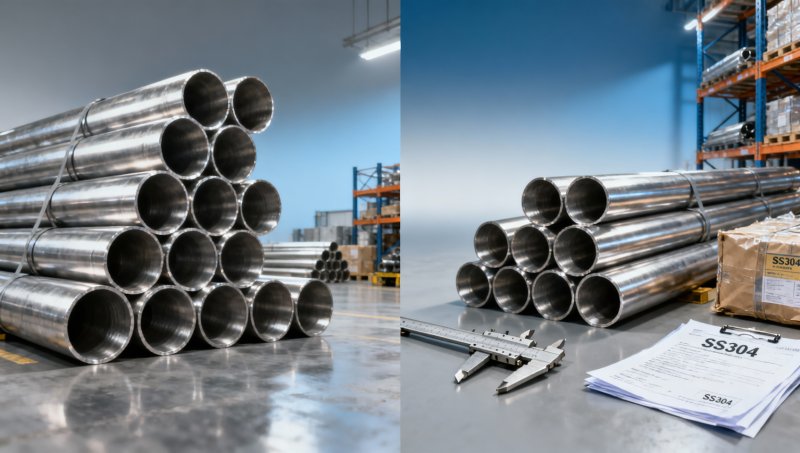
SS304 pipe is widely selected because it balances corrosion resistance, workability, and commercial availability. However, two offers with a price gap of 8%–20% may not represent the same product at all. Grade chemistry, dimensional tolerance, polishing level, and test requirements can change the real buying value significantly.
For example, if one supplier quotes based on theoretical weight and another on actual weight, the comparison is already distorted. A small wall thickness deviation such as 0.1–0.3 mm can alter both total steel content and service life, especially in pressure-related or water supply applications.
In many projects, buyers compare ss 304 pipe price per meter, but per-meter pricing only makes sense when outer diameter, schedule, tolerance, and finish are fully aligned. A 6-meter pipe with a tighter tolerance and documented mill test certificate may be the safer commercial choice than a lower-priced alternative with unclear origin.
Another common issue is application mismatch. Electrical conduit pipe, decorative tubing, and ASTM steel pipe for industrial flow service should not be priced or judged by one simplified benchmark. The lower quote may fit light-duty use, while your project may require stricter compliance or higher weld integrity.
Key cost layers behind the quoted number
Before approving a supplier, buyers should separate the visible quotation from the hidden technical and commercial variables. This approach is useful for procurement teams, finance reviewers, and project engineers trying to avoid rework, claims, or delays.
- Base material cost: stainless raw material fluctuations can change weekly and directly affect pipe pricing.
- Manufacturing route: welded and seamless pipes differ in cost, dimensional consistency, and intended use.
- Surface and finishing: pickled, annealed, polished, or brushed surfaces carry different processing cost.
- Inspection scope: PMI, hydro test, eddy current testing, and third-party inspection add cost but reduce risk.
- Trade terms: EXW, FOB, CFR, and CIF change the landed price and cash flow structure.
The table below shows why apparent price differences should be reviewed in a broader purchasing context rather than treated as pure supplier margin differences.
The practical lesson is clear: compare equivalent specifications first, then compare pricing. A quote that is 5% higher but fully compliant, traceable, and available in 2–4 weeks may be economically stronger than a lower offer that creates downstream losses.
What Technical Specifications Should Buyers Compare First
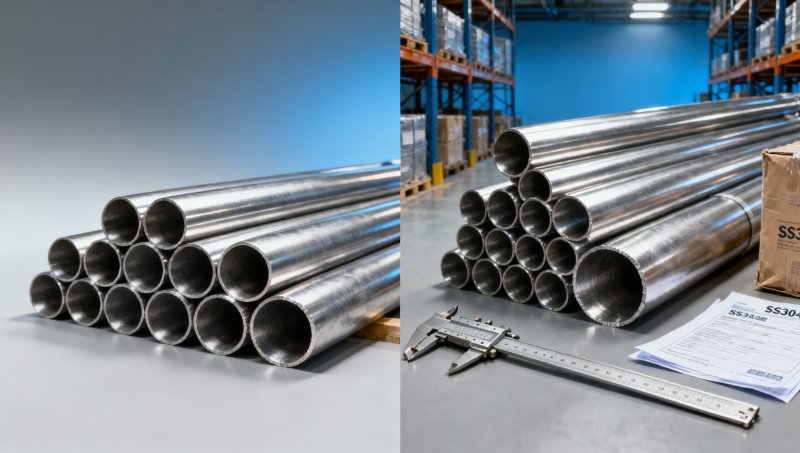
A serious ss304 pipe price comparison starts with technical alignment. Without matching dimensions and standards, no commercial comparison is reliable. This is especially important for engineers, distributors, and quality control managers who must ensure interchangeability across batches and suppliers.
At minimum, buyers should verify outer diameter, wall thickness, length, tolerance, manufacturing type, finish, and applicable standard. In many procurement cases, a supplier may quote “304 pipe” while omitting schedule, finish, or test requirement. That gap can lead to disputes after delivery.
For water supply systems, food-contact lines, handrails, and fabrication use, the technical expectation can differ a lot. A decorative tube with bright polish may look attractive, but it is not the same as ASTM-grade pipe intended for functional fluid transfer or pressure-related use.
When requesting quotes, it is wise to lock at least 7 technical points in writing. This reduces quote noise and makes supplier comparison more meaningful across 3, 5, or even 10 candidate vendors.
Core parameters that directly affect price
- Outer diameter range, such as 21.3 mm, 33.4 mm, 60.3 mm, or larger process line sizes.
- Wall thickness, for example 1.2 mm, 2.0 mm, 3.0 mm, or Sch 10/40 equivalents where applicable.
- Length format, often 6 m standard length or custom cut lengths.
- Surface finish, such as mill finish, pickled, annealed, No.4, or mirror polish.
- Test requirements, including hydro test, PMI, and dimensional inspection records.
Specification comparison checklist
The table below can be used by procurement and technical teams to verify that all quotes refer to the same deliverable product.
A clear technical checklist prevents false comparison. It also helps buyers evaluate alternative steel products in the same sourcing cycle. For example, anti-slip flooring or access-platform projects may require plate products in addition to pipes, and a sourcing partner that can supply both pipe and plate often simplifies coordination. In such cases, SM400A Patterned steel plate may be relevant for floors around equipment, machinery platforms, transportation structures, and construction areas where a patterned surface and 2–8 mm thickness range are practical.
This type of plate is commonly supplied in widths from 600 mm to 1800 mm and lengths from 2 m to 12 m, with common grades including SM400A and SM400B. For buyers managing mixed steel procurement, combining pipe orders with compatible structural items can improve schedule control and reduce coordination effort across suppliers.
Commercial Terms That Change the Real Landed Price
Even when technical specifications match, the real cost of SS304 pipe can still vary because of trade terms, MOQ, packaging method, port charges, and production lead time. A buyer who compares only EXW price against another supplier’s FOB or CIF offer may reach the wrong conclusion.
For importers, freight and handling can shift the final cost by 3%–15% depending on order volume, destination, and packing density. Small-quantity buyers often pay more per meter because cutting, repacking, and documentation are spread over fewer tons. Meanwhile, project buyers may save more by consolidating full-container or mixed-product shipments.
Lead time also deserves close attention. A supplier with a 7–10 day stock program may support urgent maintenance or short-cycle fabrication, while a mill-based production order may require 20–45 days. If project downtime costs are high, the faster quote may be commercially better even at a higher unit rate.
For global buyers, document readiness is another real cost issue. Missing packing lists, incomplete MTCs, or incorrect HS coding can delay customs clearance and tie up working capital. That risk is especially important for distributors and engineering contractors operating on milestone-based payment schedules.
Questions every buyer should ask before comparing offers
- Is the quotation based on actual weight or theoretical weight?
- Are the terms EXW, FOB, CFR, or CIF, and which port is specified?
- What is the MOQ for standard sizes and for custom cut lengths?
- How many days are needed for production, inspection, and dispatch?
- What export packing and end protection are included in the price?
The commercial comparison table below helps procurement and finance teams evaluate offers using a landed-cost logic rather than a unit-price-only approach.
When buyers add logistics, inspection, and schedule cost into the picture, a more accurate purchasing decision becomes possible. This is where experienced steel exporters can create value by aligning production capacity, stable documentation, and dependable lead times with the buyer’s actual delivery target.
How Different Buyers Should Evaluate SS304 Pipe Offers
Not every buyer compares SS304 pipe in the same way. A maintenance user may prioritize immediate availability, while a project owner may focus on documentation and total package cost. Recognizing the decision logic of each stakeholder helps shorten the approval cycle and reduce internal disagreement.
Technical evaluators often focus on grade authenticity, tolerance, and standard compliance. Procurement teams usually weigh supplier responsiveness, MOQ, and negotiated price breaks. Finance approvers may ask whether a 2% lower price truly outweighs the cost of delayed delivery or rejected material.
Project managers and QA personnel look at failure prevention. A pipe that arrives late, lacks traceability, or shows inconsistent weld quality can trigger installation delays, site claims, or replacement work. In a large project, those indirect costs can exceed the apparent unit-price saving by a wide margin.
Distributors and resellers face another challenge: repeatability. They need stable batches, consistent finish, and manageable reorder cycles. A supplier that can maintain quality across multiple shipments over 6–12 months often supports better customer retention than a one-time cheap source.
Stakeholder-based decision points
For procurement and finance
- Compare total landed cost instead of only ss304 pipe price per meter.
- Ask for payment term clarity, packing scope, and validity period of the quotation.
- Check whether price breaks apply at 1 ton, 5 tons, or container-level volumes.
For engineers, QA, and project teams
- Verify standards, material certificates, and traceability markings before approval.
- Confirm dimensional tolerance, finish, and testing scope for the actual application.
- Review expected service environment, especially for water, humidity, or chemical exposure.
For buyers sourcing from China, supplier capability should also include production stability, export experience, and response speed. A structural steel manufacturer and exporter with modern facilities, multi-standard familiarity, and consistent quality control can support not only pipe-related procurement decisions but also broader steel package coordination for industrial and construction projects.
Hongteng Fengda serves global buyers across North America, Europe, the Middle East, and Southeast Asia with structural steel products and customized solutions. While the company is known for angle steel, channel steel, steel beams, cold formed steel profiles, and OEM structural components, that broader export capability is also relevant to buyers who value dependable lead time, standard compliance, and reduced sourcing risk in multi-item steel procurement.
Common Mistakes, Practical FAQ, and Better Buying Strategy
Many SS304 pipe purchases go wrong not because the market is unclear, but because the comparison method is incomplete. Buyers sometimes approve the lowest quote before checking the standard, actual thickness, or trade term. Others forget to define whether the pipe is for decorative use, conduit use, or water-related service.
A better strategy is to work through a 4-step process: lock specification, standardize the quote sheet, review documentation, and then compare landed value. This method usually gives clearer results within 1–3 sourcing rounds and helps internal teams make faster decisions.
It is also wise to build an approved supplier list rather than restart comparison from zero each time. Over a 12-month procurement cycle, stable vendor qualification can lower transaction friction, improve forecasting, and reduce quality incidents across repeat orders.
Below are practical questions that frequently appear in stainless pipe sourcing. They are useful for information researchers, users, engineers, and business decision-makers who need a concise reference before requesting quotations.
How should I compare ss 304 pipe price per meter correctly?
Only compare per-meter prices after confirming identical OD, wall thickness, length, grade, tolerance, finish, and weight basis. If any one of these differs, the lower per-meter figure may be misleading. In many cases, cost per kilogram or total delivered cost gives a more accurate view.
Is a lower electrical conduit pipe price list always better for conduit projects?
Not always. Conduit applications still require dimensional consistency, corrosion suitability, and installation compatibility. If the lower-priced conduit has thinner actual walls or weaker finish control, it may create more installation loss, damage, or replacement cost on site.
What documents should I ask for before placing an order?
At a minimum, request a commercial quotation, material test certificate, packing details, lead time confirmation, and inspection scope. For stricter projects, add traceability records and third-party inspection if needed. This is especially useful when the order value or application risk is high.
How long is a reasonable delivery cycle?
For common sizes in stock, 7–10 days can be realistic. For mill production, finishing, and export preparation, 20–45 days is a common planning range. Buyers should also add transit time, customs clearance, and any pre-shipment inspection window.
If you are comparing SS304 pipe offers for construction, industrial fabrication, water-related service, or distribution stock, focus on equivalent specifications, traceable quality, and dependable commercial terms. That is the most practical way to control risk while still protecting budget.
For buyers who also source structural steel items, working with an experienced Chinese manufacturer and exporter can simplify supplier management, support mixed-product procurement, and improve schedule reliability. To review suitable steel solutions, product details, or customized supply options, contact Hongteng Fengda today to get a tailored quotation and procurement support for your next project.
Please give us a message


Please enter what you want to find