Choosing an ss tube finish is not a cosmetic detail. It changes corrosion behavior, cleaning difficulty, resale suitability, and the final impression of a project.
For steel supply chains, the difference between mill finish, polished, and pickled surfaces often affects quoting accuracy as much as grade or wall thickness.
That is why ss tube finish selection deserves early attention, especially when the same tube may serve structural, decorative, industrial, or fabrication needs.
Why surface finish matters in ss tube selection
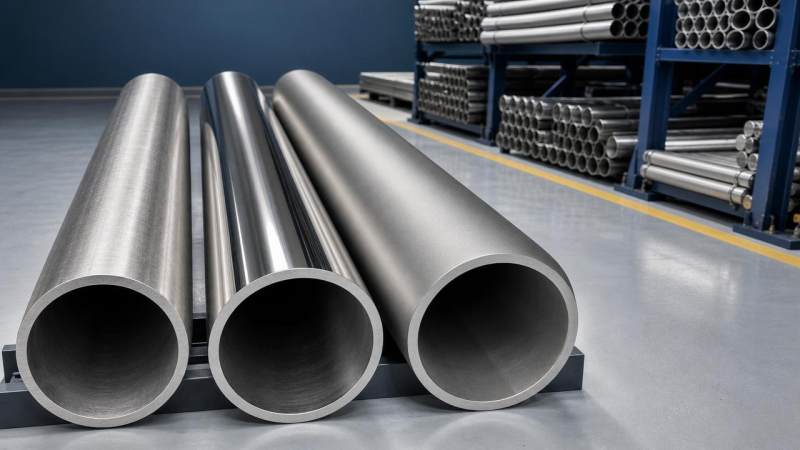
An ss tube surface is the first barrier between stainless steel and the working environment. Surface condition influences passive film stability, contamination risk, and maintenance frequency.
In practical terms, two tubes with the same stainless grade can perform differently if their finishes are different and the service environment is demanding.
Appearance also matters. A visible handrail, food contact line, or architectural trim usually needs a different finish than concealed structural tubing.
For export supply, finish consistency is equally important. Uneven gloss, rolling marks, or acid residue can become claim issues even when dimensions are correct.
The three common options at a glance
Mill finish, polished, and pickled ss tube are widely available, but they are not interchangeable. Each one reflects a different production route and use priority.
The best choice depends less on preference and more on how the ss tube will be fabricated, installed, cleaned, and viewed in service.
Mill finish: practical for processing and cost control
Mill finish ss tube comes directly from the production line with its basic industrial surface. It is often selected when appearance is not the first requirement.
This option fits projects where the tube will be cut, welded, bent, coated, or hidden inside assemblies. It is also useful when buyers want flexibility for later treatment.
Cost is one reason mill finish remains common. It avoids extra polishing steps and supports competitive pricing for volume orders.
Still, expectations should be clear. Surface tone may vary slightly, and handling marks can be more visible than on polished ss tube.
For framework, general fabrication, machinery support, and concealed stainless sections, mill finish often offers a balanced commercial solution.
Polished finish: when appearance and cleanability lead
Polished ss tube is processed to create a smoother and brighter surface. Depending on grit and target effect, it may range from satin to mirror-like.
This finish is common in architectural projects, retail fittings, food-related equipment, public railings, and decorative metalwork.
A smoother surface generally traps less dirt and is easier to wipe clean. That matters in environments where visual hygiene affects user confidence.
The trade-off is price and handling sensitivity. During packing, inland transport, and site installation, polished ss tube needs better protection to avoid scratches.
Finish specification should never stop at the word polished. A clear grit, gloss level, and inspection standard reduce disputes after delivery.
Pickled finish: a functional choice after hot work
Pickling removes heat tint, oxide scale, and surface contamination through chemical treatment. For welded or heat-affected ss tube, this can be an important quality step.
The result is usually a clean, matte surface rather than a decorative one. Its value lies in restoring corrosion performance, not creating shine.
Pickled ss tube is often suitable for process lines, industrial fabrication, marine-related components, and applications where welding integrity matters more than visual finish.
When comparing offers, it is worth confirming whether the tube is fully pickled, pickled after welding, or only acid cleaned at selected areas.
That distinction can influence both corrosion resistance and the consistency buyers see when material reaches the warehouse or jobsite.
How finish choice changes business value
Surface finish affects more than technical performance. It also shapes stock turnover, customer acceptance, complaint rates, and how easily material fits different market segments.
A common mistake is over-specifying finish. Ordering polished ss tube for hidden support frames increases cost without improving project results.
The opposite mistake is under-specifying. Using mill finish ss tube in visible decorative work often leads to rework, rejection, or secondary polishing.
The same logic appears across steel product categories. For example, patterned plate selection also depends on matching surface function to use conditions.
In anti-skid floors, equipment platforms, transportation decks, or shipbuilding, SM400A Patterned steel plate is valued for patterned grip, decorative effect, and efficient material use.
Available in SM400A and SM400B, with thickness from 2-8mm, widths from 600mm to 1800mm, and lengths up to 12m, it shows how finish and surface geometry work together.
Key checks before confirming an ss tube finish
A reliable purchase decision usually starts with a few practical questions rather than a generic finish label.
- Will the ss tube be visible after installation, or hidden inside the structure?
- Is the environment dry indoor, humid, coastal, chemical, or hygiene-sensitive?
- Will the tube be welded, bent, laser cut, or mechanically polished again?
- Does the customer need appearance consistency across multiple batches?
- What packing standard is needed to protect the selected finish during export?
- Which standards apply, such as ASTM, EN, JIS, or GB?
These checks help connect finish choice with actual project risk, rather than relying on habit or the lowest nominal price.
Working with a stable steel supply partner
Finish consistency depends on processing discipline, quality inspection, and export experience. That is especially true when orders include mixed specifications or OEM requirements.
Hongteng Fengda supplies structural steel products and customized steel solutions from China, with production aligned to ASTM, EN, JIS, and GB requirements.
Its experience across North America, Europe, the Middle East, and Southeast Asia supports a practical approach to lead times, specification control, and shipment reliability.
That matters when surface expectations are strict. A finish that looks acceptable at the mill may not be acceptable after international transport without proper protection and inspection.
For stainless and structural steel sourcing alike, clear communication on finish, standard, tolerance, and end use helps reduce avoidable claims.
A practical way to make the final choice
If the ss tube is mainly structural or will receive further processing, mill finish is often enough. If appearance drives value, polished is usually the better fit.
If welding, scale removal, and corrosion restoration are the main concerns, pickled ss tube deserves closer attention.
The most useful next step is to review the environment, visibility, fabrication route, and inspection expectations together before placing the order.
A short finish checklist can prevent long discussions later, and it usually leads to better matching between stock, project needs, and market demand.
Please give us a message


Please enter what you want to find