Understanding ss pipe price per meter is essential for project managers who need to estimate budgets quickly and avoid costly sourcing mistakes. In large construction and industrial projects, material price changes can directly affect timelines and profit margins. This guide explains the key factors behind stainless steel pipe pricing and shows how to calculate costs faster for better project planning and purchasing decisions.
Why does ss pipe price per meter vary so much in real projects?
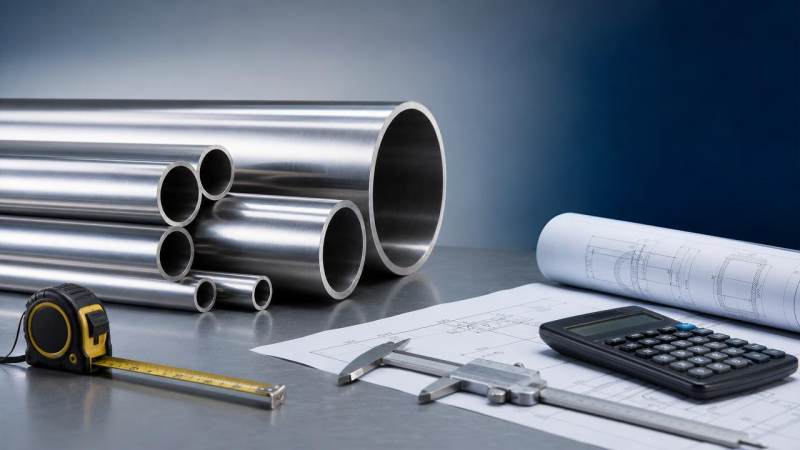
For project managers, the biggest challenge is that ss pipe price per meter rarely depends on one factor alone. The quoted number changes with grade, wall thickness, outer diameter, finish, standard, quantity, and destination.
A fast budget estimate is possible only when you break the cost into controllable variables. Without that, early-stage procurement often suffers from under-budgeting, delayed approval, or last-minute substitution.
- Material grade changes the base raw material cost. Common stainless options such as 201, 202, 304, 310, and 316 differ significantly in nickel, chromium, and corrosion performance.
- Pipe dimensions strongly affect weight per meter. Even a small increase in wall thickness can create a major jump in total tonnage across a long pipeline or fabrication package.
- Processing requirements such as polished finish, cut length, beveling, drilling, or protective packaging add conversion cost beyond the mill price.
- Standards and compliance requirements influence price because ASTM, EN, JIS, and GB specifications may involve different tolerances, testing, and documentation.
In practice, buyers who only compare unit price usually miss hidden cost drivers. The better method is to compare installed cost, procurement risk, and delivery reliability together.
What matters most during early budget planning?
At the feasibility or tender stage, you do not need a perfect final quotation. You need a workable estimate range based on likely material grade, approximate size schedule, and expected order volume.
That approach helps engineering, procurement, and finance teams align quickly. It also reduces the risk of approving a project budget based on unrealistic stainless steel pipe assumptions.
How to estimate ss pipe price per meter quickly and logically
A fast estimate starts with weight. In steel purchasing, many suppliers price stainless steel pipe by weight first, then convert the number into ss pipe price per meter according to actual dimensions.
- Confirm pipe material grade, such as 304 or 316, based on corrosion environment and service life requirement.
- Confirm outer diameter and wall thickness according to design drawings or equivalent schedule requirements.
- Calculate theoretical weight per meter using standard steel formulas or supplier reference charts.
- Multiply by the indicative price per kilogram or per ton for the selected grade.
- Add processing, inspection, packaging, inland transport, ocean freight, duty, and contingency if needed.
This method gives project leaders a much faster and more realistic estimate than relying on a generic online number with no size or grade reference.
The table below shows how project managers can structure a quick ss pipe price per meter estimate before requesting a formal quotation.
The key takeaway is simple: the most accurate early estimate comes from weight-based logic combined with project-specific additions, not from a single advertised stainless pipe number.
Why project teams should estimate a price range, not one fixed figure
Steel prices move with alloy markets, exchange rates, and freight conditions. For budgeting, it is safer to use a target range and include a contingency allowance, especially for imported material with long lead times.
That discipline is particularly useful in EPC projects, public tenders, and industrial expansions where design revisions may continue after budget approval.
Which factors most often change stainless steel pipe cost?
When buyers ask why ss pipe price per meter rose from one quote to the next, the answer usually lies in changes to grade, dimension, order structure, or compliance scope rather than arbitrary supplier behavior.
1. Material grade and corrosion requirement
201 and 202 may reduce initial cost in less demanding environments. Grade 304 is widely used for general industrial and architectural work. Grade 316 is preferred for more corrosive conditions, including marine or chemical exposure.
2. Size, schedule, and yield loss
Large diameter pipe, heavy wall sections, and special cut lengths often increase both theoretical weight and production loss. If your project needs many short pieces, waste and cutting time can materially affect the final quoted rate.
3. Manufacturing route and finishing
Seamless and welded pipes are not priced the same. Surface finish, passivation, pickling, mirror polish, or protective film can also shift the cost depending on end use.
4. Quantity, delivery terms, and destination
Small trial orders often carry a higher unit rate. Container optimization, packing method, Incoterms, and port destination all influence the landed cost that matters to project budgeting.
The comparison below helps procurement teams understand how common purchasing variables change stainless steel pipe budgeting decisions.
This comparison shows why one buyer may receive a very different quote from another, even when both ask for stainless steel pipe in the same general category.
How can project managers reduce total steel cost beyond pipe pricing?
Focusing only on ss pipe price per meter can lead to a narrow purchasing decision. In many projects, the steel package includes structural members, supports, frames, and custom fabrication, not pipe alone.
That is where supply chain coordination matters. A contractor or project owner may reduce total cost by sourcing compatible structural products from the same experienced manufacturer, simplifying documentation and shipment planning.
For example, many industrial facilities combine stainless piping with structural support systems. In those cases, an insertive sourcing strategy can improve efficiency by coordinating pipe procurement with items such as H-beam for steel structures, machinery support, bridging components, shipbuilding sections, or automobile chassis frameworks.
Available options may include Hot Rolled and Cold Rolled sections in grades such as Q235, Q345B, Q460C, SS400, S275JR, S355JR, A572, A992, 201, 202, 304, 310, and 316, with common standards including JIS G3101, EN10025, ASTM A36, ASTM A572, and ASTM A992.
- Typical dimensional references include flange thickness from 8 mm to 64 mm and web thickness from 5 mm to 36.5 mm.
- Standard lengths can range from 1 m to 12 m or be produced as required for project needs.
- Core advantages include strong bending resistance, economical section design, simple construction, cost saving, and a reasonable strength-to-weight ratio.
For project managers, this integrated view matters because support steel, fabrication time, and logistics often affect the final installed budget more than a small difference in pipe unit price.
What should you check before comparing supplier quotations?
A quotation is only useful when the technical basis is aligned. Many project delays come from comparing offers that look cheaper but are built on different specifications, incomplete documentation, or unrealistic delivery terms.
Quotation checklist for fair comparison
- Confirm material grade, pipe standard, and any substitute grade policy before approving price comparisons.
- Verify dimensions, tolerances, and exact unit length because these directly affect weight and fabrication suitability.
- Check whether the price is ex-works, FOB, CFR, or CIF, since freight can distort a direct comparison.
- Review testing scope, MTC availability, and third-party inspection needs for regulated or export projects.
- Ask about packaging, marking, bundle weight, and shipment split options if site receiving conditions are limited.
This checklist helps project teams compare real procurement value, not just a headline stainless steel pipe number that may change after clarification.
Why standards, lead time, and exporter capability affect budget accuracy
In international steel sourcing, price is only one part of the budget equation. If material arrives late, without proper documentation, or with inconsistent quality, the project cost impact can exceed the initial savings.
That is why many project managers prefer suppliers that understand global construction and industrial requirements, maintain stable production capacity, and work under recognized standards such as ASTM, EN, JIS, and GB.
Hongteng Fengda supports buyers with structural steel manufacturing and export experience from China. For global projects across North America, Europe, the Middle East, and Southeast Asia, that matters because scheduling, specification matching, and shipment coordination are often as important as the quoted ss pipe price per meter.
A supplier with modern manufacturing facilities, strict quality control, and the ability to provide both standard specifications and OEM solutions can reduce sourcing risk during design changes or multi-item procurement packages.
FAQ: common questions about ss pipe price per meter
Is ss pipe price per meter the best way to compare offers?
It is useful, but not enough by itself. Project managers should also compare grade, wall thickness, tolerances, test requirements, Incoterms, and delivery schedule. A lower unit price can become a higher total project cost if specifications are incomplete.
How do I estimate budget fast when final drawings are not frozen?
Use an estimate range based on likely grade, average diameter group, and tentative wall thickness. Then add allowances for processing, freight, and contingency. This is more reliable than waiting for every detail before planning budget approval.
What is the most common mistake when buying stainless steel pipe?
The most common mistake is buying on nominal price alone. Teams often overlook corrosion environment, standard compliance, fabrication loss, and landed cost. That can create rework, replacement, or schedule extension later.
When should I choose 316 over 304?
Choose 316 when the project environment is more corrosive, such as marine exposure, chloride presence, or certain chemical processing conditions. If the service environment is general and less aggressive, 304 may be more economical.
Why choose us for steel project budgeting and supply support?
For project managers, speed is important, but so is decision clarity. Hongteng Fengda helps buyers move from rough concept pricing to workable procurement planning by aligning material selection, specification review, production feasibility, and delivery expectations.
- You can discuss parameter confirmation for stainless steel pipe, structural sections, and custom steel components.
- You can request support on product selection based on application, corrosion level, mechanical demand, and budget targets.
- You can ask about lead time planning, batch arrangement, shipment terms, and packaging method for export projects.
- You can confirm certification expectations, standard matching, and documentation requirements before order placement.
- You can communicate OEM or customized steel solution needs for integrated construction, industrial, or manufacturing packages.
If you are evaluating ss pipe price per meter for a current project, the most effective next step is to send your grade, size range, estimated quantity, standard requirement, destination, and required delivery timing. With those basics, the quotation discussion becomes faster, clearer, and more useful for real budget control.
Please give us a message


Please enter what you want to find