When sourcing ss coil 304 for industrial or construction applications, many buyers eventually compare it with 316 and question whether the higher price truly brings practical value. For procurement teams balancing corrosion resistance, project requirements, and budget control, understanding the real performance and cost differences is essential to making a smart purchasing decision.
How Different Are ss coil 304 and 316 in Real Procurement Terms?
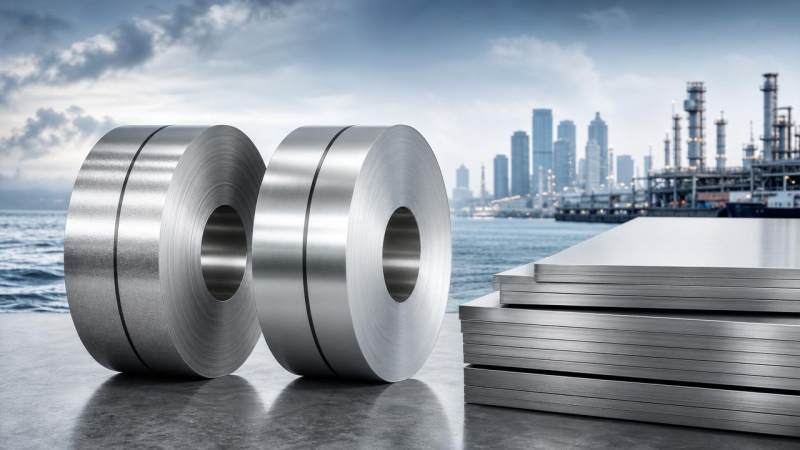
For buyers, the comparison is not only about chemistry. It is about service life, processing stability, compliance needs, replacement risk, and total project cost. In many standard indoor and mildly corrosive environments, ss coil 304 remains the practical choice because it offers a reliable balance of price, formability, and general corrosion resistance.
Grade 316 contains molybdenum, which improves resistance to chlorides and more aggressive chemical exposure. That advantage can be meaningful in marine, coastal, chemical, or high-humidity environments. However, paying more for 316 in a non-demanding application does not automatically improve procurement value. In some projects, it only raises upfront material spend without changing the final performance outcome.
- ss coil 304 is commonly selected for equipment covers, architectural trim, general fabrication, ducting, tanks, and components used in normal atmospheric exposure.
- 316 is often preferred for coastal installations, food processing with saline cleaning agents, wastewater handling, and chemical-related environments where pitting risk is higher.
- The right choice depends on exposure conditions, not on the assumption that the more expensive grade is always safer.
A Clear Material Comparison Buyers Can Use
Before comparing quotes, procurement teams should align the required environment, processing method, and service expectations. The table below gives a practical view of ss coil 304 versus 316 from a sourcing and usage perspective.
This comparison shows why many projects continue to use ss coil 304. The grade is not a compromise by default. It is often the correct engineering and commercial decision when chloride attack or chemical exposure is limited.
Where Does the Price Gap Usually Matter Most?
The price difference between 304 and 316 can become significant in bulk orders, especially for large-width coil, specific finishes, and export quantities. For procurement managers, the question is not simply how much more 316 costs per ton. The more useful question is whether that premium reduces measurable project risk.
When paying more for 316 makes sense
- The installation site is near seawater, salt spray, or de-icing salts.
- The equipment is exposed to chlorides, acids, or repeated aggressive cleaning chemicals.
- Maintenance access is difficult and failure replacement is costly.
- The buyer must minimize warranty, downtime, or corrosion claim risk over a long service cycle.
When ss coil 304 is usually enough
- The application is indoors or in a normal urban atmosphere.
- The component has limited direct contact with corrosive media.
- The project is cost-sensitive and requires a widely available stainless grade.
- The design allows cleaning, maintenance, or periodic replacement without major shutdown losses.
This is why experienced buyers assess total installed cost rather than unit price alone. A lower purchase price can be the better value, but only if the environment does not demand the extra corrosion margin of 316.
Cost, Service Life, and Risk: How Procurement Should Judge Value
A procurement decision should connect material grade with failure consequences. If corrosion causes cosmetic issues only, ss coil 304 may still be acceptable. If corrosion affects hygiene, structure, fluid containment, or customer-facing quality, the cost of failure quickly exceeds the original alloy premium.
The next table can be used as an internal decision tool when comparing bids, engineering requests, and supplier recommendations.
In other words, the price gap is worth it only when the environment justifies it. Otherwise, ss coil 304 often delivers the better cost-performance ratio and improves sourcing efficiency.
Which Application Scenarios Usually Favor ss coil 304?
Many procurement teams work across mixed portfolios, including buildings, equipment frames, fabricated components, enclosures, and support systems. In these cases, specifying 316 for every item can overextend the budget. A smarter approach is to match the grade to each exposure zone.
Common uses where ss coil 304 is often selected
- Interior cladding, trim, and decorative metal parts in commercial buildings.
- General industrial covers, cabinets, and housings with limited chemical contact.
- Fabricated components for urban infrastructure away from marine salt exposure.
- Food and light manufacturing equipment where cleaning conditions are moderate.
In broader supply projects, buyers may also combine stainless materials with carbon steel or galvanized products for non-critical auxiliary uses. For example, some packaging, fencing, binding, and industrial utility needs may be better served by Mild Steel Wire Rod, especially when low cost, good ductility, and practical corrosion protection are sufficient. This kind of mixed-material planning helps control total procurement cost without forcing a stainless solution into every application.
What Should Buyers Check Before Placing an ss coil 304 Order?
Choosing the correct grade is only one part of successful purchasing. The actual order specification determines whether the material will process smoothly and meet downstream requirements. Procurement teams should verify both technical details and supply execution points before confirming a contract.
- Confirm the required standard, such as ASTM, EN, JIS, or GB, based on project documents and destination market expectations.
- Define thickness tolerance, width, coil weight, finish, and edge condition to avoid mismatches in slitting, stamping, or forming.
- Check whether the end use involves chloride exposure, cleaning chemicals, or outdoor service near the coast.
- Ask for mill test documentation and clarify whether third-party inspection is needed for the order.
- Review packaging, loading method, and transit protection, especially for export shipments where surface quality matters.
- Align delivery schedule with fabrication planning so the material does not create delays on site or in production.
These checkpoints matter because procurement problems rarely come from grade alone. They usually come from incomplete specifications, inconsistent quality control, or unclear acceptance criteria.
How a Chinese Structural Steel Exporter Can Reduce Sourcing Risk
For international buyers, the best supplier is not simply the one offering the lowest quote. It is the supplier that helps translate engineering needs into a stable, repeatable supply plan. Hongteng Fengda supports global construction, industrial, and manufacturing projects with a broad structural steel background, modern manufacturing capability, and strict quality control aligned with common international standards such as ASTM, EN, JIS, and GB.
That matters in stainless and structural steel procurement because many projects involve coordinated sourcing, not one isolated item. Buyers may need angle steel, channel steel, steel beams, cold formed profiles, and custom components together with processed metal materials. A supplier familiar with export documentation, specification control, and project delivery timelines can reduce communication loss and shorten the decision cycle.
What procurement teams usually value most
- Clear confirmation of grades, standards, and tolerances before production begins.
- Stable manufacturing capacity that supports repeat orders and project milestones.
- Consistent quality control that reduces claims, sorting losses, and rework.
- Dependable lead times for export shipments to North America, Europe, the Middle East, and Southeast Asia.
- Support for customized solutions when a project cannot use only standard catalog items.
FAQ: Common Questions About ss coil 304 vs 316
Is ss coil 304 good enough for outdoor use?
Yes, in many normal outdoor environments ss coil 304 performs well, especially where rainfall, urban air, and routine maintenance are the main conditions. The concern grows in coastal zones, chloride-rich industrial areas, and locations with frequent salt contamination. In those cases, 316 may be a safer long-term choice.
Why is 316 more expensive than ss coil 304?
The main reason is alloy composition. 316 includes molybdenum, which improves resistance to pitting and chloride attack. That added alloy content raises raw material cost, and the premium can widen depending on market conditions, order size, and specification details.
Can buyers switch from 316 to ss coil 304 to save cost?
They can, but only after reviewing the service environment carefully. If the original 316 specification was driven by marine air, saline washing, or chemical exposure, downgrading may increase corrosion risk. If the environment is moderate and the 316 grade was selected conservatively, changing to 304 may generate meaningful savings without harming performance.
What documents should be requested during procurement?
Buyers typically request standard-related compliance information, material test documentation, dimensional confirmation, packing details, and shipment terms. For more demanding projects, third-party inspection requirements and surface quality acceptance criteria should also be clarified before production.
Why Choose Us for Your Next Steel Sourcing Project?
If your team is comparing ss coil 304 and 316, the right answer depends on environment, budget, processing needs, and supply execution. Hongteng Fengda helps buyers move beyond simple price comparison by supporting material selection, standard matching, and project-based sourcing decisions across structural steel and related metal product needs.
You can contact us to discuss specific procurement topics such as grade selection for ss coil 304, comparison with 316 for coastal or industrial exposure, dimensional and tolerance confirmation, delivery schedules, export packaging, sample support, OEM requirements, and quotation planning for mixed steel product orders. When your project involves both performance targets and cost pressure, early technical and commercial alignment can prevent expensive changes later.
Please give us a message


Please enter what you want to find