Choosing between S355JR Steel Plate and S235JR steel plate depends on strength, weldability, cost, and project requirements. For buyers, engineers, and contractors comparing structural steel options, understanding the real performance differences is essential. This guide explains where each grade fits best, how it supports efficient fabrication, and why selecting the right material can improve safety, reduce waste, and optimize long-term project value.
In structural steel purchasing, the wrong grade can affect load capacity, fabrication efficiency, surface treatment plans, and total project cost over 12 to 36 months. That is why technical teams, procurement managers, quality inspectors, and project owners usually compare yield strength, plate thickness range, weldability, compliance standards, and delivery stability before issuing a purchase order.
For global buyers sourcing from China, the decision is not only about the mechanical properties of S355JR steel plate and S235JR plate. It also involves supplier capability, inspection control, export experience, and whether the manufacturer can support matching structural sections, customized processing, and reliable lead times for construction and industrial projects.
Understanding the Core Difference Between S355JR and S235JR
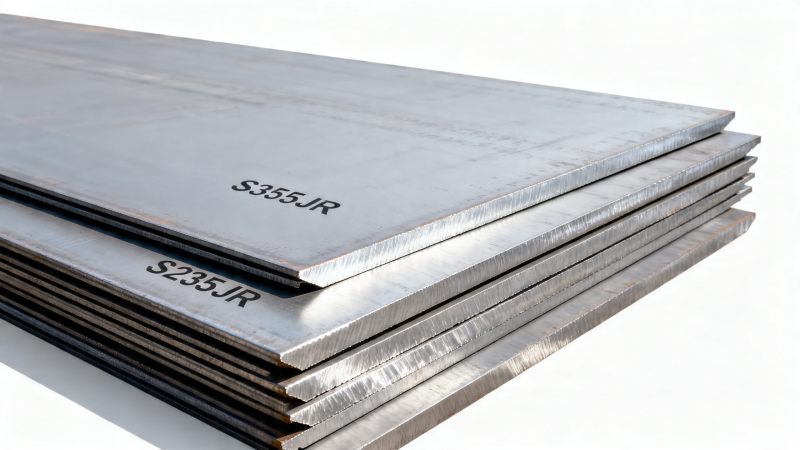
S235JR and S355JR are both non-alloy structural steels commonly supplied under EN standards. The main difference is strength. In simple terms, S235JR offers a minimum yield strength around 235 MPa, while S355JR provides about 355 MPa under typical reference thickness conditions. That 120 MPa gap is often the first reason engineers move from a basic building frame material to a higher-performance plate.
The “JR” designation indicates impact testing at 20°C, which matters for general structural applications where basic toughness is required but low-temperature service is not the primary design condition. For standard fabrication environments, both grades are workable, but they are not interchangeable in every project. If the design load, span, or safety margin is calculated around S355JR, replacing it with S235JR can create compliance and structural risk.
S235JR plate is widely used when moderate strength, easier budget control, and routine fabrication are the main priorities. S355JR steel plate is often selected when designers want to reduce section size, increase load-bearing performance, or improve structural efficiency without moving to a much more specialized steel grade.
In procurement practice, the comparison should never be based on price per ton alone. A stronger plate may reduce overall steel consumption, welding volume, or support member size. In many medium and heavy structural applications, a 5% to 15% increase in raw material price can be offset by lower total fabrication weight or better design efficiency.
Mechanical Properties and Selection Impact
The table below shows a practical comparison of the two grades from a project evaluation perspective. Exact values may vary by thickness and mill production route, so buyers should always confirm the mill test certificate and applicable standard before final approval.
The key conclusion is straightforward: if your project is driven by basic structural needs and cost sensitivity, S235JR may be enough. If your structure must carry higher loads, support longer spans, or reduce weight while keeping adequate safety margins, S355JR steel plate is usually the better engineering choice.
When the difference matters most
- For warehouse frames, platforms, equipment bases, and industrial buildings with higher design stress, the 355 MPa class is often preferred.
- For brackets, covers, secondary structures, and light fabrication, S235JR plate can remain cost-effective and easier to source in routine quantities.
- If section reduction can cut total steel usage by 8% to 20%, the higher grade may deliver a better whole-project result.
Application Scenarios, Fabrication Efficiency, and Mid-Project Selection Logic
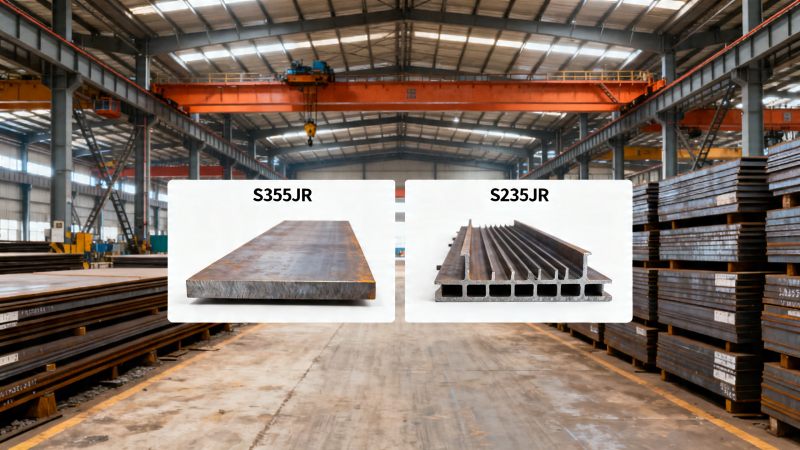
In real projects, steel grade selection is rarely decided by one parameter alone. Fabrication shops also review cutting performance, weld preparation, hole making, bending requirements, surface treatment, and whether the material needs to match channels, beams, and cold formed sections already listed in the bill of materials. This is especially important when a project includes both plates and profile steel.
S235JR plate is common in low to medium demand structures where straightforward welding and low purchasing cost are important. S355JR steel plate is more frequently used in industrial platforms, heavy-duty supports, machinery foundations, and steel structures where higher strength helps control deformation or reduce member size. In projects with 2 to 4 fabrication stages, the chosen grade influences material nesting, welding sequence, and even transport weight.
When buyers are sourcing a complete structural package, it is useful to work with a supplier that can support not only plates but also matching sections. For example, channel sections are often combined with plates in wall beams, roof systems, brackets, purlins, and light manufacturing frames. In such cases, integrating profile steel into one sourcing plan can simplify quality control and shorten communication cycles.
A relevant option for broader structural sourcing is Channel Steel Supplier. This product line covers models such as Q195, Q235, Q235B, Q345B, 201, 304, and 316, with thickness from 1.5mm to 25mm, height from 80mm to 160mm, and standard length from 6m to 12m. It is suitable for construction, automobile manufacture, purlins, wall beams, brackets, mechanical columns, and lightweight roof structures, while offering options such as hot-dip galvanized and hot-blown galvanized finishes.
How mixed steel packages improve project efficiency
For contractors and distributors, one practical advantage of buying plate and profile steel from a capable exporter is process consistency. Material documents, dimensional tolerance checks, coating expectations, and shipment planning can be coordinated under one supply schedule. That matters when a project has a 3-week to 8-week delivery window and site installation depends on sequential steel arrivals.
The following table shows how the two plate grades align with typical application demands and related structural section sourcing needs.
This comparison highlights a common purchasing truth: the “best” steel plate is the one that fits the actual structural duty, fabrication route, and total package requirement. Over-specification increases cost, but under-specification can create rework, redesign, and approval delays.
Practical checks before final material approval
- Confirm the required yield strength and plate thickness range from the structural drawings.
- Review whether section reduction with S355JR changes fabrication complexity or not.
- Check welding procedure compatibility, especially for thicker plates or multi-pass welds.
- Verify whether galvanized channels, beams, or custom components must be sourced in the same order.
- Compare lead time, certificate availability, and tolerance expectations before placing the PO.
Cost, Procurement Risk, and Supplier Evaluation Criteria
From a purchasing and finance perspective, comparing S355JR steel plate with S235JR plate requires more than unit price analysis. Buyers should review at least 4 dimensions: material price per ton, total steel consumption, fabrication cost, and delivery risk. In many competitive tenders, the lowest material price may not produce the lowest installed cost.
For example, S355JR can help reduce material weight in some structures, but if the order quantity is small and the design does not benefit from higher strength, the premium may not be justified. On the other hand, if a project is load-sensitive and a weaker plate would require thicker sections, more welding, or a larger support frame, S235JR may become the more expensive choice after fabrication is complete.
Procurement teams should also check commercial and quality risks. A reliable steel manufacturer and exporter should provide clear grade identification, heat number traceability, dimensional verification, inspection documents, and export packing suited for sea freight. Even a 7 to 10 day delay in document confirmation can affect customs clearance, site sequencing, and payment release.
For international buyers, supplier capability matters as much as material selection. Hongteng Fengda supports global construction, industrial, and manufacturing projects with structural steel products, custom solutions, and production aligned with major standards such as ASTM, EN, JIS, and GB. That combination is valuable when procurement teams need a supplier that can coordinate standard items and OEM requests under controlled lead times.
Supplier assessment table for steel plate sourcing
Before approving a supplier, many project teams use a weighted checklist. The table below summarizes practical evaluation points that help reduce sourcing risk.
A strong supplier evaluation process can save more money than negotiating a small price discount. In cross-border steel procurement, stability in quality documents, shipment timing, and problem resolution often has a larger financial impact than a narrow per-ton price difference.
Common procurement mistakes
- Approving S235JR only because it is cheaper, without checking structural load calculations.
- Ordering S355JR for every component, even when 30% to 40% of parts are non-critical.
- Ignoring certificate review until after shipment, which can delay site acceptance.
- Comparing suppliers only on price, not on tolerance control, packing, and export experience.
Quality Control, Standards, and Frequently Asked Questions
Quality assurance for structural steel plate should include incoming material verification, document review, dimensional inspection, and surface condition assessment. For most B2B buyers, the minimum control points include 3 areas: grade traceability, mechanical property confirmation, and conformity of thickness and dimensions. If cutting or fabrication is included, hole position and edge quality may become additional inspection items.
A practical acceptance workflow often follows 5 steps: quotation review, technical confirmation, production scheduling, pre-shipment inspection, and shipping document release. This process helps project managers and QC personnel prevent misunderstandings before the goods arrive on site. For repeated orders, standardized inspection sheets can reduce communication time by 20% to 30% compared with ad hoc approval methods.
Because Hongteng Fengda supplies structural steel products for North America, Europe, the Middle East, and Southeast Asia, buyers with multi-market projects can benefit from a supplier familiar with different standard expectations, packaging needs, and order coordination for profiles, beams, channels, and customized steel components.
Below are several common questions asked by engineers, distributors, and procurement teams when comparing S355JR steel plate and S235JR plate.
Is S355JR always better than S235JR?
No. S355JR is stronger, but “better” depends on application. If the structure does not need the extra strength, S235JR may provide a more economical solution. The right decision should be based on load requirement, section design, fabrication method, and total project cost rather than material grade alone.
Which grade is easier to weld?
Both grades are generally considered weldable in normal structural fabrication. However, welding results also depend on thickness, joint design, heat input, filler selection, and shop control. For plates in higher thickness ranges, the welding procedure should be reviewed carefully regardless of grade.
What should buyers check on the certificate?
- Steel grade and applicable standard reference.
- Heat number and traceability details.
- Yield strength, tensile strength, and impact test information where required.
- Plate dimensions, quantity, and matching shipping marks.
How long is the usual delivery cycle?
Delivery depends on specification, quantity, and whether cutting or customization is required. Standard material may move within about 7 to 20 days in some supply conditions, while special processing or mixed structural orders may require 3 to 6 weeks. Buyers should confirm production slots, inspection timing, and shipping plans before locking the schedule.
If you are comparing S355JR steel plate and S235JR plate for a current project, the best choice is the one that balances structural performance, fabrication efficiency, compliance, and budget control. Hongteng Fengda supports global buyers with structural steel manufacturing, export coordination, and customized supply solutions for plates, channels, beams, and related components.
Whether you need a cost-effective grade for standard construction or a stronger solution for demanding structural applications, a clear technical review at the quotation stage can prevent later changes and reduce sourcing risk. Contact us today to discuss your specifications, get a tailored steel solution, and learn more about reliable structural steel supply from China.
Please give us a message


Please enter what you want to find