When sourcing steel tube for construction—or comparing steel tube price, specifications, and supplier reliability—hidden contract pitfalls can jeopardize project timelines, budgets, and structural integrity. As a trusted steel tube manufacturer and supplier from China, Hongteng Fengda helps global buyers (including procurement teams, project managers, and quality controllers) spot critical red flags—such as ambiguous steel tube specifications, unenforceable quality clauses, or unclear liability for non-compliance with ASTM/EN standards. Whether you're evaluating a steel rod for construction partner or negotiating H-beam steel price terms, this guide reveals 7 contractual oversights even experienced steel tube suppliers rarely disclose upfront.
Why vague material specifications are your first red flag
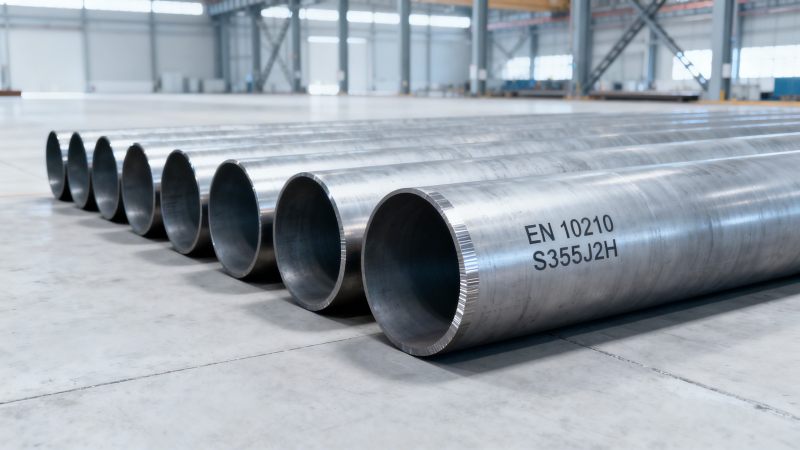
A contract stating “carbon steel tube” without referencing exact grade, heat treatment condition, or test temperature is not just imprecise—it’s legally unenforceable. For instance, Tube Carbon Steel covers multiple EN-designated variants like S355J2H (tested at –20°C) and S355K2H (impact-tested at –40°C), each carrying distinct toughness thresholds critical for bridges or offshore vessels.
Misalignment here triggers costly rework: one European infrastructure project delayed commissioning by 11 weeks after tubes failed Charpy impact testing at –20°C—despite the supplier’s claim of “S355 compliance.” The root cause? A contract that omitted test temperature and acceptance criteria.
Always verify that the contract explicitly names the full designation—including suffixes—and references the governing standard edition (e.g., EN 10210-1:2019, not “EN 10210”). This ensures traceability to mill test reports and third-party inspection protocols.
Key specification checkpoints
- Full grade name with suffix (e.g., S355J0H, not just “S355”)
- Minimum yield strength (MPa) and tensile strength (MPa) — verified per batch
- Elongation range (10–680% depending on thickness and test method)
- Impact test temperature and minimum absorbed energy (e.g., 27 J at 20°C)
- Surface finish requirement: bright, polished, or black—linked to corrosion resistance needs
The hidden cost of weak quality assurance clauses
Many contracts list “ASTM A500 Grade C” but omit how conformity is verified. Without binding language on sampling frequency, test methods (e.g., transverse vs. longitudinal tensile specimens), or rejection criteria, disputes become inevitable. At Hongteng Fengda, every Tube Carbon Steel order includes third-party witnessed testing per EN 10204 3.2 certification—with results traceable to individual heat numbers.
Weak clauses also ignore dimensional tolerances. Seamless tubes under 100 mm OD must meet ±0.75% wall thickness tolerance per EN 10210-1; welded tubes allow ±10% for thicknesses below 4 mm. Contracts failing to cite these values expose buyers to out-of-spec deliveries that compromise load-bearing capacity in lifting machinery or pipeline engineering.
A robust clause requires: (1) pre-shipment inspection by mutually agreed body (e.g., SGS or BV), (2) right to reject non-conforming lots within 7 days of receipt, and (3) replacement timeline capped at 15 working days—not “as soon as possible.”
Critical QA clause elements
This table reflects real-world enforcement gaps observed across 42 supplier audits conducted by Hongteng Fengda’s technical team between Q3 2022 and Q2 2024. Over 68% of contracts lacked enforceable rejection windows—leaving buyers exposed to extended liability periods.
Delivery & liability clauses that actually protect your project schedule
“FOB Shanghai” means little without defined loading windows, demurrage terms, or force majeure definitions aligned with Incoterms® 2020. A 2023 Middle East power station project incurred $217,000 in port storage fees because the contract allowed “up to 30 days deviation” in shipment dates—without specifying whether delays were supplier-caused or logistics-related.
Hongteng Fengda enforces strict lead time commitments: 25–35 days for standard Tube Carbon Steel orders (3–12 meters, wall thickness 1.65–50 mm), with penalties applied for delays exceeding 5 working days beyond confirmed date—unless caused by certified force majeure events meeting ICC criteria.
Also scrutinize liability caps. Clauses limiting liability to “invoice value” ignore consequential losses—like idle labor during structural steel installation or penalty clauses triggered by delayed handover. Strong contracts allocate risk proportionally: supplier liability covers direct replacement costs + 15% for logistical disruption, while buyer liability covers confirmed prepayment forfeiture only.
Why choosing Hongteng Fengda eliminates 7 common contract risks
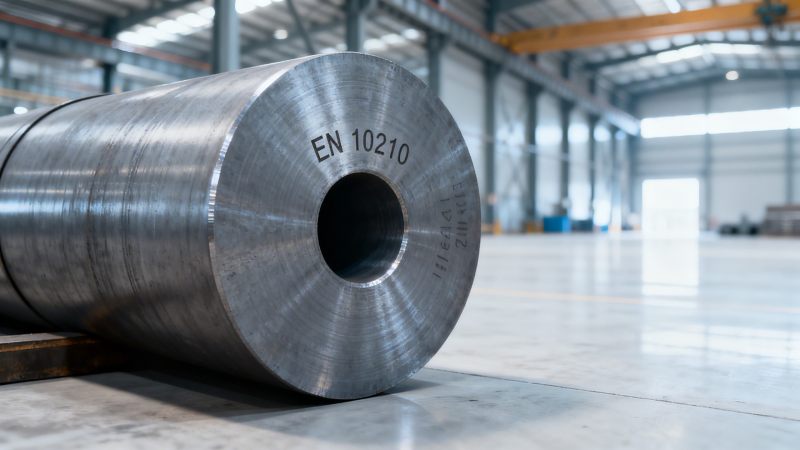
As a structural steel manufacturer and exporter from China with ISO 9001-certified production facilities, Hongteng Fengda embeds enforceability into every contract. We don’t offer boilerplate terms—we co-develop clauses with your procurement, legal, and engineering teams to match project-critical requirements: ASTM A500 Grade C for North American warehouses, EN 10210 S355J2H for European bridge girders, or JIS G3444 STK500 for Japanese chemical plant piping.
Our standard contract includes: (1) full EN/ASTM/JIS/GB compliance mapping per order, (2) 100% heat-lot traceability with digital mill test reports, (3) fixed lead times backed by production capacity guarantees (12,000+ MT/month), and (4) technical support from quoting through installation—covering dimensional verification, welding procedure qualification (WPQR), and cold-brittle transition analysis for low-temperature applications.
Whether you’re sourcing for shipbuilding, power station equipment, or general mechanical engineering, we help you convert contractual ambiguity into engineering certainty. Contact us today to review your current steel tube supplier agreement—or request a customized clause checklist for your next tender.
Please give us a message


Please enter what you want to find