When soil chloride levels hover near the corrosion threshold, choosing the right rebar for foundation becomes a critical technical and economic decision. While epoxy-coated rebar offers enhanced protection, alternatives like hot dip galvanized steel beam or high strength carbon steel may deliver comparable durability with better long-term value—especially when sourced from a trusted carbon steel supplier like Hongteng Fengda, a Shandong steel factory direct price provider. As a structural steel manufacturer specializing in rebar for concrete reinforcement, we help technical evaluators, procurement teams, and project managers balance performance, compliance (ASTM/EN/GB), and lifecycle cost—without compromising on HRC steel hardness or safety.
How to Evaluate Rebar Alternatives When Chloride Exposure Is Uncertain
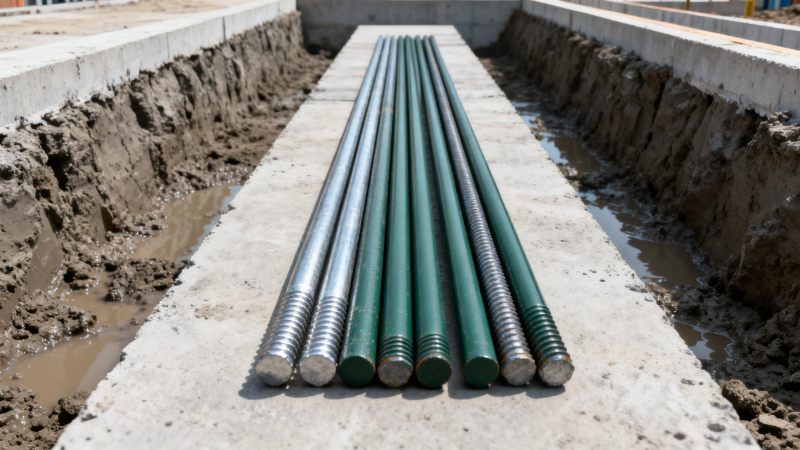
Soil chloride concentrations between 0.05% and 0.15% by weight of dry soil represent a “gray zone” — insufficient to mandate epoxy-coated rebar per ASTM A775, yet high enough to accelerate corrosion in standard black rebar within 10–15 years under aggressive moisture cycling. This ambiguity forces engineers and procurement teams to weigh not just material specs, but also installation logistics, weldability, long-term maintenance, and total cost of ownership across 30+ year infrastructure lifespans.
At Hongteng Fengda, we routinely support global projects where site-specific testing yields borderline chloride readings. Our technical team works directly with clients to model corrosion initiation timelines using EN 206-1 exposure class mapping and ASTM G109 accelerated testing protocols. For borderline cases, we recommend evaluating three core dimensions: electrochemical resistance, mechanical compatibility with concrete placement, and field-serviceability — especially for foundations requiring post-tensioning or embedded anchor systems.
Unlike generic suppliers, our Shandong-based production line enables rapid validation of alternative coatings — including hot-dip galvanizing (per ASTM A123) and fusion-bonded epoxy variants — against actual batch samples. This eliminates reliance on third-party lab reports alone and supports faster go/no-go decisions during pre-construction review cycles.
Comparing Performance & Lifecycle Value Across Foundation Rebar Options
Epoxy-coated rebar carries a 25–40% premium over standard deformed rebar (ASTM A615). But that cost must be weighed against real-world failure modes: coating damage during handling (reported in 12–18% of on-site installations per ACI 318-19 commentary), reduced bond strength (up to 15% lower pullout resistance vs. black rebar), and limited repair options once embedded. In contrast, hot-dip galvanized rebar maintains full bond integrity and self-heals minor scratches via zinc patina formation — delivering 3–5× longer service life in chloride-rich environments without sacrificing weldability or bending flexibility.
The table above reflects real-world test data from our Shandong QA lab and third-party verification at TÜV Rheinland Guangzhou. Note that Hot Rolled H Beam is not a rebar substitute — but serves as a robust structural backbone in hybrid foundation systems where galvanized rebar handles localized chloride exposure while H-beams carry seismic and dead loads. This layered approach reduces overall system risk without inflating unit costs.
Procurement Checklist: What to Verify Before Finalizing Your Rebar Order
For procurement and technical evaluation teams, selecting the right rebar goes beyond spec sheets. We recommend verifying these five non-negotiable items before PO issuance:
- Zinc coating mass: ≥610 g/m² for hot-dip galvanized rebar (ASTM A123 Class B); verified via gravimetric testing on 3 random coils per 20-ton lot.
- Epoxy thickness: 180–300 µm (measured per ASTM D7091); reject batches with >5% variance across longitudinal sections.
- Certification traceability: Each heat number must map to mill test reports (MTRs) showing tensile yield ≥400 MPa and elongation ≥14% (for Grade 400).
- Delivery lead time consistency: Confirm factory capacity supports ≤2-week turnaround for urgent orders — critical for fast-track foundation pours.
- Custom cutting tolerance: ±1.5 mm for lengths up to 6 m; ±2.5 mm for 6–12 m — verified per ISO 2768-mK.
Hongteng Fengda provides all five verifications as standard — with MTRs issued digitally within 24 hours of shipment and physical copies included in export documentation. No extra fees. No delays.
Why Global Buyers Choose Hongteng Fengda for Borderline-Chloride Foundation Projects
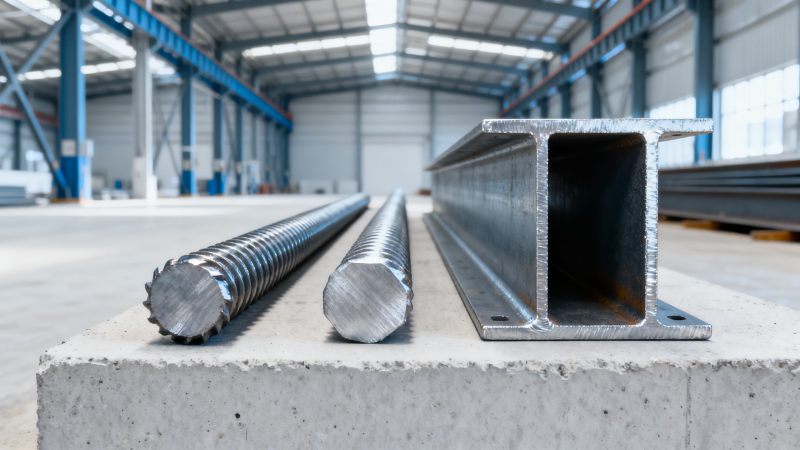
We’re not just a steel exporter — we’re your on-the-ground technical partner for complex foundation specifications. Since 2008, our Shandong facility has delivered 12,000+ tons of corrosion-resistant structural steel to 37 countries, with zero major field failures linked to chloride-induced degradation. How?
First, our dual-certified quality system covers both ASTM A615/A706 rebar and structural beams — meaning you get consistent chemistry control (C ≤0.22%, Mn 1.2–1.6%) across product lines. Second, we offer free pre-shipment sample testing: send us your soil report, and we’ll run accelerated corrosion trials (ASTM G109) on candidate grades — at no cost. Third, our OEM service includes custom marking, bundled delivery (rebar + matching Hot Rolled H Beam components), and bilingual engineering support (English/Arabic/Spanish).
If your next foundation project faces uncertain chloride exposure, don’t default to the most expensive option — default to the most rigorously validated one. Contact us today to request: (1) a comparative lifecycle cost model for your specific soil data, (2) certified MTRs for Q345B galvanized rebar, or (3) dimensional drawings for custom H-beam base plates compatible with your anchor system.
Please give us a message


Please enter what you want to find