Why does rebar for construction deserve so much attention during buying?
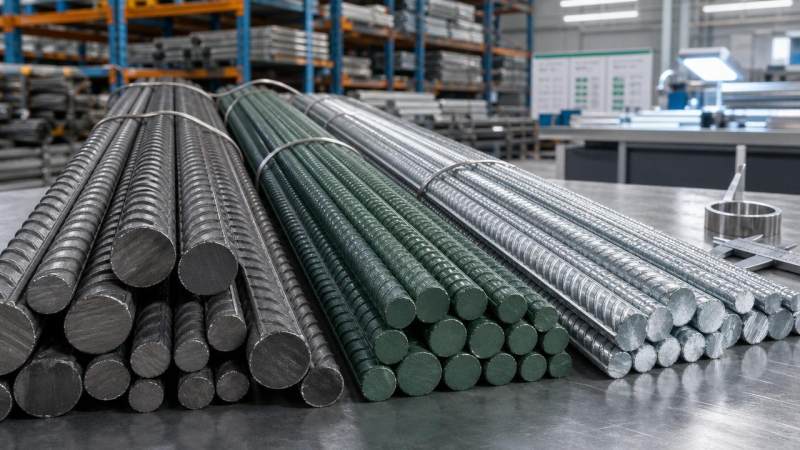
Rebar looks simple, but buying it casually can create expensive problems later.
The right rebar for construction affects structural strength, code compliance, corrosion life, and total installed cost.
That cost is not only the steel price per ton.
It also includes cutting loss, bending efficiency, coating durability, freight weight, inspection work, and replacement risk.
In real projects, a cheaper bar can become more expensive if it fails local standards or arrives with inconsistent mechanical properties.
That is why many buyers compare grade, diameter, and coating together instead of checking unit price alone.
Reliable supply matters too.
A structural steel exporter with stable production and clear quality control can reduce sourcing risk across repeated orders.
Hongteng Fengda, based in China, supports global steel supply with products aligned to ASTM, EN, JIS, and GB requirements.
That background is useful when projects involve mixed structural materials, customized fabrication, and international documentation.
When people compare rebar for construction, what does grade actually change?
Grade is one of the first filters because it defines mechanical performance.
Most buyers focus on yield strength, tensile strength, ductility, and weldability.
Higher grade rebar can carry more stress, but that does not automatically mean it is the best value.
If the design only requires a moderate strength level, over-specifying grade may raise cost without real benefit.
The more practical question is this: what grade matches the design code, loading condition, and fabrication method?
For example, seismic zones usually require stronger ductility control.
Heavy industrial slabs may prioritize load capacity and crack control.
Marine or infrastructure work often pushes the discussion toward corrosion resistance as much as strength.
Before confirming a grade, it helps to verify these points:
- Applicable standard, such as ASTM, BS, EN, or local project code.
- Required yield and tensile values in mill test certificates.
- Bend and rebend performance for site handling.
- Whether welding is permitted or restricted.
- Heat number traceability and batch consistency.
A common mistake is assuming all “equivalent” grades behave the same across standards.
Names may look close, but chemistry, tolerances, and testing methods can differ.
Is bigger diameter always better, or just heavier and costlier?
Bigger diameter is not automatically better.
It increases bar weight and often raises material spending, but the real issue is structural efficiency.
Larger bars can reduce the number of pieces and speed placement in some foundations.
At the same time, they may complicate bending, spacing, lap lengths, and concrete consolidation.
Smaller diameters can improve distribution and crack control in slabs and walls.
However, they may increase tying labor and installation time because more bars are needed.
The smartest comparison looks at tonnage, piece count, labor, and waste together.
This is why rebar for construction should be compared as a system, not as a single dimension choice.
How much does coating affect cost, and when is it worth paying more?
Coating can change both initial price and service life dramatically.
Plain black rebar is usually the lowest-cost option for dry, controlled environments.
Epoxy-coated rebar adds protection in chloride exposure, such as bridges, parking decks, and coastal construction.
Galvanized or stainless alternatives cost more upfront, but sometimes reduce long-term maintenance and repair costs.
The right choice depends on exposure class, expected design life, and the cost of future access for repairs.
Inland warehouse floors rarely need premium corrosion protection.
A marine retaining structure is a different story.
It helps to compare coatings with nearby materials too.
For example, projects involving corrosive processing areas may combine rebar with stainless sheet or plate components.
In those environments, 304 Stainless Steel Plate is often selected for equipment housings, food contact zones, chemical areas, or transport-related parts.
Its typical properties include tensile strength of at least 520MPa, yield strength of at least 275MPa, and elongation around 55% to 60%.
That kind of corrosion-aware material planning can improve lifecycle value across the whole build, not only the reinforced concrete section.
What hidden cost drivers are often missed when buying rebar for construction?
The base steel price gets most of the attention, but it is only one line in the budget.
Several hidden drivers can change the landed cost and the final installed cost.
- Length tolerance and bundle consistency, which affect cutting loss.
- Actual weight variance versus theoretical weight.
- Packing quality for sea freight and port handling.
- Lead time reliability, especially on mixed sizes.
- Third-party inspection, testing, and document preparation.
- Coating damage risk during transport and site unloading.
- Import duty, origin documents, and standard conversion checks.
A low quote can lose its advantage if delivery is split or certificates are incomplete.
That is why experienced buyers ask for more than a simple price sheet.
They usually request size lists, standard references, chemical and mechanical reports, and shipment details in advance.
Suppliers with broader structural steel experience can often support this process better.
When angle steel, beams, channels, cold formed sections, and rebar are coordinated under one quality system, documentation becomes easier to manage.
How can you tell whether a rebar quote is safe to approve?
A safe quote is clear, traceable, and technically complete.
If important details are vague, the risk usually returns later as delay or dispute.
A practical review checklist looks like this:
If one quote is slightly higher but complete, it may be safer than a cheaper offer with unclear scope.
That is especially true for export orders crossing different standards and inspection practices.
What is the smartest next step before placing a rebar order?
Start by matching rebar for construction to actual service conditions, not assumptions.
A short internal checklist can prevent expensive revisions.
- Confirm design standard and required grade.
- Review diameter mix against congestion and labor impact.
- Check whether the environment justifies coated bars.
- Compare total landed cost, not only ton price.
- Verify documents, traceability, and realistic lead time.
The best buying decision usually comes from balancing strength, durability, handling, and logistics at the same time.
If the project also includes structural sections, fabricated components, or corrosion-sensitive steel items, aligning all material specifications early is even more valuable.
That approach reduces rework, supports compliance, and keeps procurement decisions grounded in real project performance.
Please give us a message


Please enter what you want to find