Misreading ASTM A106 Gr.B specification can lead to expensive sourcing, compliance, and performance issues. This guide helps buyers, engineers, and project teams quickly understand ASTM A106 Gr B chemical composition, ASTM A106 Gr B mechanical properties, ASTM A106 Gr.B equivalent, and ASTM A106 Gr B pipe requirements, so you can compare options accurately, avoid procurement mistakes, and make safer, more cost-effective steel decisions.
In steel procurement, small wording differences in a standard can create large downstream problems. A buyer may approve a pipe that looks correct on paper but misses wall thickness tolerance, test requirements, or heat treatment conditions. An engineer may compare ASTM A106 Gr.B with another grade based only on strength, while overlooking temperature service, manufacturing method, or inspection scope. These errors often surface late, when fabrication has started or when a shipment is already on site.
For importers, fabricators, distributors, QC teams, and project managers, ASTM A106 Grade B is not just a material name. It is a purchasing, compliance, and risk-control issue. This article breaks the specification into practical decision points, explains where mistakes usually happen, and shows how to evaluate suppliers more effectively in real B2B sourcing situations.
What ASTM A106 Gr.B Really Covers in Industrial Pipe Purchasing
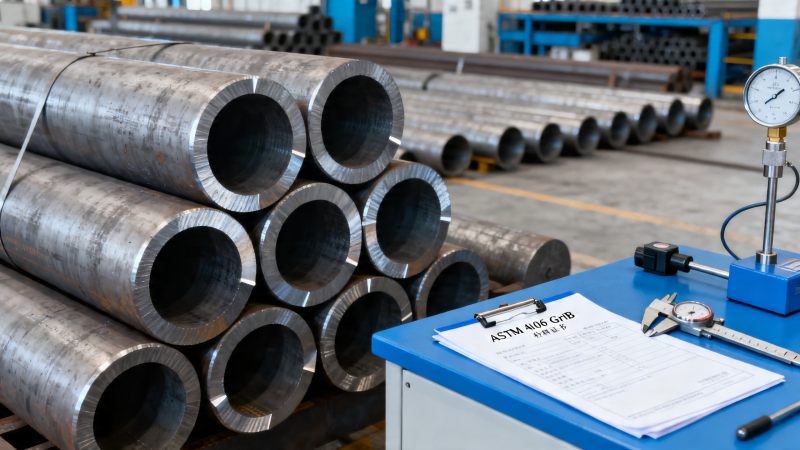
ASTM A106 Grade B is a seamless carbon steel pipe specification widely used for high-temperature service. In practice, it is commonly selected for refineries, power plants, process piping, boilers, pressure lines, and industrial systems where reliability under heat and pressure matters. The key point is that ASTM A106 Gr B pipe is defined not only by chemistry and strength, but also by manufacturing route, testing, dimensions, and marking requirements.
A frequent sourcing mistake is treating ASTM A106 Gr.B as interchangeable with any carbon steel pipe. It is not. The seamless requirement alone changes cost, lead time, and application suitability. In many projects, the difference between seamless and welded pipe affects both engineering approval and inspection plans. If the purchase order only says “carbon steel pipe, Grade B,” the supplier may quote a different standard, creating rework risk from day 1.
Another issue is that ASTM A106 Grade B is often compared with ASTM A53 Grade B and API 5L grades. While these materials may overlap in some applications, they are not identical in intended service or specification details. Buyers should verify at least 4 dimensions before approval: service temperature, pressure class, manufacturing method, and required inspection documents. Missing any one of these can affect project acceptance and total installed cost.
Core scope of the specification
The standard typically applies to NPS 1/8 to NPS 48 seamless pipe, although actual production range depends on the mill. Wall thickness requirements follow the ordered schedule or special thickness agreement. In international sourcing, lead time can vary from 3 to 8 weeks depending on diameter, thickness, quantity, and whether normalizing or additional testing is required.
- Primary use: high-temperature and pressure-related service
- Manufacturing route: seamless carbon steel pipe
- Typical documents: mill test certificate, dimensional report, marking details, and sometimes third-party inspection records
- Key checkpoints: chemical composition, tensile properties, hydrostatic or NDT testing, size tolerance, and end finish
The following table helps clarify where ASTM A106 Gr.B sits in day-to-day purchasing decisions and why a simple grade match is often insufficient.
The practical conclusion is clear: ASTM A106 Gr.B should be read as a full technical and inspection package, not as a strength label alone. Once teams align on this point, quotation comparison becomes faster and more reliable.
ASTM A106 Gr B Chemical Composition and Mechanical Properties Without Confusion
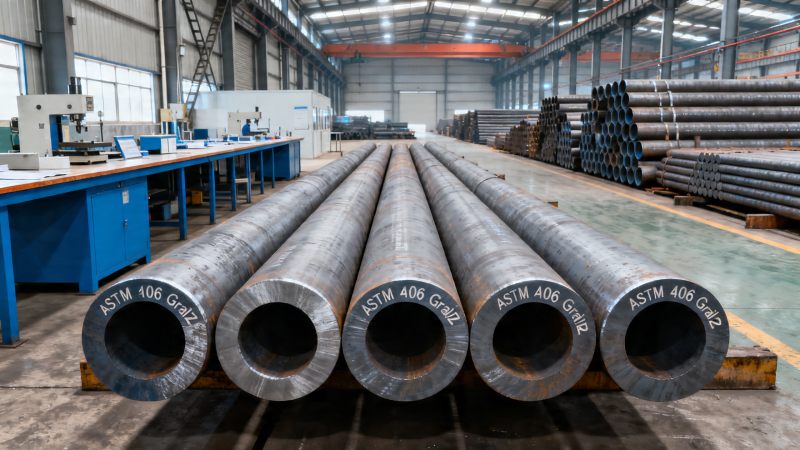
Many costly mistakes begin with incomplete interpretation of ASTM A106 Gr B chemical composition. Buyers sometimes focus only on carbon content and assume that if the material is “carbon steel,” it will behave similarly across all fabrication and service conditions. In reality, chemistry affects weldability, toughness trend, forming response, and performance stability. ASTM A106 Grade B typically includes maximum limits such as carbon 0.30%, manganese 0.29% to 1.06%, phosphorus 0.035%, sulfur 0.035%, silicon at least 0.10%, and copper, nickel, chromium, molybdenum, and vanadium within controlled combined limits.
ASTM A106 Gr B mechanical properties are equally important. Common minimum values include tensile strength of 60 ksi, or about 415 MPa, and yield strength of 35 ksi, or about 240 MPa. These numbers are often enough for initial comparison, but they do not tell the full story. Procurement teams should also confirm elongation requirements, pipe size impact, and whether the supplied pipe condition matches the intended fabrication process such as bending, beveling, threading, or welding into a pressure system.
Technical evaluators should remember that compliance depends on both lab results and production consistency. One accepted heat does not guarantee that the entire shipment performs the same way if traceability, batch segregation, or test sampling is weak. That is why quality teams usually request heat number traceability and review the mill test certificate line by line rather than checking only the grade name.
Key values to verify before issuing a PO
The table below summarizes the most referenced values in routine purchase and technical review. Actual project acceptance should still follow the latest applicable edition of the standard and project specifications.
For operators and fabrication teams, these values translate into practical shop-floor outcomes. A pipe that meets chemistry but has poor dimensional consistency may still slow fit-up. A pipe that meets strength but arrives with incomplete testing records may still be rejected by QA. Good purchasing decisions therefore combine 3 layers: material data, dimensional data, and documentation control.
A mid-project sourcing note on related steel products
Although ASTM A106 Gr.B concerns seamless pipe, many industrial buyers source multiple steel categories from one supplier group to reduce coordination time and document handling. For example, auxiliary fabrication parts, stamped covers, enclosures, or formed components in industrial projects may require cold-rolled sheet or plate products with controlled surface quality and forming performance. In those cases, High Carbon Steel Plate may be reviewed alongside structural sections and pipe-related materials when the project includes rails, switchboards, chassis parts, roof panels, or shaped components.
When evaluating such related products, buyers normally check size ranges such as width 100 mm to 3000 mm, length 1 m to 12 m, and thickness 0.1 mm to 400 mm, together with surface finish, hardness code, and applicable standards like ASTM, JIS, EN, or ISO. The benefit is not substitution with ASTM A106 pipe, but better sourcing coordination across 2 to 4 material families in one project package.
How to Judge ASTM A106 Gr.B Equivalent Grades and Avoid Wrong Substitutions
One of the most searched questions is about ASTM A106 Gr.B equivalent material. This is where many teams make a technical shortcut that becomes expensive later. An equivalent grade is rarely a perfect one-to-one replacement. It may be close in tensile strength, similar in chemistry range, or accepted in certain regions for comparable service, but that does not mean it matches the original standard in manufacturing route, inspection scope, or code approval.
In global procurement, buyers often compare ASTM A106 Gr.B with ASTM A53 Gr.B, API 5L Grade B, or some EN and JIS carbon steel pipe grades. The comparison can be useful at the pre-quotation stage, especially when lead time pressure is high and project teams need 2 or 3 alternatives. However, substitution should be approved only after checking design code, operating temperature, test method, and client specification. A lower-priced offer can become 15% to 30% more expensive once reinspection, paperwork revision, and delivery delay are added.
A smart evaluation process starts with asking why the alternative is being proposed. Is it for lower cost, shorter lead time, better local availability, or a code-driven preference? The answer determines the level of engineering review needed. For example, if the service is moderate and the project specification allows alternatives, comparison may be straightforward. If the line operates at elevated temperature or falls under strict owner approval, the review must be much deeper.
Comparison points that should never be skipped
- Check whether the alternative is seamless, welded, or available in both forms.
- Confirm minimum tensile and yield strength, not just grade naming similarity.
- Review temperature service suitability and any code limitations.
- Compare test requirements, including hydrostatic test, NDT, flattening, and tensile testing.
- Verify document acceptance: MTC format, marking, traceability, and third-party inspection if required.
The table below gives a practical screening framework rather than a final engineering approval matrix.
The key takeaway is that “equivalent” should be treated as a review topic, not as an automatic replacement right. This is especially important for distributors, resellers, and project procurement teams handling multi-country deliveries with different acceptance practices.
ASTM A106 Gr B Pipe Requirements in Orders, Inspection, and Delivery
Even when the grade is technically correct, purchase orders often fail because the order details are incomplete. ASTM A106 Gr B pipe requirements should be translated into a clear PO format covering nominal size, schedule or wall thickness, length, ends, quantity, test requirements, and documentation. If one of these details is missing, quotation comparisons become inconsistent and suppliers may interpret the order differently.
For example, a project asking for “ASTM A106 Gr.B pipe” without specifying random length or fixed length can receive offers with different price structures. Fixed lengths may increase cost because cutting, yield loss, and sorting become more demanding. Likewise, special end conditions such as beveled ends, caps, varnish, color marking, or bundling instructions affect handling and delivery readiness. On export orders, packing details can change loading efficiency by 5% to 10%.
Quality teams should also align test expectations before production starts. Depending on the order and applicable edition, inspection may include tensile testing, flattening or bend testing, hydrostatic test or nondestructive electric testing, dimensional checks, and visual examination. For larger projects, third-party inspection at mill stage can reduce disputes later, especially for shipments crossing 2 or more customs jurisdictions.
A practical 5-step order control method
- Define technical scope: grade, size, schedule, service condition, and governing standard edition.
- Define supply condition: seamless requirement, end finish, length type, coating if any, and marking method.
- Define inspection scope: MTC, dimensional report, hydro/NDT, third-party witness, and traceability level.
- Define commercial scope: quantity tolerance, delivery term, packing, lead time, and claim window.
- Define acceptance scope: required documents before shipment and on-arrival inspection checklist.
What experienced buyers ask suppliers before approval
Reliable suppliers should be able to explain production capability by diameter and thickness range, standard compliance, and typical lead time. For export projects, buyers often ask about 20-foot and 40-foot container loading plans, bundle protection, and whether split shipments are possible. These details matter because late clarification often causes 7 to 14 days of avoidable delay.
Companies such as Hongteng Fengda, as a structural steel manufacturer and exporter from China, are often evaluated not only on price but on their ability to support standard-based sourcing, customized steel processing, and consistent quality documentation across global projects. For buyers managing structural sections together with pipe-related procurement, stable production planning and cross-standard familiarity can reduce coordination risk and improve project timing.
When the order is documented correctly, the project gains three benefits: fewer technical clarifications, faster supplier comparison, and lower rejection risk at receiving stage. That is usually more valuable than a small unit-price difference.
Common Mistakes, FAQ, and Safer Buying Decisions for Global Steel Projects
The most common ASTM A106 Grade B mistakes are surprisingly basic. Teams rely on old specifications, compare only price per ton, accept “equivalent” wording without approval, or skip review of testing and marking details. In international trade, these mistakes can lead to nonconforming deliveries, reinspection charges, fabrication delays, or project disputes between procurement and engineering teams.
The good news is that most of these issues are preventable. Buyers who use a structured review process typically reduce clarification cycles and avoid rushed substitutions. Below are several frequently asked questions that reflect real sourcing concerns from distributors, EPC teams, fabricators, and end users.
How should I compare ASTM A106 Gr.B quotations from 2 or 3 suppliers?
Compare 6 items at minimum: seamless confirmation, chemistry and mechanical property compliance, size tolerance, testing scope, document package, and delivery condition. If one supplier is 8% cheaper but does not include the same inspection or packing scope, the offer is not directly comparable.
Is ASTM A106 Gr.B always the right choice for high-temperature service?
Not always. It is widely used for high-temperature service, but final suitability depends on design temperature, pressure, code requirements, and owner specification. The right decision should involve engineering review, especially when the system has critical pressure or safety implications.
What documents should be requested before shipment?
At minimum, request the mill test certificate, packing list, marking details, and dimensional confirmation. For stricter projects, add third-party inspection reports, NDT or hydro test records, and heat number traceability sheets. Reviewing these 3 to 7 days before dispatch gives time to solve discrepancies without holding cargo.
What is the safest way to handle ASTM A106 Gr.B equivalent proposals?
Treat every equivalent proposal as a controlled technical deviation. Ask for side-by-side data on strength, chemistry, manufacturing route, test scope, and code acceptance. Do not approve substitution based only on a sales statement or a generic data sheet.
Reading ASTM A106 Gr.B correctly means understanding more than a grade label. It requires a full view of chemistry, mechanical properties, equivalent-grade limits, pipe requirements, inspection scope, and commercial delivery details. For buyers, engineers, and project leaders, this approach reduces sourcing risk and protects both schedule and budget.
If you are sourcing steel for construction, industrial, or manufacturing projects and need support on standard-based material selection, export supply coordination, or customized structural steel solutions, now is the right time to review your specification strategy. Contact Hongteng Fengda to discuss your requirements, request a tailored quotation, or explore more steel supply solutions for your next project.
Please give us a message


Please enter what you want to find