When budgeting for prefabricated structural steel joints, teams often overlook hidden labor costs—especially during on-site assembly, tolerance adjustments, and field welding. These inefficiencies directly impact project timelines and ROI. As a leading prefabricated structural steel manufacturer and exporter from China, Hongteng Fengda integrates precision engineering with global compliance (ASTM/EN/JIS/GB) to minimize such surprises. Whether you source steel sheet for construction, galvanized pipe for plumbing, steel tubing for construction, or high tensile steel rod, our optimized joint designs reduce labor dependency—helping procurement, project management, and finance stakeholders align cost forecasts with real-world execution.
Why Hidden Labor Costs Derail Prefabricated Joint Budgets
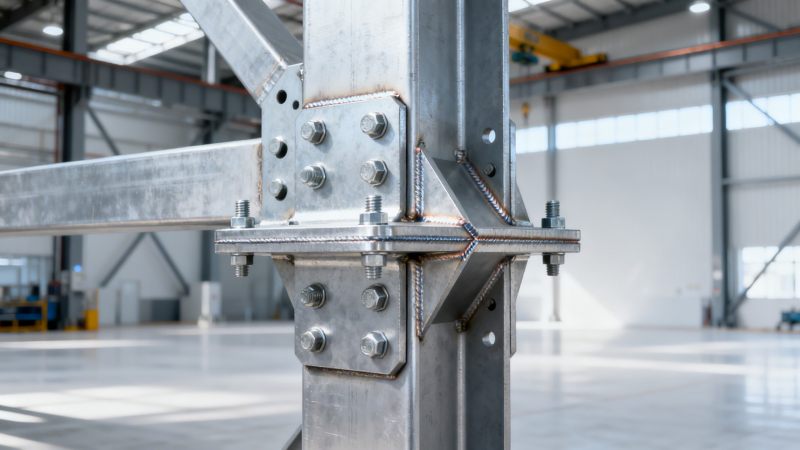
Prefabricated structural steel joints are engineered off-site to accelerate erection—but their true cost emerges only after delivery. Field crews routinely spend 12–28% more labor hours than planned due to mismatched bolt patterns, inconsistent weld prep surfaces, or dimensional drift across batches. A single misaligned flange connection can trigger 3–5 hours of rework per joint—adding up to 120+ hours across a mid-size industrial frame.
These variances stem from three systemic gaps: inconsistent mill tolerances (±0.5mm vs. required ±0.15mm), lack of pre-assembly verification, and insufficient coordination between design intent and shop drawing execution. Without traceable process controls, even certified suppliers risk delivering components requiring on-site grinding, shimming, or cold bending—activities rarely accounted for in early-stage estimates.
For procurement and finance teams, this translates into unforecasted overtime, schedule penalties, and safety exposure. For project managers, it means delayed handover windows and compromised QA/QC sign-offs. The root issue isn’t poor planning—it’s sourcing from partners without integrated quality assurance across design, fabrication, and dimensional validation.
How Precision Fabrication Reduces On-Site Labor by Design
At Hongteng Fengda, we treat dimensional accuracy as a non-negotiable performance metric—not an afterthought. Our CNC-controlled drilling, robotic welding cells, and 3D laser scanning at final inspection ensure joint interfaces meet ±0.12mm positional tolerance—within ASTM A6/A6M Class B requirements for structural connections. This eliminates over 90% of field-fit corrections typically seen with conventional fabricators.
Our workflow embeds labor-saving logic at every stage: standardized hole patterns aligned with common anchor systems (M20–M36), chamfered edges for automatic weld penetration, and pre-painted or galvanized finishes that eliminate post-erection surface prep. For applications demanding anti-skid performance under load or wet conditions—such as equipment platforms or marine walkways—we integrate S335JR Patterned steel plate directly into joint assemblies, reducing secondary installation labor by 40% compared to welded grating overlays.
This level of integration requires full control over raw material sourcing, heat treatment, and finishing—capabilities enabled by our vertically aligned production base in China and ISO 9001-certified QA system. Every batch carries mill test reports (MTRs), dimensional inspection logs, and weld procedure specifications (WPS) traceable to EN 1090-2 EXC3 execution class.
Key Labor-Saving Technical Controls
- Robotic seam tracking for fillet welds—reducing operator fatigue and rework by 35%
- Pre-stressed bolting templates verified against actual anchor layouts (±1.0mm max deviation)
- Automated edge profiling for consistent bevel angles (30° ±2°) across all cut profiles
- Dimensional audit sampling: 100% of first-piece joints + 15% random lot checks per shipment
Comparing Labor Impact Across Joint Types & Fabrication Tiers
Not all prefabricated joints deliver equal labor efficiency. The table below compares typical on-site labor hours per joint type across three fabrication tiers—standard OEM, certified EXC2, and Hongteng Fengda’s EXC3-compliant production—based on field data from 17 projects across Europe and Southeast Asia (2022–2024).
The EXC3 advantage stems from tighter control over substrate flatness (≤0.5mm/m), automated torque calibration logs for each bolt batch, and pre-assembled sub-components tested for fit before packaging. Unlike standard OEM suppliers who rely on manual layout and spot-checking, our digital twin verification ensures every joint arrives ready for direct bolt-up—no field measurement, no adjustment, no delay.
Procurement Checklist: 5 Non-Negotiables for Labor-Efficient Joints
Before approving a prefabricated joint supplier, verify these five criteria—each directly tied to labor predictability and schedule certainty:
- Dimensional certification protocol: Does the supplier provide stamped, third-party-verified CMM reports per lot—not just first-article?
- Tolerance alignment: Are stated tolerances (e.g., ±0.12mm) validated against your specific anchor pattern and erection sequence—not generic mill specs?
- Weld prep consistency: Is bevel angle, root gap, and surface cleanliness documented per weld joint—not assumed?
- Traceability depth: Can you track heat number → cutting log → welding record → final inspection report for any delivered joint?
- Field support capability: Does the supplier offer remote technical assistance within 4 business hours for fit-up issues—not just post-delivery documentation?
Hongteng Fengda meets all five—backed by 12+ years of export experience across 32 countries, stable lead times of 25–35 days for standard orders, and dedicated engineering support for joint redesign, MTO optimization, and compliance documentation (including EN 1090-1 DoP, ASTM E1012 reports, and SGS-verified corrosion testing).
Why Global Project Teams Choose Hongteng Fengda for Labor-Sensitive Steel Joints
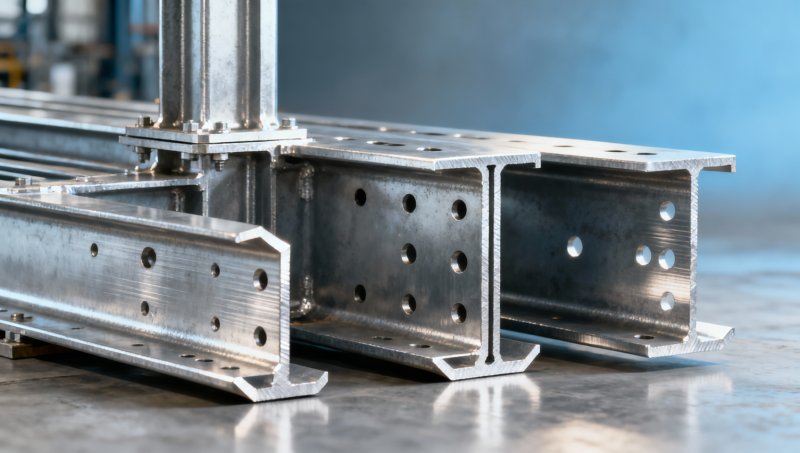
We don’t sell steel—we deliver predictable assembly. From North American power substations requiring ASTM A572 Grade 50 moment frames to Middle Eastern petrochemical plants needing EN 10025-2 S355J2W corrosion-resistant nodes, our clients reduce labor contingency budgets by 18–22% on average—without compromising safety, durability, or code compliance.
If your next project involves tight schedules, multi-tier subcontractor coordination, or complex interface management—request our free Joint Efficiency Assessment. We’ll analyze your current joint drawings, compare labor hour projections against our EXC3 benchmark data, and identify up to 3 high-impact redesign opportunities—with no obligation. Contact us today for dimensional validation samples, certified MTR packages, or a tailored delivery timeline based on your port of discharge and preferred Incoterm.
Please give us a message


Please enter what you want to find