Pre-Galvanized Sheet: When It Saves Cost and When It Doesn’t
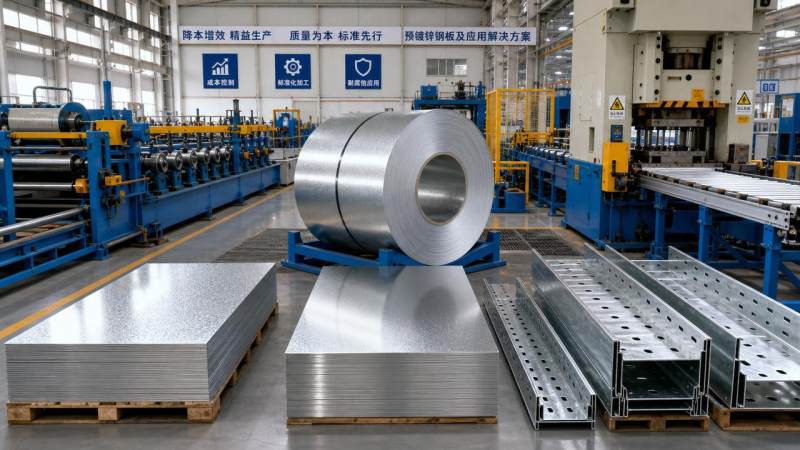
For cost-focused buying decisions, pre-galvanized sheet often appears to be a simple budget win.
The base price is usually lower than many post-treatment options.
Lead times can also be shorter.
That sounds attractive when every line item is under review.
But real cost control is not only about purchase price.
It depends on processing losses, corrosion exposure, rework risk, and service life.
That is where pre-galvanized sheet can either protect margins or quietly erode them.
In practical sourcing, the better question is simple.
Will pre-galvanized sheet reduce total landed and lifecycle cost for this exact use?
The answer changes with environment, fabrication steps, and expected maintenance burden.
What Pre-Galvanized Sheet Really Means in Cost Terms
Pre-galvanized sheet is steel sheet coated with zinc before final fabrication.
It is usually produced in continuous coil processing.
This production method supports stable output and competitive unit pricing.
From a financial angle, that matters for three reasons.
- Lower initial material cost than many hot-dip galvanized fabricated parts.
- Faster procurement for standard gauges and widths.
- Less dependence on secondary coating schedules.
However, pre-galvanized sheet has a built-in limitation.
When you cut, punch, weld, or bend it, exposed edges may lose protection.
So the purchase price advantage can shrink if extra treatment becomes necessary later.
When Pre-Galvanized Sheet Usually Saves Cost
Pre-galvanized sheet performs best when the application is moderate in exposure and simple in processing.
In those cases, it often delivers clear cost efficiency.
1. Indoor or Low-Corrosion Environments
For ducting, light framing, cable trays, ceiling systems, and interior partitions, pre-galvanized sheet is often enough.
The zinc layer provides practical protection without paying for over-specification.
This is where cost savings are most visible.
2. High-Volume Standardized Parts
If dimensions, shapes, and tolerances are repetitive, pre-galvanized sheet supports efficient production planning.
It reduces manufacturing delays and can improve material yield in roll forming or stamping lines.
3. Projects Sensitive to Lead Time
From recent supply changes, speed has become a cost factor by itself.
Pre-galvanized sheet is often easier to source quickly in common specifications.
That can reduce delay penalties, storage pressure, and emergency purchasing.
4. Budget-Controlled Projects With Defined Service Life
Not every project needs the longest possible corrosion performance.
If the use cycle is known and maintenance access is easy, pre-galvanized sheet may be the smarter spend.
In short, it saves cost when protection level matches actual exposure, not worst-case assumptions.
When Pre-Galvanized Sheet Does Not Save Cost
The bigger signal is this.
Pre-galvanized sheet becomes expensive when it creates hidden downstream costs.
1. Outdoor or Aggressive Environments
Coastal air, industrial pollution, standing moisture, and chemical contact shorten coating life.
In those conditions, pre-galvanized sheet may require replacement earlier than expected.
That shifts savings into future repair cost.
2. Heavy Fabrication After Purchase
If the material will be cut repeatedly, deeply formed, or welded often, edge exposure increases.
That means touch-up work, coating repair, quality checks, and possible rejection risk.
At that point, lower sheet price no longer tells the full story.
3. Projects With High Warranty Exposure
If corrosion failure could trigger penalties or brand damage, pre-galvanized sheet may not be the lower-risk choice.
The cheaper input can become the costlier decision.
4. Long-Life Infrastructure Expectations
For assets expected to perform for decades with limited maintenance, material choice should follow lifecycle economics.
In that context, pre-galvanized sheet may underperform compared with stronger protective systems.
The Real Approval Checklist for Cost Decisions
A reliable approval process should compare total cost, not just quoted price.
This simple checklist makes pre-galvanized sheet decisions more accurate.
- Define the service environment clearly.
- Estimate how much cutting, punching, and welding will occur.
- Compare coating repair costs after fabrication.
- Include maintenance access and replacement difficulty.
- Review warranty exposure and failure consequences.
- Check lead time value against project schedule pressure.
This also means supplier capability matters more than many teams expect.
A dependable manufacturer helps reduce sourcing risk through consistent quality and standard compliance.
That can protect budgets as effectively as negotiating a lower unit price.
How Supplier Strength Affects the Cost Outcome
In actual business, material selection and supplier selection are closely linked.
A capable structural steel partner can help align specification with end use.
That reduces the risk of paying for unnecessary protection or underbuying durability.
Hongteng Fengda, as a structural steel manufacturer and exporter from China, supports this approach with stable production and strict quality control.
Its product range covers angle steel, channel steel, steel beams, cold formed steel profiles, and customized structural steel components.
Compliance with ASTM, EN, JIS, and GB standards also helps buyers compare options on a clearer basis.
For projects that combine sheet materials with other steel items, sourcing coordination can improve purchasing efficiency.
That includes related products such as 45# Carbon Steel Round Bar for construction, handrail, staircase, furniture, water supplying, and other fabrication needs.
A Practical Comparison Table
A Smarter Way to Judge Pre-Galvanized Sheet
Pre-galvanized sheet is neither always economical nor automatically risky.
It saves cost when the environment is moderate, fabrication is controlled, and project timing matters.
It does not save cost when corrosion exposure is harsh, processing is heavy, or failure consequences are expensive.
The most reliable approval logic is to test pre-galvanized sheet against total ownership cost.
That includes procurement, fabrication, maintenance, replacement, and schedule risk.
When those factors are reviewed together, the right material choice becomes much clearer.
If the goal is stable sourcing with controlled risk, strong supplier support also becomes part of the savings model.
That is usually where better procurement decisions start.
Please give us a message


Please enter what you want to find