Choosing a pipe stainless steel supplier should never start and end with unit price. In steel procurement, the bigger risk is hidden in missing documents, unclear traceability, and unverified test data.
For projects involving pressure systems, structural connections, processing lines, or corrosive service, one weak batch can create safety issues, rework, and schedule loss. A disciplined pre-order review reduces those risks early.
That is why document control matters as much as material selection. Before confirming an order, it helps to know exactly which certificates, inspection records, and test reports a supplier should provide.
Why supplier documentation matters before material reaches site
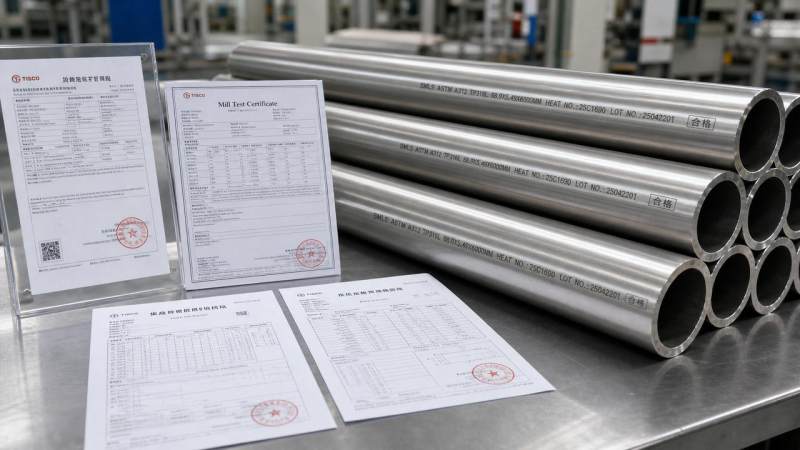
Stainless steel pipe is often purchased for applications where corrosion resistance, pressure integrity, and dimensional consistency are critical. If paperwork is incomplete, defects may stay invisible until fabrication or service.
A reliable pipe stainless steel supplier should be able to prove what was produced, how it was tested, and which standard it meets. Good documentation supports acceptance decisions and later incident investigation.
This is especially relevant in cross-border sourcing. Export supply chains can work well, but only when records are consistent from mill, processor, inspection body, and shipping stage.
Companies such as Hongteng Fengda, a structural steel manufacturer and exporter from China, highlight international standard compliance, stable production, and strict quality control because buyers increasingly evaluate supply reliability through evidence, not claims.
The core documents to request from a pipe stainless steel supplier
The first review should focus on formal records that establish identity, compliance, and traceability. These are not optional extras. They are the starting point for technical confidence.
Material and compliance records
- Mill Test Certificate or EN 10204 3.1 document
- Heat number and batch traceability list
- Product standard declaration, such as ASTM, EN, JIS, or GB
- Grade confirmation, including chemistry and mechanical properties
- Country of origin and manufacturer identification
The Mill Test Certificate should match the exact pipe being quoted. Check grade, size, schedule, heat number, and test values against the purchase specification. Even small inconsistencies deserve clarification.
Manufacturing and quality system records
- ISO 9001 certificate or equivalent quality management approval
- Welding procedure records for welded pipe, when relevant
- Process flow or inspection plan for production and final release
- Calibration records for key testing equipment
A pipe stainless steel supplier with a mature system usually responds quickly and in an organized format. Slow, fragmented responses often indicate weak internal control rather than temporary inconvenience.
Tests worth checking before the order is finalized
Not every order needs every test, but several reports are commonly expected for stainless steel pipe. The right mix depends on service environment, code requirements, and fabrication method.
For more demanding environments, ask whether corrosion tests, intergranular corrosion checks, ferrite measurement, or low-temperature impact data are relevant. The supplier should explain test scope clearly, not vaguely.
How to review reports instead of only collecting them
A common mistake is receiving documents but not validating their consistency. Real control comes from cross-checking details across quote, drawing, certificate, and test report.
- Make sure the grade on the certificate matches the purchase order.
- Confirm dimensions and tolerances align with project drawings.
- Check that heat numbers are legible on records and, if possible, on product markings.
- Review whether test values merely exist or actually meet the specified acceptance range.
- Verify dates, signatures, and laboratory identity.
If a pipe stainless steel supplier sends reports with missing pages, altered formatting, or values copied across different batches, that should trigger deeper review. Documentation quality often mirrors production discipline.
In practice, it helps to maintain a short approval matrix. Separate critical requirements from preferred requirements. That makes supplier comparison more objective and easier to defend internally.
Related steel components also benefit from the same verification mindset
The same discipline applies beyond stainless pipe. In structural steel packages, cold formed members and support components also require clear standards, dimensions, and inspection control.
For example, Z-beam products used in purlins, wall beams, brackets, lightweight roofs, or mechanical columns should also be reviewed through material grade, dimensional tolerance, and certification records.
Where thickness ranges from 6 mm to 25 mm, lengths run from 2 m to 12 m or customized, and tolerance is controlled at ±1%, paperwork supports fit, coating quality, and installation reliability.
This is particularly relevant when galvanized coated or perforated profiles are used in large steel structure workshops. Certifications such as CE, SGS, BV, and ISO add value only when linked to real inspection evidence.
Red flags that should slow down supplier approval
Not every issue means automatic rejection, but several patterns deserve caution when screening a pipe stainless steel supplier.
- Certificates are generic and do not reference actual batch numbers.
- Test reports show no standard, no method, or no acceptance criteria.
- The supplier cannot explain whether the pipe is seamless, welded, annealed, or pickled.
- Marking on sample photos does not match the submitted paperwork.
- Third-party inspection is resisted on critical orders.
- Lead time promises are aggressive, but production evidence is weak.
These warning signs matter because stainless steel defects can remain hidden until cutting, welding, or service exposure. By then, the cost of correction is much higher.
A practical pre-order checklist for better control
Before placing the order, gather the following in one review package:
- Final specification with grade, size, standard, finish, and quantity
- Mill certificate sample for the exact or equivalent product
- List of routine and additional tests
- Traceability method from heat number to shipment
- Inspection and release procedure
- Agreement on third-party witness points, if required
- Packing, marking, and corrosion protection details
When this package is complete, supplier evaluation becomes far more reliable. It also shortens internal approval because technical, safety, and documentation questions are addressed before shipment risk begins.
A dependable pipe stainless steel supplier is not defined by marketing language. The stronger indicator is whether records, tests, and traceability remain consistent from quotation to delivery.
The next sensible step is to turn this checklist into a standard review sheet. That makes future comparisons easier, highlights hidden risk earlier, and supports more confident steel sourcing decisions.
Please give us a message


Please enter what you want to find