Minimum order quantity for steel rods is becoming a faster pricing trigger
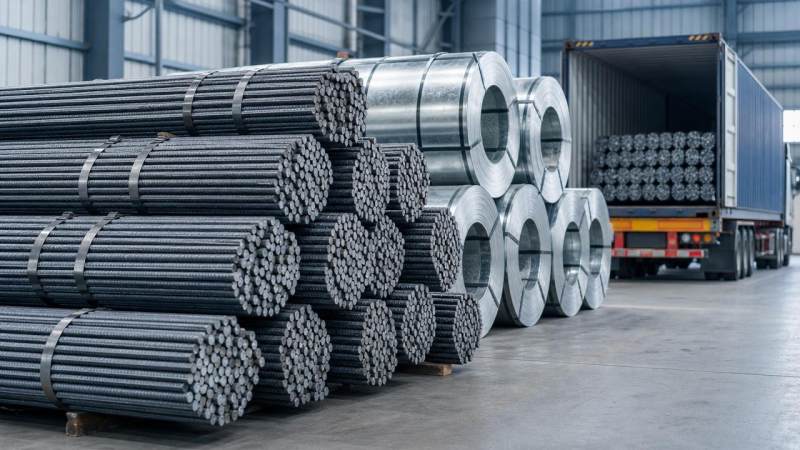
For procurement teams, understanding the minimum order quantity for steel rods is essential because it can quickly change unit pricing, inventory pressure, and project budgeting. When sourcing from a reliable structural steel manufacturer in China, buyers need to balance MOQ, quality standards, customization, and delivery stability to achieve better cost control and reduce supply chain risk.
In the steel sector, the minimum order quantity for steel rods is no longer a minor commercial detail. It has become a practical decision point that directly affects ex-works pricing, shipping efficiency, mill scheduling, and even project cash flow. As construction schedules tighten and steel price volatility remains visible across global markets, a mismatch between required quantity and supplier MOQ can raise the real unit cost much faster than many buyers expect.
This trend is especially relevant when the order includes custom grades, special diameters, non-standard lengths, or mixed specifications. In these cases, the minimum order quantity for steel rods often reflects production realities such as rolling line setup, raw material batching, galvanizing arrangement, inspection workload, and container utilization. Understanding these factors helps buyers make better sourcing decisions instead of focusing only on the quoted price per ton.
Market signals show MOQ is influencing steel rod sourcing earlier in the buying cycle
A noticeable shift in global steel procurement is that MOQ discussions now happen earlier, sometimes before technical confirmation is fully completed. This change reflects a market where lead time, freight cost, and inventory cost are increasingly linked. If the minimum order quantity for steel rods is too high for the immediate project need, the buyer may face excess stock, delayed capital turnover, and higher warehousing exposure. If it is too low, the supplier may charge a premium because setup and logistics are spread over fewer tons.
For standard structural steel products, mills can usually offer more competitive terms when order quantities align with regular production runs. However, for project-based steel rods, fabricated components, or export shipments with mixed loading plans, MOQ becomes a cost lever. This is one reason many global buyers are turning to Chinese structural steel suppliers with broader production capabilities, because flexible processing, stable output, and export experience can soften the impact of the minimum order quantity for steel rods.
Why the minimum order quantity for steel rods changes cost so quickly
The relationship between MOQ and unit cost is driven by several production and supply chain mechanisms. Even when the material itself is similar, the commercial result can change significantly depending on whether an order fits a standard manufacturing window.
In practical terms, the minimum order quantity for steel rods often determines whether the order can be treated as part of a routine mill schedule or as a special production task. That is why a small difference in tonnage can produce a noticeably different offer.
The impact extends beyond rod pricing to related steel product planning
Another important market signal is that MOQ decisions are affecting broader material coordination, not just steel rods. Many projects now combine rods, sections, coils, and fabricated steel parts in one sourcing strategy. When buyers align these categories under one supplier, they may gain better planning flexibility and reduce the negative effect of the minimum order quantity for steel rods.
For example, corrosion-resistant materials are increasingly considered alongside structural items in industrial and construction applications. In some cases, adding compatible galvanized steel products to a shipment can improve loading utilization and support a more efficient purchasing structure. A useful example is Gi Coil, available in G40 galvanized steel with thickness from 0.12mm to 3.5mm and width from 600mm to 1500mm, with standards including ASTM, JIS, EN, DIN, and GB. Its zinc coating options and corrosion-resistance advantages make it relevant for moisture-prone environments, especially when projects aim to extend service life while consolidating multiple steel categories in one export plan.
This kind of integrated sourcing does not eliminate the minimum order quantity for steel rods, but it can reduce total landed cost pressure by making production scheduling, packaging, and container use more efficient.
Different business stages feel MOQ pressure in different ways
The minimum order quantity for steel rods affects several business stages, and each stage experiences the pressure differently.
- Budget planning: Early estimates may appear competitive until MOQ-adjusted pricing is applied. This can change total material assumptions and contingency needs.
- Specification finalization: Frequent design changes can create fragmented demand, making it harder to reach a cost-efficient minimum order quantity for steel rods.
- Inventory management: Buying above immediate consumption may lower the quoted unit price, but it increases storage cost, damage risk, and working capital lockup.
- Delivery coordination: Trying to avoid MOQ by splitting orders across suppliers may create uneven quality control and more schedule complexity.
- Compliance control: Smaller lots with many mixed items can complicate traceability, especially when ASTM, EN, JIS, or GB compliance is required for export projects.
This is why experienced sourcing teams increasingly evaluate MOQ together with lead time, standards compliance, and shipping logic rather than treating it as a simple negotiation point.
What deserves closer attention when comparing suppliers in China
A reliable structural steel manufacturer in China can provide more than a competitive quotation. The better benchmark is whether the supplier can explain the minimum order quantity for steel rods in operational terms and offer realistic ways to improve cost efficiency without weakening quality or delivery performance.
- Production flexibility: Check whether standard and custom steel products can be scheduled together.
- Standards coverage: Confirm support for ASTM, EN, JIS, and GB where needed.
- Export handling: Review packing, documentation, and container planning capability.
- Quality consistency: Ensure the supplier maintains stable mechanical properties and traceable inspection records.
- Customization threshold: Ask at what quantity custom diameter, length, coating, or processing becomes commercially viable.
- Lead time stability: A lower MOQ offer is not useful if it creates uncertain dispatch timing.
Hongteng Fengda, as a structural steel manufacturer and exporter from China, supports this kind of evaluation through stable production capacity, strict quality control, and broad experience in angle steel, channel steel, steel beams, cold formed steel profiles, and customized structural steel components. This matters because MOQ decisions are most effective when supported by dependable manufacturing and export execution.
A practical response strategy can reduce MOQ-related cost shocks
Instead of reacting to MOQ after receiving a quote, it is better to build an early response plan. The following approach can help manage the minimum order quantity for steel rods more effectively.
When these steps are used consistently, the minimum order quantity for steel rods becomes a manageable planning factor rather than a late-stage surprise.
The next sourcing advantage will come from earlier MOQ visibility
The broader trend is clear: in steel sourcing, pricing speed now depends heavily on planning quality. The minimum order quantity for steel rods is one of the earliest indicators of whether a project will benefit from efficient production, balanced inventory, and predictable logistics. Buyers that identify MOQ constraints early can negotiate from a stronger position, align technical requirements more realistically, and protect project margins with fewer last-minute adjustments.
If a project involves structural sections, steel rods, custom components, or galvanized materials, the best next step is to request a quotation framework that includes MOQ tiers, standards compliance, production lead time, and shipment optimization options together. That approach turns the minimum order quantity for steel rods into a strategic input for cost control rather than a hidden cause of unit price inflation.
Please give us a message


Please enter what you want to find