Understanding the mill order meaning for steel buyers is essential before confirming any structural steel purchase, especially when sourcing internationally. A mill order is more than a simple purchase request—it defines the steel grade, dimensions, standards, quantities, delivery terms, and quality requirements that directly affect project cost, compliance, and lead time. For procurement teams, knowing what to check in a mill order helps reduce sourcing risks, avoid specification errors, and ensure the supplier can deliver reliable steel products that match project expectations.
For global buyers, the practical issue is not only placing an order, but making sure every technical and commercial detail is clear before production starts.
In structural steel sourcing, one unclear dimension, missing standard, or incorrect tolerance can delay a project by 2–4 weeks and increase inspection costs.
What a Mill Order Means in Structural Steel Procurement
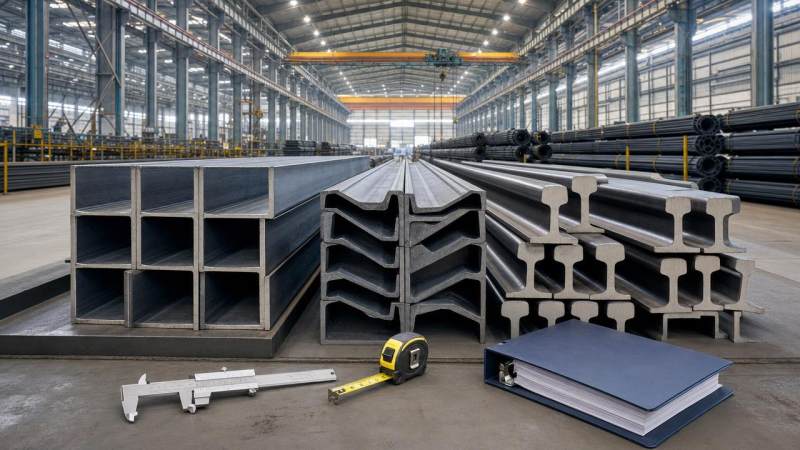
The mill order meaning for steel buyers is best understood as a production instruction confirmed between buyer and manufacturer before rolling, cutting, forming, or finishing.
It usually includes 6 core elements: material grade, product type, size range, quantity, applicable standard, and delivery condition.
Unlike a general purchase order, a mill order connects the buyer’s project specification with the steel mill’s manufacturing and quality control process.
Why Procurement Teams Should Review It Early
Early review helps procurement teams confirm whether the supplier can produce the requested steel under ASTM, EN, JIS, or GB requirements.
For example, steel beams, channel steel, angle steel, and cold formed profiles may require different tolerances, packaging methods, and inspection documents.
A mill order should be checked before deposit payment, because changes after production may cause scrap, rework, or shipment rescheduling.
Typical Information Included
- Product name and specification, such as I-beam, H-beam, channel, angle, flat bar, or custom profile.
- Steel grade and standard, including ASTM A36, EN S235, JIS SS400, GB Q235, or project-specific equivalents.
- Quantity and unit, normally stated in metric tons, pieces, bundles, or container load plans.
- Surface condition, such as black, galvanized, painted, oiled, or shot-blasted where required.
- Delivery terms, including FOB, CFR, CIF, EXW, lead time, port, and required shipment window.
When these items are aligned, the mill order becomes a practical risk-control document for both the buyer and the manufacturer.
Key Items Steel Buyers Must Check Before Confirmation
Understanding the mill order meaning for steel buyers becomes valuable when procurement teams convert it into a checklist for daily sourcing decisions.
The following table highlights critical checkpoints that should be reviewed at least 1 time internally and 1 time with the supplier.
The key conclusion is simple: a mill order should be treated as a technical contract, not a routine buying form.
Check Steel Grade and Standard Equivalence
Steel buyers often compare grades across markets, but equivalence is not always exact between ASTM, EN, JIS, and GB systems.
For structural applications, procurement teams should confirm yield strength, tensile strength, elongation, and impact requirements when the project specifies 2 or more standards.
Hongteng Fengda supports buyers with structural steel products manufactured under major international standards, helping reduce confusion in cross-border specifications.
Confirm Dimensions, Tolerances, and Cutting Requirements
Dimensions in a mill order should include nominal size, allowable tolerance, ordered length, and whether cutting, drilling, punching, or bending is required.
For many structural steel projects, a tolerance difference of ±1 mm to ±3 mm may determine whether components fit during assembly.
If the buyer needs OEM components, drawings should be reviewed before production, and any revision should be controlled through a written change record.
How Mill Orders Affect Cost, Lead Time, and Quality Control
The mill order meaning for steel buyers is closely linked to cost control because steel price depends on grade, section size, process, surface treatment, and volume.
A standard hot-rolled profile may be faster to supply, while a customized section may require tooling, drawing review, and 2–5 additional working days.
Commercial Terms That Should Not Be Overlooked
- Payment terms, including deposit ratio, balance payment timing, and document release conditions.
- Trade terms, such as FOB, CFR, CIF, or EXW, with named port and shipment responsibility.
- Packing method, including bundle weight, anti-rust protection, labels, and container loading limits.
- Inspection scope, such as dimensional check, mill test certificate, coating check, or third-party inspection.
These commercial details may look secondary, but they often influence total landed cost more than the quoted unit price alone.
Quality Documents to Request
A complete mill order should state which documents are needed before shipment, especially for construction, industrial, and manufacturing projects.
Common documents include mill test certificates, packing lists, commercial invoices, certificates of origin, inspection photos, and loading records.
For higher-risk orders, buyers may request third-party inspection at 3 stages: pre-production confirmation, in-process check, and pre-shipment inspection.
Practical Cost-Control Advice
Buyers should compare quotes using the same grade, standard, length, finishing condition, loading method, and Incoterms to avoid misleading price gaps.
When quotations differ by more than 5%–8%, confirm whether surface treatment, tolerance control, document requirements, or inland logistics are included.
Product-Specific Example: Rails and Special Structural Profiles
Special structural products require more detailed mill order review because profile geometry and application conditions directly affect performance and service life.
For example, Rail products may be used in railway systems, bridge railings, deck handrails, and industrial track applications.
A buyer should specify whether the product is intended to guide rolling stock wheels, bear wheel pressure, transfer loads, or provide a smooth rolling surface.
The table below shows the type of product details that should appear in a mill order for this category.
This example shows why technical descriptions must be precise; generic wording can lead to unsuitable material, incorrect profile selection, or installation problems.
When Customized Steel Components Are Required
Customized structural steel components should include drawings, 3D files if available, welding requirements, hole positions, and surface treatment notes.
Hongteng Fengda supplies standard specifications and OEM solutions for global construction, industrial, and manufacturing buyers seeking stable export support.
Common Mill Order Mistakes and How to Avoid Them
Many purchasing issues happen because buyers focus on unit price and overlook technical confirmation before the mill order is released.
For international sourcing, the safest approach is a 5-step review involving engineering, procurement, supplier sales, production, and quality teams.
Mistake 1: Using Only Product Names Without Standards
Terms such as “channel steel” or “steel beam” are not enough because sizes, grades, and tolerance systems vary by market.
A correct mill order should state the section type, standard reference, grade, dimensions, ordered quantity, and required certificate format.
Mistake 2: Ignoring Packaging and Loading Constraints
Long steel products may need bundle control, edge protection, moisture prevention, and container loading plans based on 20GP or 40HQ availability.
If length exceeds common container limits, buyers should confirm breakbulk shipment, special trucking, or cutting plans before production begins.
Mistake 3: Approving Without Final Drawing Review
For fabricated or cold formed profiles, final drawings should be signed or approved by email to avoid disputes after completion.
Even a small hole-position error can make 50 or 500 pieces unusable, depending on the assembly design and installation sequence.
A Practical Review Workflow for Global Steel Buyers
A clear workflow helps procurement teams turn the mill order meaning for steel buyers into daily operating discipline and supplier accountability.
The process below is suitable for standard structural steel orders, customized components, and repeat purchasing programs across multiple project sites.
Recommended 6-Step Confirmation Process
- Collect project specifications, drawings, quantity breakdown, and required delivery date.
- Ask the supplier to confirm manufacturability, standard compliance, and available stock or production cycle.
- Review quotation details, including unit price, weight calculation, packaging, Incoterms, and payment terms.
- Check the draft mill order against engineering requirements and procurement budget.
- Confirm inspection documents, mill test certificates, photos, and any third-party inspection requirement.
- Release the order only after all technical, commercial, and logistics details are documented.
This 6-step approach reduces back-and-forth communication and helps buyers control schedule risk during international steel sourcing.
What to Ask Your Steel Supplier
Before confirmation, ask whether the supplier has stable production capacity, experience with your target standard, and export documentation capability.
It is also reasonable to request estimated lead time, typical inspection schedule, available surface finishes, and packing photos from previous similar shipments.
Hongteng Fengda works with buyers across North America, Europe, the Middle East, and Southeast Asia, supporting stable lead times and consistent quality control.
Final Purchasing Advice for Mill Order Review
The mill order meaning for steel buyers is ultimately about reducing uncertainty before money, material, and time are committed.
A strong mill order should answer 4 basic questions: what steel is needed, how it is produced, how it is inspected, and when it ships.
For structural steel buyers, careful review protects project budgets, supports compliance, and improves communication between engineering, procurement, and suppliers.
Hongteng Fengda provides angle steel, channel steel, steel beams, cold formed profiles, and customized components for international construction and industrial projects.
If your team needs help reviewing specifications, confirming standards, or planning a reliable structural steel order, contact us to get a customized solution.
Please give us a message


Please enter what you want to find