Choosing the right metal wire for fencing can significantly affect outdoor durability, maintenance costs, and customer satisfaction. For distributors, agents, and wholesalers, the practical question is not simply whether a wire is “protected,” but which coating holds up longer in real outdoor service and under what conditions. In most cases, hot-dip galvanized wire offers the best balance of lifespan, cost efficiency, and broad market acceptance, while PVC-coated wire can extend service life further when the base galvanized layer is strong and the environment is not prone to coating damage. Electro-galvanized wire is usually the lower-cost option, but it tends to have a shorter outdoor life.
For buyers serving construction, agriculture, infrastructure, and residential markets, coating choice directly affects claim rates, repeat orders, and brand trust. A fence that fails early due to rust, peeling, or wire weakening creates more than a product issue; it becomes a business issue for everyone in the supply chain. That is why understanding coating thickness, processing quality, and matching the wire to climate and application is more important than comparing price alone.
This guide is written for distributors and channel partners who need clear, commercially useful answers. It focuses on how outdoor exposure affects common fencing wire coatings, what customers are most likely to ask, and how to make sourcing decisions that reduce risk while improving long-term value.
What Buyers Really Want to Know: Which Coating Lasts Longest Outdoors?
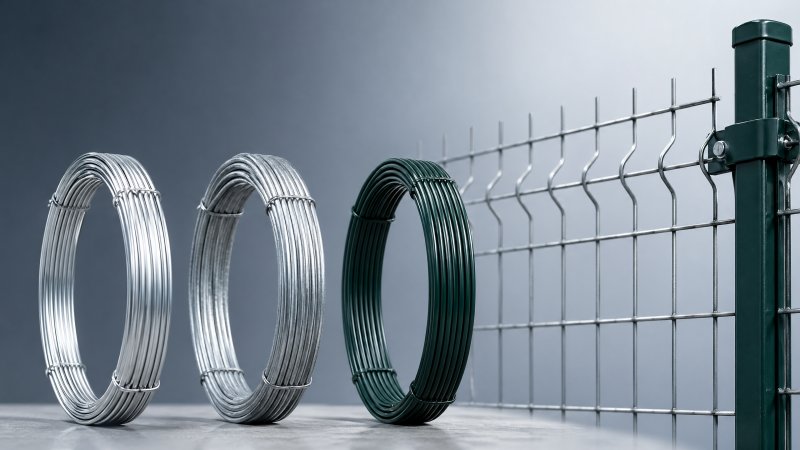
The short answer is this: hot-dip galvanized fencing wire generally lasts longer outdoors than electro-galvanized wire, and a well-made PVC-coated galvanized wire can perform even better in many environments if the plastic layer remains intact. However, the “best” choice depends on how the fence will be used, the local climate, and the expected service life your customer is willing to pay for.
From a distribution perspective, this is the key decision path. If the project needs reliable all-around corrosion resistance at a reasonable cost, hot-dip galvanized wire is often the safest recommendation. If the end user wants improved appearance, additional weather protection, or extra barrier performance in humid environments, PVC-coated galvanized wire may be the stronger option. If the project is highly price-sensitive and the expected service period is short, electro-galvanized wire may still have a place, but it should not be oversold as a long-life outdoor solution.
What matters most is that coating type is only one part of durability. Zinc coating weight, adhesion, wire base quality, manufacturing consistency, and handling during installation all influence outdoor performance. The most successful wholesalers are usually the ones who sell by application and service expectation, not by generic product label.
How the Main Fencing Wire Coatings Compare in Outdoor Conditions
There are three common coating approaches in the fencing market: electro-galvanized, hot-dip galvanized, and PVC-coated galvanized wire. Each serves a different price and performance segment. Understanding the differences helps you position the right product and avoid mismatched recommendations.
Electro-galvanized wire has a thinner zinc layer applied through an electroplating process. It usually has a cleaner and brighter appearance at the start, but because the zinc layer is relatively thin, it tends to lose corrosion resistance faster outdoors. In dry inland areas and short-life applications, it may be acceptable. In humid, rainy, coastal, or industrial environments, it is more vulnerable to early rusting.
Hot-dip galvanized wire is coated by immersing the wire in molten zinc, creating a thicker and more durable zinc layer. This gives stronger long-term corrosion protection, especially in open-air installations. For many distributors, this is the default commercial standard for outdoor fencing because it offers a more dependable balance of price and service life. It is widely used in chain link fence, field fence, welded wire mesh, barbed wire, and perimeter security systems.
PVC-coated galvanized wire adds an outer plastic layer over a galvanized steel wire core. This dual-layer concept can provide excellent weather resistance and visual appeal. The PVC surface helps isolate the wire from moisture and corrosive exposure, while the galvanized core gives backup protection if the outer layer is slightly damaged. However, long-term performance depends heavily on the quality of both the PVC and the underlying galvanizing. A weak core under a thick plastic cover is not a premium solution; it just hides the risk temporarily.
For most outdoor projects, the typical ranking is straightforward: electro-galvanized offers the shortest service life, hot-dip galvanized lasts longer, and high-quality PVC-coated galvanized wire can outperform both in suitable conditions. But in rough-use environments where abrasion, cutting, animal impact, or installation damage is common, exposed steel under a broken plastic layer can become a failure point. That is why specification quality matters more than marketing terms.
What Factors Have the Biggest Impact on Service Life?
When customers ask which metal wire for fencing lasts longer outdoors, they often expect a simple answer. In reality, service life depends on several interacting variables. The coating method matters, but the local environment often matters just as much.
The first major factor is climate exposure. Coastal areas with salt-laden air are much more aggressive than dry inland regions. High humidity, frequent rainfall, freeze-thaw cycles, and industrial pollution all accelerate corrosion. A wire that performs acceptably in a farm fence in a dry region may fail much earlier near the sea or in a chemical plant perimeter.
The second factor is zinc coating thickness. Two products may both be described as galvanized, yet their actual outdoor durability can be very different. Heavier zinc coating generally means longer time before red rust appears. This is why experienced importers ask for coating weight, test reports, and standard compliance rather than relying on product names alone.
The third factor is mechanical damage during transport and installation. If the coating is scratched, bent too sharply, or abraded during tensioning, the protective barrier can be compromised. PVC-coated wire is especially sensitive here: if the outer layer cracks or splits, water can reach the steel core. Good packaging, careful handling, and suitable installation practices all contribute to actual field life.
The fourth factor is wire design and application. Barbed wire, welded mesh, hexagonal wire netting, and chain link fabric do not all experience exposure in the same way. Weld points, cut ends, and high-tension areas can become corrosion initiation sites. For this reason, a coating system should be selected based on fence type as well as environment.
How Distributors Can Match Coating Type to End-Use Market
For channel buyers, the smartest way to reduce complaints is to segment recommendations by use case. Not every customer needs the highest-cost product, but every customer does need a coating that matches the application honestly.
For agricultural fencing, hot-dip galvanized wire is often the most practical option. It provides good outdoor life, reasonable cost control, and broad suitability for livestock fencing, field boundaries, and farm enclosures. If the site has high humidity or heavy vegetation contact, PVC-coated galvanized wire may be justified for a longer visual and functional life.
For residential and decorative fencing, PVC-coated galvanized wire is often attractive because appearance matters along with corrosion resistance. End users typically appreciate the cleaner look, common green or black finishes, and smoother surface. In these channels, the selling point is not only durability but also reduced maintenance and better aesthetic integration.
For infrastructure, industrial, and security fencing, hot-dip galvanized wire is usually the baseline standard because reliability is critical. If the site is coastal, heavily polluted, or exposed to chemical agents, buyers should consider heavier zinc coatings or additional protective systems. In these projects, lifecycle cost is more important than the lowest initial quotation.
Many distributors that also supply steel construction materials already understand this logic from other product categories. For example, corrosion protection is equally important in structural support systems and secondary framing components. In steel building applications, products such as C Beam Steel are commonly used in purlins, wall beams, lightweight roof trusses, and mechanical light industry structures, where galvanized surfaces help improve durability and reduce maintenance risk. The same sourcing principle applies to fencing wire: the right surface treatment should fit the environment, function, and service expectation.
In practical sales terms, this means your product mix should not be built around one “universal” fencing wire. A more effective strategy is to carry clearly positioned grades: economy outdoor wire for short-term use, standard hot-dip galvanized wire for mainstream demand, and premium PVC-coated galvanized wire for customers who want longer life or better visual finish.
How to Evaluate Suppliers Beyond the Basic Coating Label
One of the biggest sourcing mistakes is assuming that all galvanized or PVC-coated wires are comparable. They are not. For wholesalers and importers, supplier evaluation should focus on measurable quality points, not just surface appearance or unit price.
Start by confirming applicable standards and coating specifications. Ask about zinc coating weight, wire diameter tolerance, tensile properties, adhesion performance, and salt spray or corrosion testing where relevant. A supplier serving international markets should be able to discuss compliance expectations clearly and provide documentation rather than vague assurances.
Next, review manufacturing consistency. Stable wire quality depends on raw material control, surface preparation before coating, line process control, and post-treatment. Uneven coating, poor adhesion, or inconsistent diameter can all shorten field life. This is especially important when supplying projects that require repeatable quality across multiple shipments.
Then assess packaging and export handling. Even a good coating can be compromised by poor packing, moisture exposure in transit, or rough loading. Export-ready suppliers should have practical experience protecting wire products during long-distance shipment, especially to North America, Europe, the Middle East, and Southeast Asia where delivery chains can vary significantly.
Finally, consider the supplier’s broader manufacturing mindset. Companies with experience in structural steel and fabricated steel products often bring stronger process discipline, tolerance control, and quality inspection culture to related steel goods. For distributors, this can reduce sourcing uncertainty and support more reliable long-term cooperation.
What Customers Ask Most Often—and How to Answer Clearly
One common question is: “How many years will this fencing wire last?” The best answer is to give a range rather than a fixed number. Service life depends on coating system, zinc thickness, climate, and installation conditions. It is more credible to explain expected performance by environment than to promise the same result everywhere.
Another frequent question is: “Is PVC-coated wire always better than galvanized?” The correct answer is no. PVC-coated wire can last longer and look better, but only if the galvanized core is properly specified and the plastic layer is durable and intact. A poor-quality PVC-coated product may underperform a strong hot-dip galvanized wire in demanding field conditions.
Buyers also ask: “Why is one galvanized wire cheaper than another?” Usually the difference comes from zinc coating weight, base wire quality, processing route, and manufacturing consistency. This is where distributors can add value by helping customers understand that a lower purchase price may lead to higher replacement and maintenance cost later.
A final question is: “Which option gives the best resale value for my market?” In many regions, hot-dip galvanized wire is the easiest product to move because it fits a wide range of outdoor uses and sits in a practical middle ground between price and durability. PVC-coated wire can generate better margins in appearance-sensitive or humid markets, while electro-galvanized wire should be reserved for clearly defined lower-demand segments.
Best Practical Recommendation for Stocking and Sales Strategy
If you are building or refining your fencing portfolio, the safest primary stock item for outdoor use is usually hot-dip galvanized wire. It satisfies the broadest range of end-user needs, performs more reliably than electro-galvanized alternatives, and supports a lower complaint rate over time. For most distributors, this is the core product that balances inventory efficiency with market demand.
Add PVC-coated galvanized wire as a premium offering where visual finish, added weather resistance, or consumer preference justifies the upgrade. This is especially useful in residential channels, landscaping projects, parks, schools, and humid regions. However, be selective about supplier quality, because the premium category only works when the product truly performs like a premium item.
Keep electro-galvanized wire as a targeted budget option rather than a default outdoor recommendation. It may fit temporary fencing, lower-exposure uses, or price-driven orders, but it should be sold with realistic expectations. Clear positioning protects both your margin and your reputation.
In short, when someone asks which coating lasts longer outdoors, the commercially sound answer is this: hot-dip galvanized wire is the most dependable mainstream choice, while high-quality PVC-coated galvanized wire can offer the longest service in suitable applications. The right decision comes from matching coating type to exposure, expected lifespan, and customer budget—not from choosing the lowest initial price.
For distributors, agents, and wholesalers, that understanding creates real business value. It helps reduce returns, improve customer trust, and support more confident sourcing decisions in a competitive fencing market. If you sell metal wire for fencing, coating knowledge is not just technical detail—it is a practical sales advantage.
Please give us a message


Please enter what you want to find