Understanding MOQ requirements for structural steel orders is critical for procurement managers, project planners, and global buyers—especially when sourcing Steel Channel for construction projects or ASTM A36 Angle Steel price per ton in Philippines. At Hongteng Fengda, a certified structural steel manufacturer & exporter from China, we align MOQs with international standards for structural steel products (ASTM, EN, JIS, GB) to balance cost efficiency and supply reliability. Whether you’re looking to buy angle steel online, compare angle steel vs channel steel differences, or evaluate how MOQs impact your project timeline, our flexible OEM solutions and stable lead times help mitigate sourcing risks—without compromising quality or compliance.
How MOQs Directly Influence Your Project Timeline
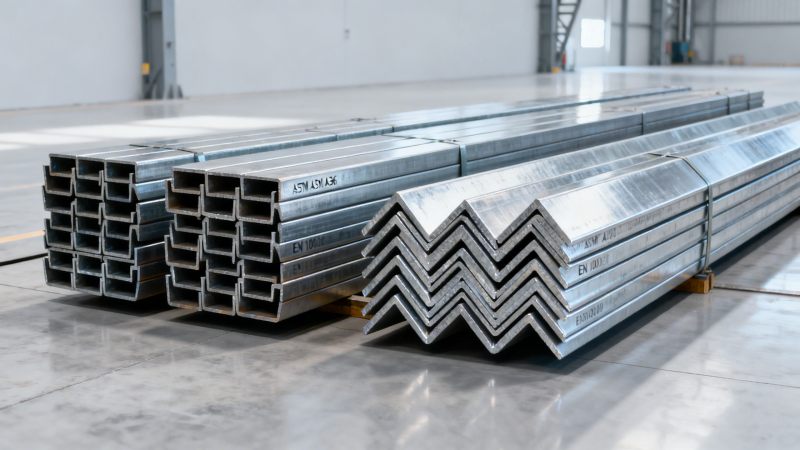
Minimum Order Quantity (MOQ) is not just a procurement threshold—it’s a critical timeline lever. For structural steel projects, MOQ determines production scheduling, raw material allocation, and logistics coordination. At Hongteng Fengda, standard MOQs for hot-rolled sections like ASTM A36 angle steel start at 5 metric tons, while custom cold-formed profiles may require 3–8 tons depending on complexity and tooling setup.
A low-MOQ order (e.g., under 3 tons) typically triggers batch consolidation—delaying dispatch by 7–15 days to meet internal production efficiency targets. Conversely, orders above 15 tons often qualify for priority scheduling and dedicated furnace runs, shortening lead time by up to 25%. This variance directly impacts milestone sequencing: foundation framing, column erection, and cladding installation all hinge on synchronized steel delivery.
Moreover, MOQ affects documentation and certification turnaround. Orders meeting minimum thresholds allow concurrent QA/QC verification and mill test report generation—reducing approval lag by 3–5 business days versus fragmented small lots requiring separate inspection batches.
MOQ by Product Type: What You Need to Know Before Ordering
MOQ isn’t uniform across product categories—it reflects manufacturing physics, inventory turnover, and compliance overhead. Below is a comparison of typical MOQ ranges and their implications for common structural steel items:
This table highlights why cross-product MOQ alignment matters: mixing angle steel and galvanized pipe in one PO can optimize total tonnage to meet higher-tier MOQ thresholds—unlocking faster lead times and bundled certification support. Hongteng Fengda offers MOQ bundling across up to 4 structural steel categories without compromising traceability or dimensional tolerance (±0.15mm for DX52D Galvanized Pipe).
When Low MOQ Isn’t the Right Choice: 4 Hidden Trade-offs
While low MOQ seems buyer-friendly, it introduces measurable operational risks:
- Unit Cost Inflation: Orders under 5 tons incur +12–18% per-ton premium due to fixed setup, heat treatment, and QC labor allocation.
- Logistics Fragmentation: Multiple small shipments increase port handling fees by 20–30% and extend customs clearance cycles—especially for mixed-spec EN/ASTM consignments.
- Quality Variance Risk: Sub-MOQ batches may draw from different heats or coil lots, increasing tensile strength deviation beyond ±5% ASTM tolerance.
- Documentation Lag: Each sub-MOQ lot requires separate MTR issuance, adding 2–4 days per document set versus consolidated reporting.
For project managers coordinating multi-phase builds, these trade-offs compound: a 3-ton early-order for scaffolding may delay main structural delivery by 11 days if it pulls capacity from the same rolling line scheduled for 12-ton I-beam production.
Optimizing MOQ Without Overstocking: A Practical Framework
Hongteng Fengda supports buyers with three strategic MOQ optimization tools:
- Phased Delivery Planning: Lock MOQ at contract stage, then schedule shipments over 3–4 months based on site readiness—maintaining full compliance while deferring inventory costs.
- Shared MOQ Pooling: For distributors or regional contractors, combine orders across 2–3 end-users into one MOQ-compliant shipment, with pre-labeled bundles and individual MTRs.
- OEM Pre-Approval Pathway: Submit engineering drawings 8 weeks ahead; we validate feasibility, assign production slot, and hold MOQ commitment—even before formal PO issuance.
Each option preserves ASTM/EN/JIS certification integrity and supports real-time progress tracking via our supplier portal—where delivery milestones, heat numbers, and coating thickness logs (for DX52D Galvanized Pipe) are updated daily.
Why Partner with Hongteng Fengda for MOQ-Smart Structural Steel Sourcing
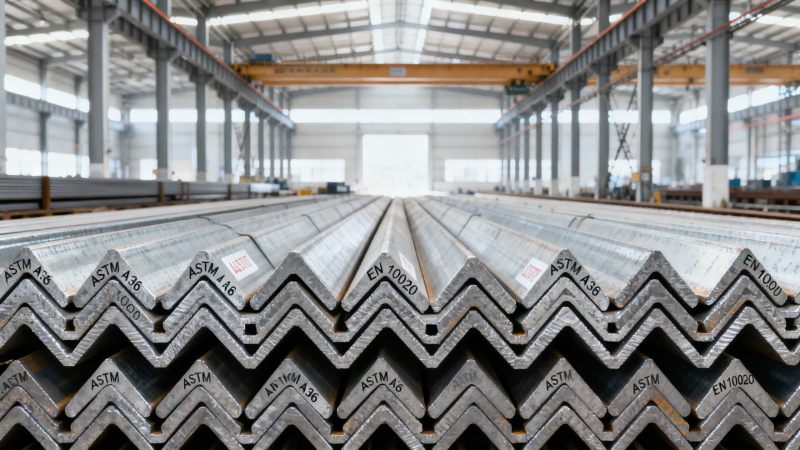
We don’t treat MOQ as a barrier—we engineer it into your project advantage. With ISO 9001-certified facilities in Hebei and Jiangsu, we maintain 120,000+ tons annual structural steel output capacity, enabling dynamic MOQ adjustment across 28 standard grades and 17 OEM configurations.
Our clients—from Philippine infrastructure developers to German industrial plant integrators—leverage our MOQ flexibility to compress overall project duration by 14–22 days on average. We provide free MOQ feasibility review within 48 hours, including lead time simulation, cost-per-ton breakdown, and alternative specification options aligned with ASTM A36, EN 10025, or JIS G3101 standards.
Ready to align MOQ with your next milestone? Contact us to request: (1) MOQ-adjusted quotation for your exact section list, (2) DX52D Galvanized Pipe technical datasheet and coating durability report, (3) sample lead time calendar with production slot reservation, or (4) OEM drawing validation support for custom cold-formed components.
Please give us a message


Please enter what you want to find