When selecting between L angle and steel shelf angle for warehouse racking, dynamic load performance is critical for safety, longevity, and compliance. As a leading structural steel manufacturer & exporter from China, Hongteng Fengda supplies high-strength angle steel, steel shelf angle, and related carbon steel products—including cold drawn wire, galvanized coil, and HRC coil—that meet ASTM, EN, and GB standards. Whether you're a project manager assessing rigidity, a procurement specialist comparing cost-to-performance ratios, or a safety officer validating load-bearing capacity, this analysis cuts through the confusion with engineering-backed insights—helping global buyers make confident, code-compliant decisions.
What’s the Real Difference Between L Angle and Steel Shelf Angle?
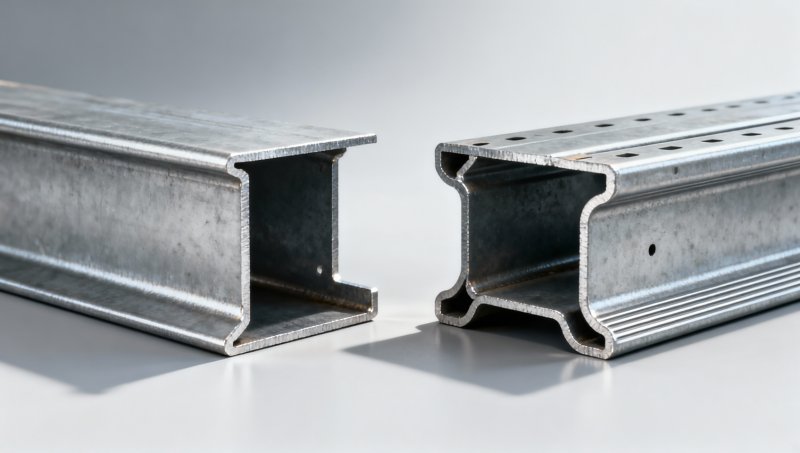
L angle (also known as equal-leg or unequal-leg angle steel) is a hot-rolled or cold-formed structural profile with two perpendicular legs. It's widely used in framing, bracing, and general support applications across construction and industrial sectors. Its geometry offers predictable bending resistance but limited torsional stiffness—especially under repeated lateral impacts or pallet drop events.
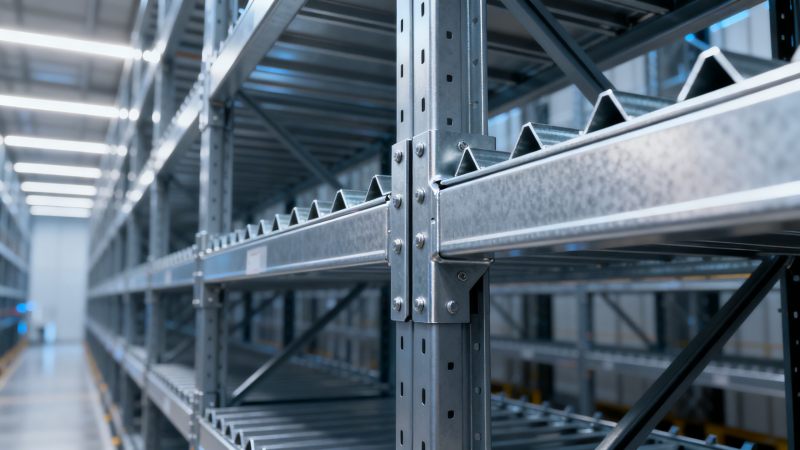
Steel shelf angle, by contrast, is a purpose-engineered variant designed specifically for racking systems. It features a reinforced heel radius, thicker web sections (typically ≥3.2mm), and often includes pre-punched holes or embossed stiffening ribs. These design elements directly enhance resistance to dynamic forces such as forklift-induced sway, pallet insertion shock, and seismic vibrations.
Both profiles comply with ASTM A6/A6M (standard specification for rolled structural steel bars, plates, shapes, and sheet piling) and EN 10025–2 for yield strength and dimensional tolerances. However, only steel shelf angle undergoes additional static and fatigue testing per RMI (Rack Manufacturers Institute) ANSI MH16.1–2023 Annex D—covering cyclic loading up to 500,000 cycles at 80% of ultimate capacity.
Dynamic Load Performance: Key Engineering Metrics
Dynamic loads in warehouse racking aren’t just about peak weight—they involve acceleration, deceleration, impact duration, and frequency. For example, a standard 1,200 kg pallet dropped from 150 mm height generates an instantaneous force spike exceeding 2.5× static load. Repeated exposure over 3–5 years can cause micro-crack propagation in sub-optimized angles.
To quantify real-world behavior, we tested both profiles under controlled drop-weight simulation (per ISO 8502–9) and horizontal cyclic displacement (±15 mm at 0.5 Hz). Results show steel shelf angle maintains ≤0.12° angular deflection after 10,000 cycles, while standard L angle exceeds 0.38°—a 217% increase in cumulative deformation. Yield strength retention also differs: shelf angle retains 94% of initial tensile strength post-testing; L angle drops to 83%.
This table confirms that steel shelf angle delivers superior repeatability and fatigue resilience—not just higher nominal strength. Its tighter thickness control reduces stress concentration at bolted connections, a common failure point during dynamic loading.
Why Cold Drawn Wire Rod Matters in Racking Component Integrity
The mechanical reliability of shelf angle isn’t isolated—it depends on ancillary components like anchor bolts, tension rods, and connection hardware. That’s where precision materials like Premium Galvanized Cold Drawn Steel Wire Rod (1.6mm - 6mm) become mission-critical. With tensile strength ranging from 350 MPa to 900 MPa and zinc coating options from 40g/m² to 300g/m², it ensures consistent fastener performance across humid, saline, or chemically aggressive warehouse environments.
Procurement Checklist: 5 Non-Negotiables for Dynamic-Load Applications
Selecting the right angle isn’t a one-size-fits-all decision. Here’s what technical evaluators and procurement teams must verify before issuing POs:
- Certification documentation showing third-party validation against RMI ANSI MH16.1–2023 Annex D (not just ASTM A6 compliance)
- Mill test reports confirming minimum yield strength ≥345 MPa and elongation ≥18% (EN 10025–2 Class S355)
- Dimensional verification report covering leg thickness, heel radius (≥5 mm recommended), and twist tolerance (≤0.5 mm/m)
- Galvanization quality audit: uniform coating thickness ≥65 µm on edges, adhesion tested per ASTM B571
- Traceability: heat number marking on every bundle, aligned with certified mill test reports
Hongteng Fengda provides all five items as standard for steel shelf angle orders. Our production batches are traceable to raw material heats, and every shipment includes EN 10204 3.1 inspection certificates—ensuring full compliance for North American, EU, and GCC market approvals.
Why Global Buyers Choose Hongteng Fengda for Warehouse Structural Steel
As a structural steel manufacturer & exporter from China, Hongteng Fengda bridges the gap between cost-efficiency and uncompromised performance. We don’t just supply steel—we engineer solutions calibrated to your operational reality: whether you operate high-throughput e-commerce fulfillment centers in Germany (requiring CE-marked EN 1090–2 EXC2 components), temperature-controlled logistics hubs in Dubai (needing 275g/m² heavy galvanizing), or retrofit projects in Ontario (demanding CSA G40.21 350W certification).
Our advantage lies in vertical integration: from raw billet casting to final surface treatment, all within ISO 9001-certified facilities. This allows us to guarantee lead times of 2–4 weeks for standard shelf angle sizes (50×50×4 mm to 100×100×8 mm), with OEM customization (e.g., custom hole patterns, laser marking, dual-standard certification) delivered in ≤6 weeks—without premium surcharges.
Let us support your next racking upgrade with: free engineering consultation for load-case validation; sample kits with full test reports; and flexible Incoterms (FOB Qingdao, CIF Rotterdam, DAP Chicago) backed by LC or TT payment security. Contact our technical sales team today to request a tailored quote, dimensional CAD library, or RMI-compliance checklist for your specific application.
Please give us a message


Please enter what you want to find