Choosing the right l metal angle size is becoming more important in light structural work. Tighter budgets, faster fabrication, and stricter quality expectations now shape every steel selection decision.
For frames, supports, brackets, and reinforcement, the right l metal angle improves fit, strength, and installation efficiency. A poor size choice can increase waste, cause rework, and limit load performance.
This guide reviews size logic, demand shifts, load-related checks, and material standards. It also highlights how reliable steel sourcing supports practical and cost-effective light structural applications.
Why l metal angle selection is receiving closer attention
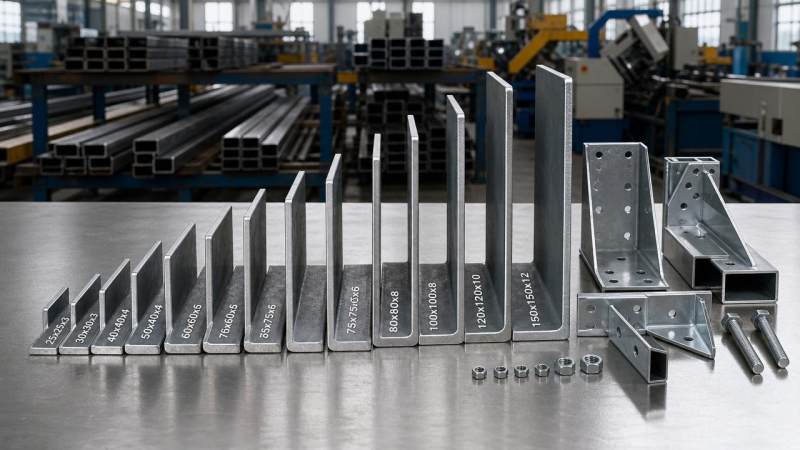
The market is moving away from rough size estimation. More projects now require precise section matching, especially where light structures must balance strength, weight, and fabrication speed.
In many workshops and job sites, l metal angle is no longer treated as a generic item. Buyers increasingly compare leg size, thickness, tolerances, steel grade, and coating compatibility.
This change is driven by modular building methods, export-oriented fabrication, and more frequent cross-border specification reviews. Standard compliance now affects material approval much earlier in planning.
Another signal is the wider use of mixed steel sections. Light assemblies may combine angle steel with channels, beams, or custom profiles to optimize performance and reduce total material use.
What is changing in light structural applications
Light structural jobs are not necessarily low-risk jobs. Small support members often carry repeated loads, vibration, or connection stress that demand better size selection.
The most common applications for l metal angle include:
- Wall and equipment brackets
- Machine frames and base supports
- Rack stiffeners and edge reinforcements
- Small platforms, guards, and trims
- Agricultural and utility fabrication
Across these uses, the trend is clear. Projects prefer angle sizes that are easy to cut, weld, drill, and transport while still meeting strength and dimensional requirements.
As a result, common l metal angle sizes are being evaluated with more detail, not just by nominal leg dimension but also by thickness, straightness, corner radius, and surface quality.
The main factors pushing this sizing trend
Several practical forces explain why l metal angle selection has become more data-driven in recent years.
These forces do not eliminate the need for conservative design. They simply make every l metal angle decision more sensitive to real application conditions and total project cost.
How to compare l metal angle sizes more accurately
A useful comparison starts with four core dimensions. These dimensions determine section capacity, fabrication practicality, and compatibility with connection details.
1. Leg length
Leg length affects bearing area, fastening space, and stability. Equal angle sizes are common for balanced loading. Unequal angles help when one side needs more connection surface.
2. Thickness
Thickness has a major effect on stiffness and local strength. Thicker l metal angle sections usually resist deformation better, but they also increase weight and welding demand.
3. Length
Stock length affects waste control and transport planning. Matching supply length to fabrication drawings can reduce cutting loss and improve production rhythm.
4. Tolerance and straightness
Straightness matters in visible frames and multi-point assemblies. Poor tolerance control can delay fitting, especially in bolt-on brackets or repeated modular components.
For projects using multiple structural shapes, angle steel may work alongside channels or beams. In heavier industrial layouts, I-beam sections support larger spans while angle members handle secondary framing.
Load-related checks that should guide the final decision
Even for light structural work, l metal angle selection should reflect actual service conditions. Simple visual judgment is rarely enough.
- Identify whether the member carries static, impact, or repeated loads.
- Check if the angle acts in compression, tension, bending, or combined stress.
- Review connection details, hole spacing, and weld length.
- Consider unsupported length and risk of twisting or buckling.
- Allow for corrosion environment and future maintenance access.
Many failures in light steel assemblies come from connection weakness, not section weakness. That is why l metal angle sizing must be coordinated with bolts, welds, and mounting surfaces.
Where loading is uncertain, a qualified structural review remains the safest path. A well-chosen section is cost-effective only when it also performs reliably in service.
Why material grade and standards matter more than before
A correct size does not guarantee correct performance. Steel grade, chemistry, and production quality also influence bending behavior, weldability, and long-term durability.
Common project references include ASTM, EN, JIS, and GB. These standards help define dimensional tolerances, mechanical properties, and testing expectations for structural steel products.
Reliable suppliers support this process through consistent manufacturing and documented quality control. That becomes especially important when l metal angle is exported for regulated construction or industrial use.
Hongteng Fengda, a structural steel manufacturer and exporter from China, supplies angle steel, channel steel, steel beams, cold formed profiles, and customized components for global projects.
With modern production facilities and compliance with ASTM, EN, JIS, and GB, the company helps reduce sourcing risk through stable capacity, dependable lead times, and consistent product quality.
What these changes mean for fabrication and sourcing decisions
The shift toward precise l metal angle selection affects more than engineering. It also changes quotation accuracy, production planning, and inventory control.
When size data is incomplete, fabrication shops may face avoidable cutting waste, fit-up delays, or last-minute material substitution. Those issues can erase savings from a low unit price.
Better specifications improve purchasing clarity. They also make it easier to compare suppliers on equal terms, especially when reviewing grade, tolerance, finish, and certification support.
In mixed structural packages, heavier sections may be required for primary loads. For example, an I-beam in carbon steel may offer flange widths from 100mm to 400mm and lengths from 6m to 12m for industrial structures.
The key points worth watching next
- Demand will keep favoring optimized, application-specific angle sizes.
- Tolerance consistency will matter more in modular and export projects.
- Material traceability and standard compliance will remain stronger buying factors.
- Surface condition and weldability will increasingly affect total fabrication efficiency.
- Reliable steel partners will be valued for stability, not only price.
A practical path for choosing the right l metal angle
Start with the real job condition, not just a familiar stock size. Confirm leg dimensions, thickness, length, load type, connection method, and environmental exposure.
Then compare available standards, tolerances, and supplier quality systems. This approach helps narrow the right l metal angle option faster and reduces downstream risk.
For light structural jobs, the best result usually comes from balancing strength, fabrication ease, cost, and dependable steel supply. That is the most practical way to secure long-term value.
If a project requires standard or customized structural steel, reviewing section data early and confirming compliance details in advance can make sourcing more efficient and predictable.
Please give us a message


Please enter what you want to find