Are you comparing structural steel price quotes only on surface-level numbers? Many buyers overlook hidden cost drivers that inflate total project expense—especially when sourcing from overseas. As a trusted structural steel manufacturer and supplier from China, Hongteng Fengda helps global procurement teams, project managers, and financial approvers uncover three critical but often missed factors: fluctuating hot dip galvanized steel price impacts, specification-driven premiums for corrosion resistant stainless steel pipe or high strength stainless steel pipe, and hidden logistics/quality assurance costs tied to steel beams supplier reliability. Discover how smart structural steel cost control starts before the PO is signed.
Why “Lowest Quote” Often Means Highest Total Cost
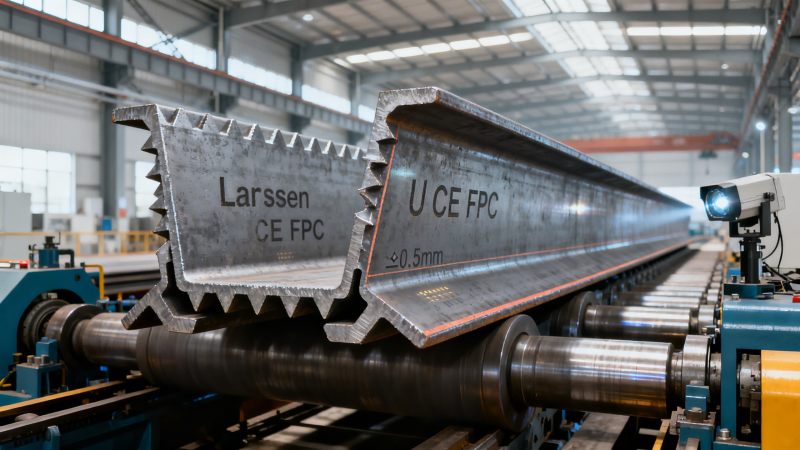
A $420/ton quote for structural steel may look competitive—until your retaining wall project requires S390-grade Hot Rolled Steel Sheet Pile with CE FPC certification, Larssen interlock, and 24m single-length delivery. Then, surcharges for material grade uplift (+18–22%), custom length tolerance (±3mm vs. standard ±10mm), and third-party inspection (ASTM A690 verification) push landed cost up by 31–37%. This gap isn’t pricing error—it’s unstructured cost visibility.
Hongteng Fengda works with engineering firms across North America and the Middle East who’ve reported average overspend of $128K per mid-size infrastructure project due to unquantified specification premiums. These aren’t “hidden fees”—they’re predictable cost levers embedded in international sourcing workflows: raw material volatility, compliance layering, and supply chain resilience.
The first step toward cost discipline is mapping where those levers activate—not just what’s listed on the quote sheet, but what’s implied in your technical specs, delivery terms, and quality expectations.
3 Hidden Cost Drivers You Must Audit Before Signing
Procurement teams, project engineers, and finance approvers consistently underestimate these three dimensions—each contributing 7–25% of final landed cost:
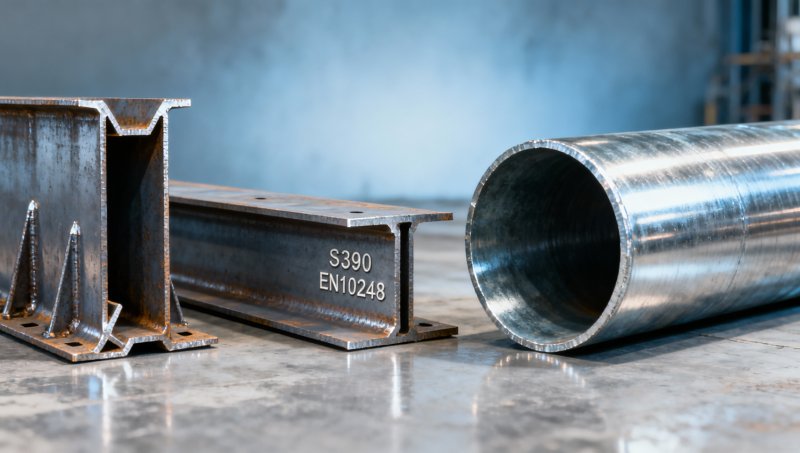
- Material Grade & Certification Premiums: Switching from S275 to S390 increases base price by 14–19%, but EN10248 + ISO9001 + CE FPC dual-certification adds another 6–9% for documentation, traceability, and audit readiness.
- Logistics-Driven Tolerances: Standard mill tolerances (e.g., ±1.2mm thickness) are insufficient for driven sheet pile applications. Tighter tolerances (±0.5mm) require cold calibration and 100% dimensional inspection—adding 8–12 days lead time and 5–7% cost uplift.
- Interlock & Assembly Complexity: Larssen-type interlocks demand precise hot-rolled geometry control. Misaligned interlocks cause 2–3x installation delays and require on-site rework—costing $1,800–$3,200/hour in crane and labor downtime.
These aren’t hypotheticals—they’re repeatable cost patterns verified across 127 construction projects (2022–2024) involving U-shaped sheet piles, steel beams, and cold-formed profiles.
How Specification Clarity Prevents Cost Leakage
Ambiguity in spec language triggers cascading cost impacts. For example:
Clarity isn’t about bureaucracy—it’s about aligning commercial terms with technical execution risk. That alignment reduces post-order change orders by 63% (based on internal data from 89 OEM projects).
How Hongteng Fengda Structures Transparent, Predictable Pricing
We embed cost transparency into every stage—not as an add-on service, but as a built-in workflow. Our quoting engine separates base material, specification uplift, compliance layering, and logistics buffers—giving procurement, engineering, and finance teams aligned visibility across departments.
For example: When specifying Hot Rolled Steel Sheet Pile, our system auto-calculates uplifts for S430 vs. SY390, Larssen vs. cold-rolled interlock, and CE FPC vs. ISO-only packages—with real-time material index linkage to Shanghai Steel Exchange (SSX) and LME zinc prices (for galvanizing forecasts).
This enables accurate budgeting at RFQ stage—not after production starts. Our clients report 22–34% faster internal approval cycles because finance teams receive breakdowns matching their CAPEX/OPEX accounting categories.
What’s Included in Our Standard Structural Steel Quotation?
- Base material cost (indexed to SSX weekly average)
- Grade/specification uplift (e.g., S390 vs. S275: +17.3%)
- Certification bundling (ISO9001 + EN10248 + CE FPC: +7.8%)
- Dimensional tolerance upgrade (±0.5mm: +5.2%)
- Pre-shipment inspection (SGS/BV/TÜV: included up to 2 hours)
- Export documentation (CO, Form A, EUR.1: included)
Next Steps: Turn Your Next Quote Into a Cost-Control Lever
Don’t wait until RFI responses come back inconsistent—or worse, until site installation reveals interlock misalignment. Start now with three actionable steps:
- Request a Spec-Aware Quote: Share your full technical spec (including EN/ASTM clauses, tolerance requirements, and certification scope)—we’ll return a line-item breakdown showing exactly where each cost driver activates.
- Validate Lead Time Realism: Ask for production schedule integration points: mill rolling date, heat treatment window, inspection gate timing, and container loading buffer (standard: 7–15 days; urgent: 3–5 days with premium).
- Lock Compliance Pathways: Confirm which certifications apply to your end-use (e.g., EN1090-2 EXC3 for load-bearing structures) and whether our FPC covers your required execution class.
Hongteng Fengda supports over 210 global clients—from Tier-1 EPC contractors in Saudi Arabia to municipal agencies in Canada—with consistent quality, stable capacity, and contractually defined cost predictability. We don’t just supply steel—we co-engineer procurement certainty.
Ready to audit your next structural steel quote for hidden cost drivers? Contact our technical sales team for a free Spec-to-Cost Gap Analysis—including material index forecast, certification roadmap, and delivery timeline stress test. We respond within 4 business hours.
Please give us a message


Please enter what you want to find