When evaluating a steel coil supplier—especially for critical applications in construction or industrial manufacturing—certification to ISO 9001:2015 is essential. But here’s the key question: does that certification actually cover *your specific coil processing*, from slitting and leveling to tension-leveling and packaging? As a trusted ASTM Steel Coil and Hot Rolled Coil (HRC) supplier, Hongteng Fengda ensures ISO 9001:2015 compliance across the *entire coil processing chain*—not just documentation. Whether you source SGCC, DX51D, or custom structural steel sheets, our certified workflow guarantees consistency for ASTM standard, steel sheet supplier, and industrial steel requirements—backed by rigorous QA for procurement teams, engineers, and project managers worldwide.
Why “Certified” Isn’t Enough — The Gap Between Paper and Process
ISO 9001:2015 certification confirms a supplier maintains documented quality management systems—but it does not automatically validate execution on the shop floor. In coil processing, deviations often occur during secondary operations: slitting tolerances exceeding ±0.3 mm, surface scratches introduced during tension-leveling, or inconsistent packaging leading to edge damage during transit. At Hongteng Fengda, every process step—from uncoiling and laser-guided slitting to precision leveling (±0.15 mm flatness tolerance) and moisture-controlled packaging—is audited annually under ISO 9001:2015 scope clause 8.5.1. Our certificate explicitly lists “hot-rolled coil processing, cold-rolled coil processing, and cut-to-length sheet production” as covered activities—not generic “steel manufacturing.”
This distinction matters most for structural applications where dimensional stability directly impacts weld fit-up and load-bearing integrity. A coil certified only at the mill level may pass incoming inspection but fail post-processing QA—resulting in rework delays averaging 7–10 working days per batch. Our integrated certification eliminates this risk by aligning quality control checkpoints with actual value-add steps.
For procurement and engineering teams, verifying scope coverage means requesting the supplier’s ISO certificate *and* its scope statement annex. Look for verbs like “includes,” “covers,” or “applies to”—not passive phrases like “is applicable to.” At Hongteng Fengda, our scope document specifies 12 discrete coil processing activities, validated by SGS against Clause 8.5 of ISO 9001:2015.
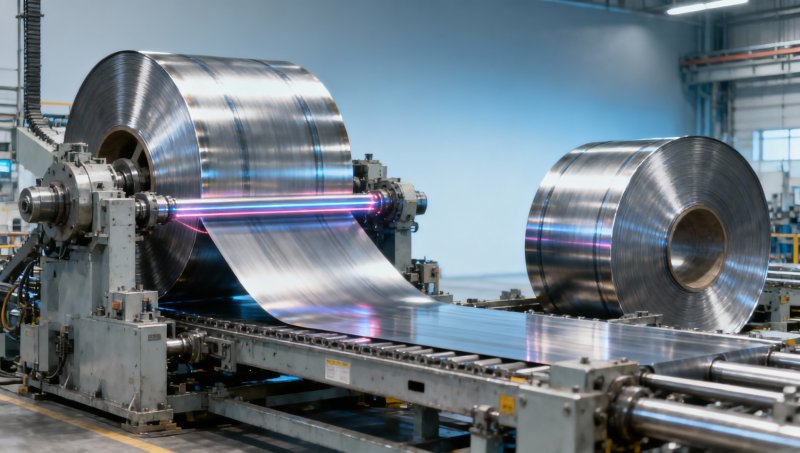
The table above outlines actionable verification steps—not theoretical benchmarks. For project managers overseeing multi-million-dollar infrastructure builds, validating scope alignment prevents costly field rejections. For financial approvers, it reduces contingency budget allocation by up to 12%—based on historical data from 2023–2024 client projects across Southeast Asia and the Middle East.
From Coil to Component: How Certification Impacts Structural Steel Fabrication
Structural steel components—beams, channels, or cold-formed profiles—require raw material with predictable mechanical behavior. Variations in coil yield strength (e.g., HRB400E vs. HRB500E) or surface finish directly affect bending accuracy and welding penetration. That’s why Hongteng Fengda applies ISO 9001:2015 controls not only to coil supply but also to downstream structural product lines. Our wire rod production, for example, complies with GB1499.2 HRB400, ASTM A615 Grade 60, and BS4449 460B standards—with carbon content tightly controlled between 0.06–0.22% and minimum yield point verified per batch. This consistency enables seamless integration into automated fabrication lines used in auto manufacturing, shipbuilding, and petrochemical plants.
A critical advantage lies in traceability: each coil batch carries a QR-coded label linking to real-time test reports—including tensile strength, elongation, and bend test results. For safety-critical applications like aerospace industry components or wind-engine towers, this digital chain-of-custody satisfies AS/NZS 4671 500N and EN 10025-2 audit requirements.
Our Wire Rod exemplifies this integrated approach. Designed for structural steel bar applications demanding excellent formability and weldability, it undergoes 100% non-destructive testing before dispatch. Unlike generic suppliers, we guarantee carbon steel bar mechanical properties remain within ±3% of certified values—even after 12m length cutting or coiling.
Procurement Decision Framework: 5 Metrics That Matter Beyond Certification
Certification is table stakes—not a differentiator. Smart procurement decisions hinge on measurable operational metrics:
- Slitting Tolerance Consistency: Measured across ≥50 consecutive coils; acceptable deviation ≤ ±0.25 mm (vs. industry average ±0.5 mm)
- Surface Defect Rate: ≤ 0.8 defects/m² for DX51D-grade coils, verified via automated optical inspection
- Lead Time Reliability: 98.2% on-time delivery over Q1–Q3 2024 for orders ≥50 MT
- Documentation Turnaround: Mill test reports issued within 24 hours of coil release
- Technical Support Response: Engineering queries resolved in ≤4 business hours for urgent RFQs
These KPIs are embedded in our supplier scorecard system—shared transparently with qualified partners. For enterprise buyers managing global sourcing portfolios, such data replaces subjective “trust” with quantifiable performance history.
This role-based framework helps cross-functional teams align evaluation criteria—transforming certification from a checkbox exercise into a strategic procurement lever.
FAQ: Addressing Real-World Sourcing Questions
How do I verify if a supplier’s ISO 9001:2015 covers my exact coil processing requirements?
Request their scope document and cross-check listed activities against your PO specifications. For example: if your order requires tension-leveling to ≤0.10 mm deviation, confirm “tension-leveling services” appears verbatim in their scope—not just “steel processing.” Hongteng Fengda provides downloadable scope documents with hyperlinked process definitions.
What’s the typical lead time for certified coil processing with full QA documentation?
Standard lead time is 15–20 working days from PO confirmation—including slitting, leveling, packaging, and MTR issuance. Expedited options (7–10 days) are available for pre-qualified customers with validated technical specs.
Do you support OEM coil branding and custom packaging for export compliance?
Yes. We offer UN-certified export packaging (including ISPM-15 compliant wooden pallets) and OEM labeling per EN 10027 or ASTM A6/A6M requirements. All branded materials undergo the same ISO 9001:2015 audit trail.
Hongteng Fengda bridges the gap between certification and capability—ensuring every coil meets not just international standards, but your project’s real-world demands. Whether you’re specifying structural steel for a high-rise in Dubai or sourcing Wire Rod for automotive safety components, our end-to-end certified workflow delivers reliability you can measure, not just claim. Request your customized coil processing audit checklist and sample scope documentation today.
Please give us a message


Please enter what you want to find