When evaluating flooring materials for factories, warehouses, or heavy-duty platforms, many buyers ask whether Z150 steel sheet for industrial flooring can deliver the right balance of durability, corrosion resistance, and cost efficiency. For business assessment teams, understanding its coating performance, load suitability, and long-term value is essential before making a sourcing decision.
Why Z150 Steel Sheet for Industrial Flooring Needs a Careful Review
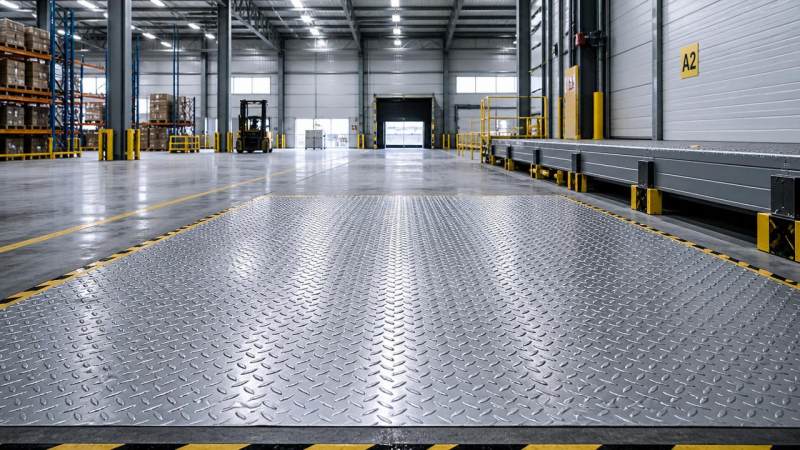
Z150 steel sheet for industrial flooring refers to galvanized steel sheet with a zinc coating mass of about 150 g/m². This coating improves resistance to rust in demanding environments.
However, flooring performance depends on more than coating. Surface profile, base steel strength, sheet thickness, support spacing, and traffic type all affect real service life.
A checklist-based review helps compare short-term price against long-term maintenance, downtime risk, and replacement cost. That approach leads to better steel flooring decisions.
Core Points to Check Before Choosing Z150 Steel Sheet for Industrial Flooring
Use the following points to judge whether Z150 steel sheet for industrial flooring matches the actual operating conditions of the site.
- Confirm the corrosion level of the environment, including humidity, chemical splash, cleaning frequency, and outdoor exposure, because zinc coating performance changes greatly with site conditions.
- Check the base steel grade and sheet thickness, since coating alone cannot compensate for weak substrate strength or insufficient section capacity under repeated loads.
- Review the expected load type, such as foot traffic, pallet jacks, forklifts, machines, or static storage, because each condition creates different stress patterns.
- Measure span length and support spacing carefully, as even strong galvanized sheet can deflect excessively when unsupported distances exceed structural recommendations.
- Verify slip resistance requirements, especially in wet or oily areas, because smooth steel sheet may need embossing, anti-slip treatment, or additional surface finishing.
- Inspect weld zones, cut edges, and drilled holes in the design, since these locations often lose protection first and may require touch-up coating.
- Compare maintenance expectations with project lifespan, because lower upfront material cost may become less attractive when corrosion repair is frequent.
- Confirm compliance with ASTM, EN, JIS, or GB specifications, ensuring the sheet quality, coating consistency, and mechanical properties meet project documentation.
How Z150 Performs in Typical Industrial Flooring Conditions
1. Warehouses and Storage Platforms
In dry indoor warehouses, Z150 steel sheet for industrial flooring can be a practical option. It offers a useful balance between corrosion protection and material cost.
The key checks are sheet thickness, traffic frequency, and support design. If forklifts operate directly on the flooring, stronger sections or added structural reinforcement may be necessary.
2. Factory Walkways and Mezzanines
For walkways, maintenance decks, and mezzanines, Z150 steel sheet for industrial flooring often performs well where moisture is controlled and loads remain moderate.
Attention should focus on slip resistance and local bending. In many layouts, galvanized sheet works best when paired with support members designed for stable load distribution.
3. Food, Beverage, or Wash-Down Areas
These areas are more demanding. Frequent washing, humidity, and chemical cleaners can shorten zinc coating life if exposure is severe or continuous.
In such cases, Z150 may still work in secondary zones, but stainless steel or heavier coating systems may be better for primary wet areas.
4. Outdoor Platforms and Loading Zones
Outdoor exposure increases the risk of coating wear and edge corrosion. Rain, temperature shifts, and standing water can accelerate deterioration.
For open environments, check drainage, edge sealing, and whether a higher zinc coating or extra protective finish offers better lifecycle value.
Structural Support Matters as Much as the Sheet
Industrial flooring rarely works as a single material decision. The surrounding structure strongly affects sheet performance, durability, and safety.
For framing, bracing, and edge support, compatible structural sections are important. A reliable Angle Steel Supplier can support projects needing carbon steel or stainless steel angle sections.
Available grades may include S235JR-S335JR Series, Q195-Q420, Q235, Q345, SS400, ST37-2, ST52, Q420, and Q460. Common thickness ranges are 3-20mm.
Standard sizes can cover 20*20mm*3mm through 200*200mm*20mm, with lengths such as 5.8m, 6m, 9m, and 12m. These sections help improve framing stability and reinforcement capacity.
When flooring design includes brackets, trims, or bracing components, matching support steel to the sheet reduces deflection risk and improves installation efficiency.
Commonly Overlooked Issues That Affect Service Life
Ignoring Edge Protection
Cut edges are usually more vulnerable than flat coated surfaces. If not treated correctly, corrosion may begin there earlier than expected.
Assuming Galvanized Means Chemical-Proof
Z150 steel sheet for industrial flooring resists normal atmospheric corrosion well, but aggressive chemicals, salts, or alkaline cleaners may still reduce performance quickly.
Using the Same Sheet Across All Zones
A factory may contain dry storage, wet cleaning areas, and heavy loading points. One specification does not always suit every flooring zone.
Focusing Only on Initial Cost
A lower purchase price may seem attractive, yet repair frequency, shutdown time, and shorter replacement cycles can increase total ownership cost.
Missing Standard Verification
Always confirm coating weight, steel grade, and dimensional tolerances through inspection records. This is especially important in international steel sourcing.
Practical Steps for a Better Flooring Decision
- Map each flooring area by moisture level, traffic type, point load, and cleaning method before choosing any sheet specification.
- Request technical data for coating mass, steel grade, thickness tolerance, and relevant standards from the steel supplier.
- Review support framing and span design together with the sheet, rather than treating flooring and structure as separate decisions.
- Ask for corrosion protection details for cut edges, fastener points, and welded locations in the fabrication plan.
- Compare Z150 against heavier galvanized coatings or stainless options in the most exposed sections of the project.
- Estimate lifecycle cost over several years, including maintenance labor, replacement intervals, and possible downtime losses.
FAQ About Z150 Steel Sheet for Industrial Flooring
Is Z150 suitable for heavy forklift traffic?
It depends on thickness, base steel strength, and support spacing. For heavy rolling loads, engineering verification is essential before final selection.
Can Z150 be used outdoors?
Yes, but outdoor service life depends on climate, water drainage, and maintenance. In harsher conditions, stronger corrosion protection may be more appropriate.
Is Z150 steel sheet for industrial flooring cost-effective?
In many indoor industrial settings, yes. It can provide good value when corrosion exposure is moderate and structural design is correct.
Final Takeaway
Z150 steel sheet for industrial flooring can be a good fit when the environment is moderate, the load conditions are clear, and support framing is properly designed.
The best decision comes from checking coating needs, structural demands, slip safety, and maintenance expectations together. That method reduces sourcing risk and improves long-term flooring performance.
Before placing an order, compare site conditions zone by zone, verify standards, and confirm the full flooring system. A careful review will show whether Z150 is the right choice for your project.
Please give us a message


Please enter what you want to find