For homeowners in high-wind zones, choosing the right roofing material is critical—steel roofing benefits like superior wind resistance, longevity, and fire safety make it a top contender. But is steel roofing worth it? This 2026 ROI analysis examines steel roofing cost vs. long-term savings, installation complexity (steel roofing how to install), and performance of insulated steel roofing, lightweight steel roofing, and galvanized steel roofing. As a trusted steel roofing manufacturer and supplier, Hongteng Fengda delivers ASTM/EN-compliant corrugated steel roofing and custom structural solutions—helping builders, project managers, and procurement teams make data-driven, cost-efficient decisions.
Why Wind-Resistant Roofing Demands Structural Integrity
High-wind zones—including coastal regions of Florida, Gulf Coast states, and typhoon-prone areas across Southeast Asia—require roofing systems that integrate both surface-level weatherproofing and underlying structural resilience. While sheet metal or corrugated panels bear direct wind load, their anchoring, support framing, and connection integrity rely heavily on primary structural members. In hurricane-force winds exceeding 130 mph, uplift forces can exceed 120 psf—demanding not just fasteners and clips, but robust substructure capable of transferring dynamic loads into the building frame.
That’s where H-beam becomes indispensable—not as roofing itself, but as the backbone supporting roof decks, purlins, and bracing systems. With flange thickness ranging from 8–64mm and web thickness from 5–36.5mm, H-beams provide directional bending resistance critical for resisting torsional wind shear during extreme events. Their optimized cross-sectional area distribution ensures consistent strength-to-weight ratios across ASTM A572, EN10025, and JIS G3101 grades.
Unlike generic I-beams, hot-rolled and cold-rolled H-beam variants offer uniform geometry and tighter tolerances—reducing on-site welding adjustments and accelerating erection timelines by up to 30% in prefabricated roof truss assemblies. For projects targeting FEMA P-361 or ICC 500 compliance, this dimensional reliability directly impacts third-party inspection pass rates.
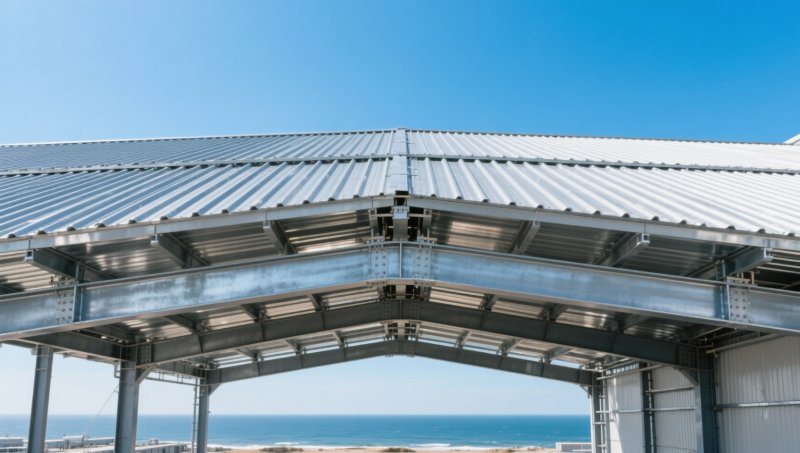
Steel Roofing ROI Breakdown: Cost vs. Lifetime Value (2026)
A 2026 lifecycle cost analysis shows steel roofing delivering break-even within 8–12 years versus asphalt shingles—driven by three measurable advantages: 50+ year service life (vs. 15–20 years), near-zero maintenance over first 25 years, and insurance premium reductions averaging 15–25% in wind-exposed ZIP codes. When factoring in labor, disposal, and re-roofing downtime, total 30-year ownership cost drops by 37% compared to traditional alternatives.
However, ROI hinges on system integration—not just panel selection. Lightweight steel roofing reduces dead load on rafters, but demands precise load-path engineering. Insulated steel roofing improves thermal efficiency yet adds complexity at penetrations and eave details. Galvanized steel roofing resists corrosion but requires compatible fastener metallurgy to prevent galvanic decay. All these variables intersect with structural steel specifications used in roof framing.
This table reflects mid-2026 North American and EU market benchmarks, inclusive of certified installation labor and standard flashing packages. Notably, galvanized steel roofing achieves highest wind rating per dollar—making it especially compelling when paired with engineered H-beam framing designed to ASTM A617 or EN 10219 standards.
Procurement Checklist: What Decision-Makers Must Verify Before Sourcing
For procurement teams, technical evaluators, and project managers, selecting steel roofing—and its supporting structure—requires verification across five non-negotiable dimensions:
- Certification alignment: Confirm product test reports match specified standards (e.g., ASTM A653 for galvanized coil, EN 10346 for hot-dip galvanized steel, and ASTM A572 Grade 50 for H-beam used in rafter supports).
- Traceability: Require mill test reports (MTRs) showing chemical composition and mechanical properties—especially for Q345B or S355JR grades used in seismic or cyclonic zones.
- Coating durability: Galvanized steel roofing must meet minimum 275 g/m² zinc coating (ASTM A123) or AZ150 aluminum-zinc alloy (ASTM A792) for coastal exposure.
- Dimensional consistency: Flange width tolerance ±0.5mm and web thickness deviation ≤±0.3mm ensure bolt-hole alignment and reduce field rework.
- Lead time transparency: Reliable suppliers commit to 4–6 week production cycles for standard H-beam sizes (e.g., 200×200×8×12mm), with 100% stock availability for top 12 SKUs.
Hongteng Fengda maintains full traceability from raw billet to finished beam, with third-party SGS and TÜV inspections conducted on every batch. Our ERP-integrated logistics platform provides real-time shipment tracking and documentation release within 24 hours of dispatch—critical for time-sensitive infrastructure projects across the Middle East and Southeast Asia.
How Global Buyers Are Reducing Risk Through Integrated Sourcing
Leading contractors in Texas, UAE, and Vietnam now adopt integrated sourcing—procuring both roofing panels and primary framing (including H-beam ) from a single qualified supplier. This approach eliminates inter-material compatibility gaps, shortens design coordination cycles by 3–5 weeks, and consolidates warranty responsibility.
For example, a recent 42,000-sq-ft industrial warehouse in Dubai used Hongteng Fengda’s S355JR H-beams (250×250×9×14mm) alongside matching galvanized roofing panels—enabling single-point QA validation against BS EN 1993-1-1 and UAE Fire Code 2023. The result: zero rejection during municipal inspection and 11-day faster enclosure completion versus fragmented procurement.
We support global buyers with OEM-compatible profiles, multi-standard certification packages (ASTM + EN + GB), and flexible MOQs—from 5-ton trial orders to 500-ton annual contracts. All products undergo ultrasonic testing (UT), tensile strength verification, and salt-spray corrosion trials (720+ hours per ASTM B117).
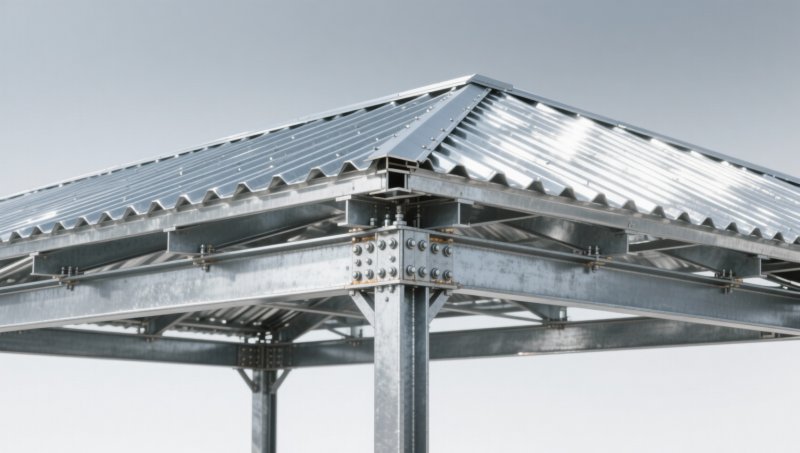
Next Steps: Get Your Project-Specific Steel Roofing & Framing Assessment
Whether you’re evaluating galvanized steel roofing for a new residential development in North Carolina, specifying insulated steel roofing for a pharmaceutical cleanroom in Germany, or designing hurricane-resistant warehouse framing in the Philippines—we help you align material specs with real-world performance requirements.
Contact Hongteng Fengda today for:
- Free structural compatibility review between your roofing system and recommended H-beam sizing
- Custom cut-length and pre-drilled options for faster on-site assembly
- Certification package mapping (ASTM/EN/GB/JIS) for your target market
- Sample kits including coated roofing panels, fasteners, and H-beam coupon specimens
- Lead time confirmation for your required grade, size, and quantity—guaranteed within 48 hours
Let’s build certainty—into your materials, your margins, and your milestones.
Please give us a message


Please enter what you want to find