Is corrugated steel roofing worth the investment for your project? For buyers comparing corrugated steel roofing with factors like galvanized sheet price, durability, and maintenance, the answer depends on long-term performance and total cost. This guide helps procurement teams, engineers, and project managers evaluate whether corrugated steel roofing delivers the value, reliability, and service life needed for industrial, commercial, and construction applications.
In steel-intensive projects, roofing is not just an enclosure material. It affects structural loading, installation speed, weather resistance, insulation strategy, and maintenance budgets over 10–30 years. For factories, warehouses, agricultural buildings, workshops, and commercial facilities, corrugated steel roofing is often selected because it combines practical strength with cost-efficient manufacturing.
However, the cheapest sheet is not always the lowest-cost roofing system. Buyers need to compare base metal thickness, coating type, corrosion exposure, support spacing, fastening details, and supplier reliability. A roof that saves 8% upfront but requires earlier replacement or frequent leak repair can become more expensive over its service life.
For global buyers sourcing from China, supplier capability also matters. Hongteng Fengda, as a structural steel manufacturer and exporter, supports construction and industrial customers with stable production, quality control, and steel solutions aligned with ASTM, EN, JIS, and GB requirements. That background is valuable when roofing decisions must fit broader structural steel procurement and project delivery schedules.
What Makes Corrugated Steel Roofing Cost-Effective
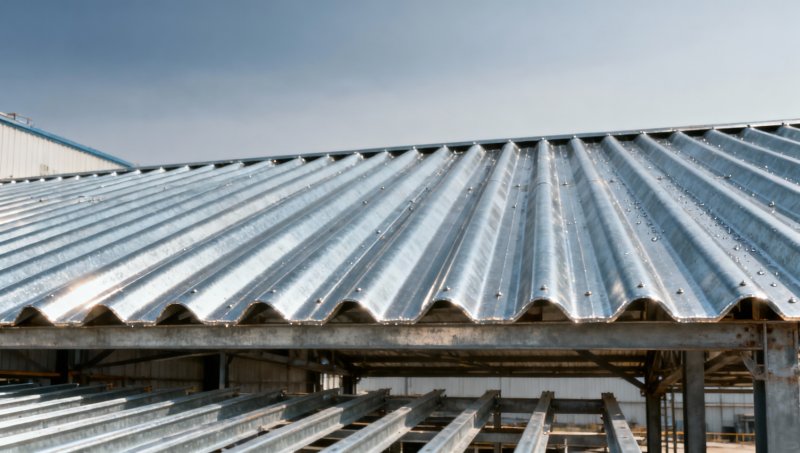
Corrugated steel roofing is formed with repeating ridges and grooves that increase sheet stiffness without requiring excessive material thickness. In practical terms, a profile built from 0.30 mm to 0.80 mm galvanized or pre-painted steel can carry everyday roofing loads more efficiently than a flat sheet of similar weight. That is one reason it remains widely used in industrial and agricultural construction.
From a cost perspective, the value of corrugated steel roofing comes from 4 areas: lower dead load, faster installation, broad availability, and manageable maintenance. A lighter roof can reduce demands on purlins and supporting frames. On many projects, this helps control total steel consumption, especially when roof spans, live loads, and wind conditions are properly evaluated during design.
Installation time is another major factor. Compared with heavier roofing materials, corrugated steel sheets are easier to transport, lift, align, and fasten. On medium-sized industrial buildings, labor savings may become noticeable over 2–4 weeks of roof work. Fewer wet trades and less curing time also help contractors keep schedules tighter in variable weather conditions.
Still, the term “worth the cost” depends on project category. For a temporary storage building with a 5–10 year use plan, budget-grade galvanized roofing may be enough. For a coastal workshop, logistics center, or high-rainfall facility expected to operate for 20 years or more, coating quality, corrosion resistance, and proper detailing become far more important than the lowest initial sheet price.
Initial price versus whole-life value
A practical procurement review should separate purchase price from life-cycle cost. Buyers often focus on galvanized sheet price per ton or per square meter, but the more useful question is how many maintenance events, panel replacements, and leak-related shutdowns the roof may create over 15–25 years. In industrial environments, even one unplanned interruption can outweigh a small material saving.
The table below shows how corrugated steel roofing is typically evaluated against other common considerations in steel building projects.
The main takeaway is that corrugated steel roofing becomes more attractive when procurement teams evaluate total installed value rather than only invoice price. In many steel building applications, the combination of light weight, quick assembly, and reliable service makes it a commercially sound option.
How to Judge Durability, Coating Performance, and Structural Fit
Durability is where many roofing decisions succeed or fail. A corrugated roof can perform well for 10, 15, or more than 20 years, but only if the steel substrate, coating mass, profile design, and installation details match the environment. Corrosion risk rises quickly in coastal zones, chemical plants, livestock buildings, and regions with frequent condensation.
Buyers should review at least 6 technical points before ordering: base steel thickness, zinc or metallic coating level, paint system, profile depth, screw type, and expected support spacing. Even small differences can matter. For example, a sheet that is too thin for local wind uplift conditions may deform earlier, while poor fastener sealing can create leakage long before the sheet itself fails.
Roofing must also work with the steel frame below it. Purlin spacing, truss design, roof slope, and thermal movement all affect performance. In steel structure projects, this is why coordination between roofing procurement and structural steel design is essential. A roofing system that looks economical on paper may require additional supports if profile capacity is not correctly matched to span and loading conditions.
For industrial clients sourcing broader steel packages, integrated planning can improve results. In reinforced concrete and composite structures, the roof is only one part of the load path. Mid-project coordination sometimes includes reinforcement products such as HRB500 Rebar, a hot ribbed steel rebar option used in building structures subjected to significant loads, super high-rise buildings, long-span bridges, and heavy-duty industrial plants. Available in common sizes from φ6 to φ50 and aligned with standards such as ASTM, DIN, GB, and JIS, it is an example of how strength, compliance, and seismic considerations often influence overall project material planning.
Key durability checks before purchase
- Confirm whether the project environment is inland, coastal, industrial, or chemically aggressive, because coating needs differ by exposure level.
- Check sheet thickness tolerance and profile consistency, especially for large roofs where alignment affects overlap performance.
- Review screw quality, washer material, and fastening layout to prevent premature leakage around penetrations and laps.
- Verify compatibility with roof slope, drainage path, and purlin spacing rather than selecting by sheet price alone.
Common technical ranges buyers often compare
Although exact specifications vary by market and project design, many buyers compare roofing sheets in the 0.40–0.60 mm range for commercial and light industrial applications. Heavier-duty environments may require thicker material, improved coatings, or insulated panel systems. Procurement teams should request mill test data, coating information, and production consistency rather than relying only on catalog descriptions.
The next table summarizes how common project conditions influence roofing selection.
This comparison shows why durability cannot be judged by appearance alone. The right corrugated steel roofing specification depends on exposure, loading, and how the roof integrates with the rest of the steel structure.
Procurement Priorities: Price, Quality Control, and Supply Reliability
For procurement personnel and commercial evaluators, the real question is not just whether corrugated steel roofing is affordable, but whether the supplier can deliver consistent quality at the required timeline. A roofing package delayed by 2 weeks can hold up envelope installation, internal trades, and project handover. In export sourcing, production planning and documentation are therefore part of the total value equation.
Quality control should cover raw material verification, profile accuracy, coating condition, packaging, and loading protection. Thin-gauge products can be damaged by poor stacking or insufficient edge protection during shipment. This is especially important for buyers serving North America, Europe, the Middle East, and Southeast Asia, where transport routes and handling stages may extend over several weeks.
Hongteng Fengda’s positioning as a structural steel manufacturer and exporter is relevant here because many buyers prefer suppliers that understand both component manufacturing and project coordination. When roofing, beams, channels, angle steel, and cold formed profiles are planned together, procurement teams can reduce communication gaps, standard mismatches, and scheduling conflicts.
A dependable steel partner should also support standard compliance. Depending on destination market and project requirement, buyers may need materials aligned with ASTM, EN, JIS, or GB. Even when roofing specifications differ from structural sections, the supplier’s quality system, inspection discipline, and export experience can lower sourcing risk and make issue resolution faster.
A practical 5-point procurement checklist
- Request clear sheet thickness and coating details, not only general product names.
- Confirm profile dimensions, effective cover width, and fastening recommendations.
- Ask about production lead time, packing method, and loading protection for export.
- Check whether mill documentation and inspection records can be provided.
- Evaluate supplier responsiveness, because technical clarification speed matters during project execution.
In many B2B purchases, the best outcome comes from balancing 3 dimensions: competitive cost, stable quality, and predictable delivery. If one of these is weak, the apparent saving on galvanized sheet price may disappear through claims, rework, or scheduling loss.
Installation, Maintenance, and Common Misjudgments
Even a well-made corrugated steel roof can underperform if installation is rushed or maintenance is ignored. Many leakage complaints are linked not to the sheet itself but to errors in overlap direction, screw torque, washer seating, flashing detail, or roof penetration treatment. For this reason, installers and project supervisors should follow a documented method rather than relying only on site habit.
Routine inspection does not need to be complicated. On many industrial roofs, a visual check every 6–12 months is enough to identify blocked drainage, loose fasteners, damaged sealants, coating scratches, or early corrosion around edges. Facilities in harsh environments may need shorter inspection intervals, especially after heavy storms or seasonal temperature swings.
One common misconception is that all corrugated steel roofing is noisy, short-lived, or suited only for low-end buildings. In reality, performance depends on system design. When paired with insulation, anti-condensation measures, correct support spacing, and proper accessories, corrugated roofing can serve efficiently in factories, logistics buildings, farm structures, workshops, and retail support facilities.
Another frequent mistake is overbuying specification without a matching operational need. A highly upgraded roof may not be necessary for a low-risk inland storage shed. On the other hand, under-specifying a roof in a corrosive coastal plant usually leads to premature maintenance cost. The best decision comes from matching the steel roofing system to the building’s service environment and expected operating life.
Typical maintenance priorities
- Keep gutters, valleys, and downpipes clear so water does not pond at overlaps or edge details.
- Inspect fasteners, flashing lines, and roof penetrations after major wind or rain events.
- Treat scratches and local coating damage early before corrosion spreads across panels.
- Avoid incompatible contact materials that may accelerate corrosion at joints.
Who benefits most from corrugated steel roofing?
This roofing option is particularly suitable for buyers seeking a practical balance of cost and durability: industrial operators, warehouse developers, agricultural users, distributors, project managers, and maintenance teams. It is also attractive where rapid installation and scalable sourcing are priorities, such as phased construction or export-based steel building packages.
FAQ for Buyers Comparing Corrugated Roofing Options
Because roofing decisions often involve technical, commercial, and operational questions at the same time, buyers usually benefit from a short FAQ review before placing orders. The answers below address common concerns from engineers, procurement teams, and end users.
How long does corrugated steel roofing usually last?
Service life can vary widely depending on coating system, environment, installation quality, and maintenance. In typical inland conditions with appropriate specification and routine inspection, many roofs perform well for 10–20 years or longer. In aggressive environments, buyers should increase attention to corrosion protection and detailing rather than assuming all roofing grades perform the same.
Is corrugated steel roofing suitable for industrial buildings with heavy-duty use?
Yes, provided the roof profile, thickness, support spacing, and accessory system are engineered for the building’s load and exposure conditions. It is commonly used for workshops, processing plants, storage facilities, and logistics structures. The key is not the profile name alone, but whether the whole roof system matches wind, rain, thermal, and maintenance requirements.
What should buyers compare besides galvanized sheet price?
At minimum, compare 5 items: base thickness, coating level, profile geometry, installation accessories, and supplier delivery reliability. Also review packaging, documentation, and after-sales communication. A lower quoted price can become less competitive if the product arrives damaged, inconsistent, or poorly supported in technical follow-up.
Can a China-based steel supplier support international roofing projects effectively?
Yes, when the supplier has export experience, modern manufacturing capability, and consistent quality control. Buyers should look for responsiveness, standards familiarity, and production stability. For projects combining structural sections, cold formed profiles, and related steel materials, a supplier with integrated steel industry knowledge can often support smoother procurement and lower coordination risk.
Corrugated steel roofing is often worth the cost when evaluated through the full project lens: material efficiency, installation speed, structural compatibility, service life, and maintenance exposure. For many industrial, commercial, and construction applications, it delivers a practical balance between budget control and dependable performance.
If you are comparing roofing materials alongside structural steel sourcing, Hongteng Fengda can support your project with reliable steel products, customized solutions, and export-oriented service. Contact us to discuss specifications, request product details, or get a tailored steel supply solution for your next project.
Please give us a message


Please enter what you want to find