ASTM A36 is widely used in structural projects, but is it the best fit for your job? From load-bearing frames to support components, buyers often compare ASTM A36 with products like steel coil, galvanised steel sheet, and smls pipe when balancing strength, cost, and compliance. This article explores where ASTM A36 performs well, what limitations to consider, and how to choose the right steel solution for reliable project results.
For engineers, fabricators, procurement teams, and project owners, the question is rarely whether ASTM A36 is usable. The real issue is whether it matches the service environment, design load, welding needs, coating plan, and total budget of a specific project. In many cases, A36 remains a practical structural steel grade because it is familiar, available, and cost-effective. In other cases, higher-strength or corrosion-resistant alternatives can reduce lifecycle risk.
For global buyers sourcing from China, material choice also affects lead time, inspection scope, export documentation, and downstream fabrication efficiency. A supplier that understands ASTM, EN, JIS, and GB standards can help avoid costly substitutions, dimensional mismatch, and compliance delays. That is especially important in construction, industrial support systems, machinery frames, and OEM structural components.
What ASTM A36 Is and Why It Is So Common in Structural Steel
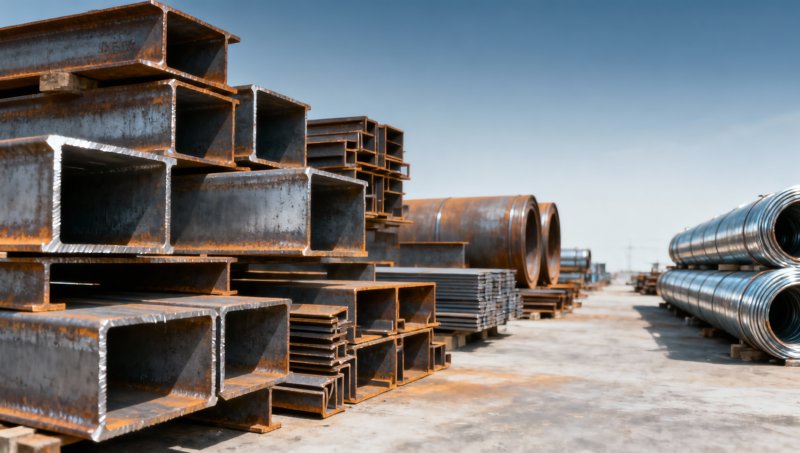
ASTM A36 is a carbon structural steel specification widely used for plates, bars, and structural sections in buildings, platforms, frames, supports, and general fabrication. It is popular because it offers a practical balance of strength, weldability, machinability, and price. In many standard applications, buyers do not need an advanced alloy grade to meet project requirements, and A36 fills that role efficiently.
In day-to-day engineering decisions, A36 is often selected for base plates, brackets, beams, channels, angle steel, and fabricated supports where moderate strength is acceptable. Typical minimum yield strength is around 36 ksi, which is about 250 MPa, and tensile strength commonly falls in the 58–80 ksi range, or about 400–550 MPa. These figures make it suitable for many welded and bolted structural assemblies used indoors or in controlled environments.
Another reason for its wide use is processing flexibility. A36 can usually be cut, drilled, welded, and formed using standard shop practices, which lowers fabrication complexity. For manufacturers and EPC contractors, this can shorten workshop cycles by several days across medium-volume orders, especially when compared with materials that require tighter heat input control or more specialized welding procedures.
Typical applications where A36 performs well
A36 is frequently used in warehouse structures, mezzanines, stair stringers, equipment frames, machinery supports, and non-exposed structural members. It is also common in fabricated parts where dimensional stability and cost control matter more than high-strength optimization. In projects with clear protective coating plans, the steel can deliver reliable service for 10 years or more, depending on environment and maintenance frequency.
- Building frames and general steel supports in low to moderate corrosion environments
- Base plates, gusset plates, brackets, and connection components for welded assemblies
- Industrial platforms, access systems, and machinery foundations requiring dependable fabrication
- OEM structural parts where standard material availability helps control procurement cost and lead time
The table below summarizes where ASTM A36 fits best and where buyers should evaluate alternatives more carefully.
The key takeaway is that ASTM A36 is not an outdated choice. It remains a reliable option when the design basis, exposure level, and fabrication plan are aligned. The mistake is assuming it is automatically right for every structural job without reviewing corrosion exposure, section efficiency, and regulatory requirements.
When ASTM A36 Is the Right Choice and When It Is Not
The best use cases for ASTM A36 are projects where moderate mechanical performance is sufficient and fabrication simplicity matters. If your structure is a support frame, equipment skid, factory platform, warehouse rack support, or secondary steel element, A36 often delivers strong value. For buyers managing cost-sensitive projects with short lead times of 2–6 weeks, its availability can simplify supply planning and reduce procurement uncertainty.
However, material selection should not stop at yield strength. If your project aims to reduce dead weight, increase span efficiency, or meet stricter seismic or structural performance targets, a higher-strength grade may lead to better overall economics even if the per-ton price is higher. In some cases, using fewer tons of steel can offset the premium of a stronger material and reduce welding hours by 5%–15%.
Corrosion is another major boundary. Bare A36 is not a corrosion-resistant solution by itself. In coastal, chemical, humid, or outdoor service conditions, the steel usually needs galvanizing, painting, or another protective system. Without proper surface protection and inspection intervals, corrosion can increase maintenance cost and shorten service life significantly.
Key decision factors before approving A36
- Confirm the actual load case, including static load, live load, impact, and fatigue exposure.
- Review the service environment: indoor, outdoor, coastal, industrial, or chemically exposed.
- Check fabrication method, especially welding process, heat input, hole-making, and dimensional tolerance.
- Compare total installed cost, not only material cost per ton.
- Verify standard compliance, test requirements, and mill documentation before purchase.
Common selection mistakes
One common mistake is using A36 in an outdoor project and assuming standard paint is enough without calculating coating thickness, edge preparation, and maintenance interval. Another is comparing A36 only with plate or beam alternatives, while ignoring whether a galvanized pipe, coil-based formed section, or other profile could better serve the application. For support systems and low-pressure fluid lines, the required function may be corrosion resistance and service life rather than structural yield alone.
A second mistake is choosing based only on initial purchase price. If a material saves 3% on procurement but adds weight, coating rework, or more frequent maintenance over a 5–10 year period, the lower upfront cost may not be the better decision. Finance approvers and project managers should assess total cost of ownership rather than invoice price alone.
For technical reviewers, it is useful to compare A36 against performance needs in a structured way. The table below provides a practical screening model.
This comparison shows that ASTM A36 is usually a strong candidate for standard fabrication and general structural steel work, but it should be challenged in highly corrosive or heavily optimized designs.
How ASTM A36 Compares with Other Steel Products in Real Projects
Buyers often ask whether A36 should be compared only with other structural grades. In practice, the comparison is broader. Depending on the job, alternatives may include hot rolled sections, cold formed profiles, steel coil for downstream roll forming, galvanised steel sheet for enclosure systems, and pipe products for supports or fluid service. The right comparison is based on function, exposure, and fabrication route, not on material name alone.
For example, if the project requires a support frame in a humid outdoor environment, a galvanized tubular section may be more practical than untreated A36 plate assemblies. If the project involves roofing, cladding, or lightweight secondary framing, coil-based processed steel may be more efficient. If the structure is carrying low-pressure water, gas, or oil, a pipe solution can serve both mechanical and corrosion-related needs more directly than standard structural plate.
This is where integrated sourcing becomes valuable. A structural steel manufacturer with capabilities in angle steel, channel steel, steel beams, cold formed profiles, and customized fabricated parts can review whether the design should stay with A36 or shift to a more specialized product. That approach helps reduce material mismatch and lowers the chance of buying a familiar grade that is not ideal for the actual service condition.
A practical inserted product option for corrosion-related use
In projects where corrosion resistance is a first-level decision factor, buyers may evaluate Hot diped-Galvanized Pipe as an alternative or complementary product. It is used in the construction industry, light industry, automobile-related manufacturing, agriculture, material storage and transportation, and low-pressure fluid pipelines such as water, gas, and oil. It is also used for support frame pipe in trestle piles and mining pits, showing how selection depends on the actual job function.
Typical supplied dimensions include length from 1–12 m, width from 0.6–3 m where applicable to processed forms, and thickness from 0.1–300 mm depending on product configuration. A common thickness tolerance can be around ±0.15 mm. The surface may be clean, blasted, and painted according to customer requirements, and the product can be supplied to standards such as AISI, ASTM, DIN, JIS, GB, SUS, and EN. For buyers comparing material routes, these parameters help determine whether a galvanized pipe solution can better support service life targets.
When the comparison changes from strength to service life
If a project involves general low-pressure fluids, outdoor support members, or equipment exposed to rain, dust, and intermittent chemicals, corrosion protection can be more important than choosing a conventional structural grade alone. In such cases, galvanized pipe can reduce maintenance frequency and extend usable life, especially where repainting every 3–5 years would disrupt operations or increase labor cost.
- Choose ASTM A36 when the job is primarily structural and corrosion can be controlled by design and coating.
- Choose galvanized pipe when the job combines support function with exposure to moisture or low-pressure fluid service.
- Use a mixed-material strategy when the project includes both primary steel framing and corrosion-sensitive auxiliary systems.
The core point is not that one product replaces the other in every case. It is that real-world projects often need multiple steel solutions, each chosen for the most demanding performance criterion.
What Buyers Should Check Before Ordering ASTM A36 from a Supplier
A reliable purchasing process for ASTM A36 should cover more than price and quantity. Procurement teams should confirm section type, dimensions, tolerance expectations, surface condition, test documentation, and destination market requirements before issuing the final order. Even a small mismatch in beam size, hole location, camber expectation, or coating scope can create installation delays and rework costs at the site.
For international sourcing, a practical review usually includes 6 checkpoints: material grade, dimensions, production standard, inspection method, packing method, and shipping schedule. If the order includes fabricated components, also verify weld maps, drawing revision control, marking rules, and trial assembly needs. These details matter because site problems often come from execution gaps rather than from the steel grade itself.
For quality control and safety teams, traceability is essential. Heat number tracking, mill test certificates, dimensional reports, and coating inspection records should be aligned with the purchase order. In export projects, the acceptance process is often smoother when the documentation package is agreed in advance rather than requested after production is complete.
Recommended procurement checklist
From a supplier evaluation perspective, stable production capacity and consistent lead time are just as important as quotation level. A manufacturer serving North America, Europe, the Middle East, and Southeast Asia should understand export packing, international standard matching, and communication around OEM requirements. That reduces sourcing risk for distributors, project contractors, and end users.
A simple 5-step ordering flow
- Submit drawings, section list, quantities, and project standard requirements.
- Confirm grade, dimensions, surface treatment, and inspection points within 24–72 hours.
- Approve quotation, lead time, and documentation list before production release.
- Conduct in-process or pre-shipment inspection for critical orders.
- Coordinate packing, shipment, and receiving inspection at destination.
This process helps both technical and commercial stakeholders evaluate whether ASTM A36 is not only technically suitable but also executable within the project schedule and budget.
FAQ: Common Questions About ASTM A36 in Structural Jobs
Is ASTM A36 strong enough for major structural work?
For many common structures, yes. With minimum yield strength around 250 MPa and tensile strength roughly 400–550 MPa, ASTM A36 is adequate for a wide range of frames, supports, and fabricated members. The final answer depends on load calculations, section design, connection details, and governing code requirements. For high-load optimization or weight-sensitive designs, stronger grades may be more efficient.
Can ASTM A36 be used outdoors?
Yes, but usually with surface protection. Outdoor use commonly requires painting, galvanizing, or another corrosion-control system. In mild environments, a proper coating plan may perform well with routine inspection every 12–24 months. In coastal or chemical exposure, buyers should review whether a different steel solution or a heavier-duty protective system is justified.
What should purchasers ask for in documentation?
At minimum, ask for the mill test certificate, dimensional inspection record, packing list, and clear marking tied to heat number or batch identification. For fabricated structural components, also request drawing revision confirmation, weld inspection records when applicable, and any agreed coating inspection data. These documents reduce installation disputes and help quality teams verify compliance faster.
How long is the usual lead time for ASTM A36 structural orders?
For standard stock-based items, supply can sometimes be arranged in 7–15 days. For mill rolling, cutting, drilling, welding, or export packing, a more typical range is 2–6 weeks depending on tonnage, section complexity, and port schedule. Buyers with project deadlines should also account for inspection time and shipping transit, not only production time.
How do I decide between A36 and a galvanized pipe solution?
Start with function. If the component is a general structural member inside a building or within a controllable coating system, A36 may be the right choice. If the component must handle low-pressure fluids, moisture exposure, or corrosion-prone support duty, a galvanized pipe may provide better service life and lower maintenance. The most efficient solution often combines primary structural steel with corrosion-focused auxiliary products.
ASTM A36 remains a dependable structural steel option for many projects because it is versatile, weldable, and widely available. Still, the right material decision depends on 4 core factors: load demand, environment, fabrication route, and lifecycle cost. Buyers who compare these factors early can avoid over-specifying the steel or underestimating corrosion and maintenance risk.
As a structural steel manufacturer and exporter from China, Hongteng Fengda supports global customers with angle steel, channel steel, steel beams, cold formed steel profiles, customized structural steel components, and practical sourcing guidance across ASTM, EN, JIS, and GB requirements. If you are evaluating ASTM A36 for an upcoming project, now is a good time to review drawings, service conditions, and alternative product routes before placing the order.
Contact us today to discuss your structural steel application, request a customized solution, or get detailed support on material selection, fabrication options, and export supply planning.
Please give us a message


Please enter what you want to find