For buyers sourcing materials for damp environments, the value of 202 stainless steel coil depends on balancing cost, corrosion resistance, and end-use requirements.
While it is cheaper than 304 or 316, humidity can reveal clear performance limits.
A careful review of exposure level, fabrication method, and maintenance expectations is essential before choosing 202 stainless steel coil.
Material profile of 202 stainless steel coil
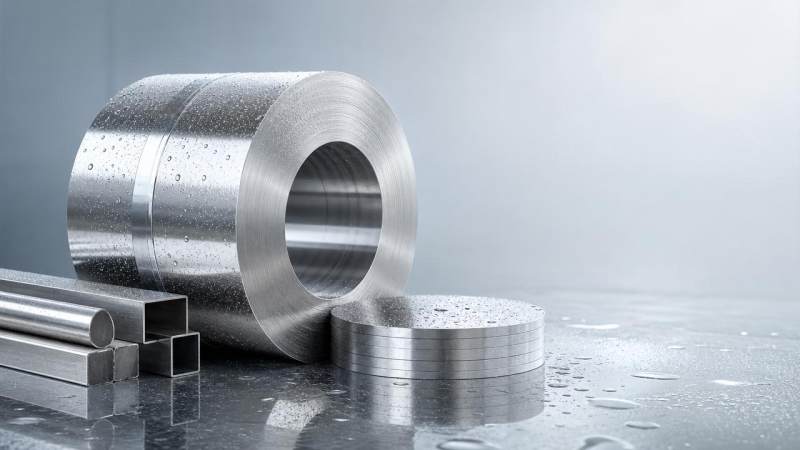
202 stainless steel coil is an austenitic stainless steel grade with reduced nickel and increased manganese content.
This composition helps lower material cost while keeping acceptable formability and strength for many light industrial uses.
In dry indoor conditions, 202 stainless steel coil can perform well for decorative panels, household fixtures, trim, and general fabrication.
Its surface can look similar to higher grades, which often leads to confusion during sourcing decisions.
The key difference appears when moisture, salts, chemicals, or poor ventilation increase the corrosion burden over time.
Why buyers consider this grade
- Lower price than 304 stainless steel in many markets
- Good strength for formed parts and light structural components
- Suitable for polishing, bending, and common fabrication work
- Available in different thicknesses and finishes
These advantages explain why 202 stainless steel coil remains widely traded in cost-sensitive steel applications.
Why humid use changes the buying decision
Humidity alone does not always cause immediate failure, but it increases the risk of staining, tea discoloration, and localized corrosion.
If the environment also includes chloride, condensation, industrial dust, or cleaning chemicals, the risk grows faster.
In such settings, 202 stainless steel coil may lose its appearance earlier than expected.
That can create hidden costs through replacement, polishing, downtime, or customer complaints.
Humidity factors that matter most
This is why the question is not only whether 202 stainless steel coil is cheap.
The real question is whether it remains economical after exposure-related maintenance and replacement are included.
Industry signals shaping material selection
Across the steel supply chain, buyers increasingly compare initial price with full-life performance.
This trend is especially visible in fabricated steel parts used in semi-exposed environments.
Projects now ask more often about service life, finish retention, compliance, and consistency between batches.
- Lower-cost stainless grades remain attractive where exposure is moderate
- Moisture-related warranty concerns are pushing some uses toward 304
- Surface finish quality increasingly affects corrosion behavior and customer perception
- Traceability and standards alignment matter more in export projects
A capable steel supplier should support this evaluation with clear technical data and realistic application guidance.
Hongteng Fengda, as a structural steel manufacturer and exporter from China, serves global construction and industrial projects with stable production and strict quality control.
That background is useful when material choice must align with ASTM, EN, JIS, and GB related expectations.
Application value in real steel projects
202 stainless steel coil can still be worth buying when humidity is present but exposure remains controlled.
Examples include indoor fittings, architectural trims away from splash zones, and fabricated covers in ventilated workshops.
In these cases, cost savings may justify the grade if the finish is maintained properly.
For projects combining stainless elements with structural framing, related components also influence long-term durability.
A practical example is Metal Channel used in construction, wall beams, brackets, lightweight roofs, and mechanical supports.
It is available in grades such as Q195, Q235B, Q345B, Duplex, 201, 202, 304, and 316.
Typical specifications include thickness from 1.5mm to 25mm, length from 6m to 12m, and height from 80mm to 160mm.
With standards including AISI, ASTM, DIN, JIS, BS, and GB/T, this product supports broad industrial compatibility.
For humid settings, coating type, grade selection, and fabrication quality should be reviewed together rather than separately.
Where 202 stainless steel coil adds value
- Interior decorative steel components
- Appliance shells in low-corrosive indoor conditions
- Light fabrication where periodic cleaning is feasible
- Budget-limited projects with short or medium service expectations
Typical humid-use scenarios by suitability
This kind of classification helps avoid over-specifying or under-specifying stainless material.
Practical checks before placing an order
Before buying 202 stainless steel coil, review more than the price per ton.
Moisture exposure interacts with finish, fabrication, storage, transport, and installation quality.
- Confirm the exact application and whether chloride exposure exists.
- Request chemical composition, mechanical properties, and test certificates.
- Check surface finish, edge condition, and protective film quality.
- Ask how welding, polishing, and passivation will be handled.
- Estimate cleaning frequency and expected service life.
- Compare life-cycle cost against 304 stainless steel, not only purchase price.
If the part is visible and replacement is disruptive, a higher grade may produce better value even with a higher upfront cost.
If exposure is light and inspection is easy, 202 stainless steel coil may remain a practical choice.
Decision guidance for humid environments
Is 202 stainless steel coil worth buying for humid use?
The answer is yes for controlled indoor humidity and cost-sensitive applications with limited corrosion demand.
The answer becomes no when the environment includes salt, condensation, chemical exposure, or strict appearance retention requirements.
A sound steel sourcing decision should match grade, finish, fabrication, and maintenance to the real service environment.
When comparing options, request technical support, standard compliance details, and alternative grade recommendations before finalizing the order.
That approach reduces sourcing risk and improves long-term project performance in humid conditions.
Please give us a message


Please enter what you want to find