When evaluating materials for budgets and performance, 201 stainless steel pipe often appears to be an attractive option. But is the lower upfront cost truly a smart saving, or could it introduce long-term risks in corrosion resistance, maintenance, and project reliability? For steel-related projects, the answer depends on where, how, and why the pipe will be used.
In many cases, 201 stainless steel pipe can reduce initial spending without creating immediate problems. In other situations, choosing 201 stainless steel pipe may increase replacement frequency, surface rust risk, and total ownership cost. A useful decision starts with application fit, not price alone.
Why application context decides whether 201 stainless steel pipe saves money
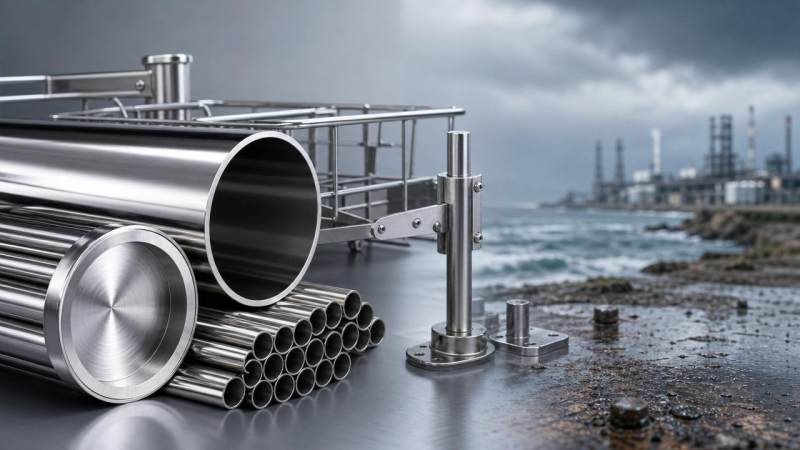
Not all steel pipe environments are equal. Indoor decorative use, dry structural support, and light fabrication differ greatly from coastal exposure, chemical contact, or high-humidity processing areas.
That is why 201 stainless steel pipe should be judged by service conditions. A lower purchase price helps only when the material can meet durability requirements throughout the project lifecycle.
Compared with higher-grade stainless options, 201 contains less nickel and more manganese. This composition helps lower cost, but it can also reduce corrosion resistance in aggressive environments.
For steel buyers, the real question is simple: will the operating environment stay mild enough for 201 stainless steel pipe to remain stable, clean, and structurally acceptable over time?
Which project scenarios make 201 stainless steel pipe a practical choice
Indoor decorative and architectural applications
In dry indoor spaces, 201 stainless steel pipe often performs well. It is commonly used for handrails, trim structures, display frames, furniture components, and decorative tubing.
These applications usually prioritize appearance, formability, and cost control. If exposure to chlorides, standing water, and industrial contamination is limited, the economic case becomes stronger.
Light structural fabrication in controlled environments
Some light-duty frameworks can also use 201 stainless steel pipe effectively. Examples include indoor support frames, equipment guards, partitions, and non-critical fabricated assemblies.
The key judgment point is not load alone. It is the combined effect of moisture, maintenance frequency, cleaning chemicals, and visual quality expectations over the service period.
Projects driven by short-to-medium service life targets
When project economics are based on shorter use cycles, 201 stainless steel pipe may fit. Temporary installations, budget-limited interior works, and replaceable fabricated parts are common examples.
If periodic inspection and future replacement are already planned, the lower entry cost can be justified. However, this only works when the replacement process itself remains manageable.
Which scenarios turn 201 stainless steel pipe into a long-term risk
Coastal, marine, and chloride-rich environments
Salt in the air or water is a major warning sign. In coastal construction, port facilities, and marine-adjacent fabrication, 201 stainless steel pipe can show staining or corrosion faster than expected.
Even attractive polished finishes may degrade under chloride exposure. In these settings, a lower upfront price often leads to higher cleaning, repair, and replacement expenses later.
Food processing, wet cleaning, and chemical contact zones
Areas with frequent washing, disinfectants, acidic residues, or cleaning agents require extra caution. 201 stainless steel pipe may not maintain surface integrity as reliably in these environments.
Where hygiene, appearance, or low contamination risk matters, corrosion spots quickly become operational problems. The material decision then affects compliance, maintenance labor, and downtime.
Outdoor public and infrastructure installations
Outdoor railings, exposed supports, transit features, and public-facing structures face rain, pollution, and temperature changes. In such cases, 201 stainless steel pipe may age unevenly.
Visual degradation matters here as much as structural performance. A material that saves money on paper can harm brand image or increase maintenance calls after installation.
How scenario demands differ across common steel applications
The table below helps compare when 201 stainless steel pipe is a reasonable value choice and when it creates avoidable risk.
What to check before choosing 201 stainless steel pipe
A smarter buying decision comes from evaluating environment, finish, fabrication method, and service expectations together. Cost analysis should include use conditions, not only unit price.
- Check whether the installation is indoor, semi-outdoor, or fully exposed.
- Review contact with salt, cleaners, acids, humidity, or standing water.
- Confirm visual standards for staining, discoloration, or surface marks.
- Estimate maintenance frequency and access difficulty after installation.
- Compare replacement cost against savings from the initial purchase.
In broader project planning, combining the right pipe grade with suitable surrounding materials also improves lifecycle performance. For roofing and cladding systems, materials such as PPGI Steel Sheet can support corrosion resistance, easy installation, and durable exterior performance in many construction applications.
This kind of coordinated material selection matters in commercial buildings, wall panels, public structures, and manufacturing facilities, where appearance, maintenance, and weather exposure interact closely.
Common mistakes when judging 201 stainless steel pipe by price alone
Mistake 1: Assuming all stainless steel performs the same
The word stainless creates false confidence. Different grades behave differently under moisture, chlorides, cleaning chemicals, and temperature variation. Grade selection should always follow application demands.
Mistake 2: Ignoring finish and fabrication details
Weld quality, surface finish, and fabrication contamination influence corrosion behavior. Even suitable 201 stainless steel pipe can perform poorly if processing and handling are not properly controlled.
Mistake 3: Looking only at purchase cost
Real cost includes cleaning, downtime, appearance complaints, repair labor, and replacement. A cheaper grade may become the more expensive option once field performance is considered.
Mistake 4: Forgetting regional climate factors
Humidity, industrial pollution, and coastal air can change material outcomes significantly. The same 201 stainless steel pipe may perform acceptably in one city and fail early in another.
Practical selection guidance for steel projects
If the environment is dry, indoor, and appearance-focused, 201 stainless steel pipe can be a cost saver. If the project faces salts, chemicals, frequent washing, or outdoor exposure, caution is necessary.
A reliable sourcing approach should also consider processing consistency, dimensional accuracy, quality control, and compliance with international standards. These factors affect installation efficiency and long-term stability.
As a structural steel manufacturer and exporter from China, Hongteng Fengda supports global construction and industrial projects with stable production, dependable lead times, and customized steel solutions across multiple product categories.
The best next step is to match service conditions with material performance targets, then compare total lifecycle cost. That process will show whether 201 stainless steel pipe is a genuine saving or an avoidable risk for your project.
Please give us a message


Please enter what you want to find