When comparing I beam vs H beam for heavy-load applications, the right choice depends on strength, span, cost, and steel standards. For engineers, buyers, and project managers sourcing structural steel, understanding load performance alongside related materials like Mild Steel Plate, angle stainless steel, and Corrosion Resistant Steel can reduce risk and improve project efficiency.
How do I beam and H beam differ in heavy-load structural work?
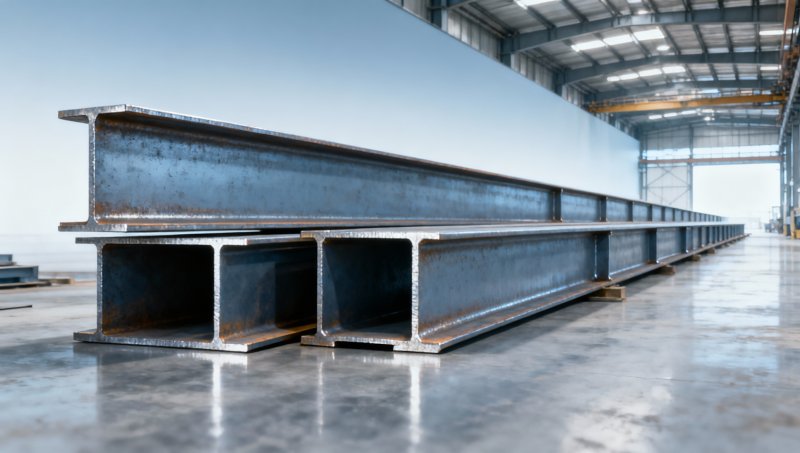
In steel construction, the debate around I beam vs H beam usually starts with shape, but real project decisions go much deeper. Both are structural steel beams designed to carry bending and shear loads, yet their flange width, web thickness, section depth, and manufacturing standard affect how they behave under heavy loads. For warehouses, industrial workshops, equipment platforms, bridges, and multistory frames, that difference can directly influence safety margin, fabrication efficiency, and budget control.
An I beam typically has narrower flanges and a relatively thinner web profile compared with an H beam of similar nominal height. This makes it suitable for many conventional building frames, secondary members, and moderate-span applications. An H beam generally features wider flanges and a more balanced cross-section, which often improves load distribution and stability in high-load or long-span conditions. That is why engineers frequently consider H beams for columns, transfer beams, and primary load-bearing members.
For technical evaluators and procurement teams, the practical question is not which profile is universally better, but which section performs better under a given load case. Heavy-load handling depends on at least 4 core factors: section modulus, moment of inertia, unbraced length, and connection design. A beam used over a 6–12 m span in a factory frame will face different design priorities than one used in a 3–5 m mezzanine system.
Hongteng Fengda supports global buyers who need standard and customized structural steel components for such scenarios. With manufacturing aligned to common international standards such as ASTM, EN, JIS, and GB, the company helps contractors, distributors, and project owners compare structural profiles based on application demands rather than guesswork. This reduces sourcing errors, rework risk, and delivery pressure during critical project phases.
Key section differences that affect load behavior
- Flange width: H beams usually have wider flanges, which can improve resistance to bending and enhance bearing stability at supports and connections.
- Web and flange proportions: I beams often use a more tapered or visually narrower proportion, while H beams tend to have a more uniform and heavy-duty section profile.
- Application role: I beams are commonly selected for beams and floor members, while H beams are frequently used for both beams and columns in high-load frames.
- Fabrication and installation impact: The chosen section affects welding length, end-plate design, bolting patterns, and lifting weight during site erection.
For operators and site managers, these differences also influence handling, storage, and field alignment. A heavier H beam may reduce deflection under service loads, but it can also require different lifting equipment, more robust base plates, or revised transport planning. That is why beam choice should always be linked to the full project workflow, not only the section drawing.
Which one handles heavy loads better in real projects?
If the project involves heavy loads, H beam often has the advantage because its geometry is typically better suited for high axial loads, strong bending resistance, and stable support conditions. In many industrial and commercial structures, the wider flange and robust section allow the H beam to perform more effectively where large machinery loads, concentrated support reactions, or longer spans are involved. This does not mean an I beam is weak; it means the load case must match the section capability.
For example, in a workshop crane bay, platform support system, or heavy equipment foundation frame, engineers often prefer sections with stronger resistance to deflection and local instability. H beams are commonly favored in these cases, especially when the structure must carry repeated service loads or support large dead loads plus live loads. In lighter building frames or shorter spans, an I beam may still provide a cost-effective and structurally sufficient option.
The comparison below helps clarify where each section is generally more suitable. Final sizing still depends on engineering calculations, but this table gives procurement teams and decision-makers a practical starting point when reviewing heavy-load structural steel options.
The table shows why many heavy-load projects move toward H beam selection, especially where designers need stronger section performance without excessive redesign. Still, “better” should be measured against project requirements such as span-to-depth ratio, support condition, vibration sensitivity, and available steel grade. A lighter I beam can sometimes meet code and budget goals more efficiently than an oversized H beam.
When H beam is usually the stronger choice
H beam is commonly preferred in 3 types of heavy-duty situations: high axial compression in columns, long-span beams with strict deflection control, and industrial structures carrying repetitive live loads. In these applications, section stability matters as much as nominal strength. Procurement teams should therefore review not only tonnage, but also beam geometry, steel grade, and fabrication compatibility.
Typical heavy-load scenarios
- Steel frame workshops supporting cranes, suspended systems, or heavy rooftop equipment.
- Industrial platforms exposed to concentrated loads from machinery, tanks, or piping assemblies.
- Warehouse and logistics buildings where columns and girders must tolerate high rack loads and forklift traffic impact.
- Infrastructure or plant projects where structural members must meet both strength and strict safety review requirements.
For quality and safety managers, it is also important to verify whether the beam will be used under static load only or under dynamic loading conditions. Repeated loading, vibration, and support eccentricity can change the ideal profile choice. In practice, that often shifts the recommendation further toward a more stable H beam section.
What technical factors should buyers and engineers compare before choosing?
A smart procurement decision should go beyond the simple I beam vs H beam label. Structural performance depends on section properties, steel grade, manufacturing tolerance, connection details, coating system, and inspection scope. For B2B buyers, at least 5 checkpoints should be reviewed before placing an order: design load, span length, standard requirement, fabrication method, and delivery schedule. Missing any one of these can lead to redesign, site delays, or cost overruns.
The steel standard matters because dimensional series and tolerances vary across ASTM, EN, JIS, and GB systems. A section that looks equivalent on paper may differ in flange thickness, corner geometry, or actual mass per meter. For international projects, technical teams should confirm whether the required beam is a standard rolled section, a custom fabricated profile, or a substitution candidate approved by the structural designer.
At this stage, related material selection often enters the discussion as well. A project may combine beams with plates, channels, cold formed sections, and stainless components in corrosive or hygienic environments. For piping supports, plant retrofits, or mixed-material assemblies, buyers sometimes also source 304 Stainless steel pipe to complement carbon steel structures. Its common application range includes residential decoration, food or medical sectors, and industrial piping systems, with typical dimensions such as 3000–12000 mm length, 6–2500 mm outside diameter, and 0.6–30 mm thickness.
That kind of inserted procurement planning is useful because heavy-load structures are rarely isolated purchases. They often sit inside a broader package involving support frames, corrosion control, process lines, or OEM steel components. Suppliers with both standard structural steel capability and customization support can simplify the supply chain and reduce communication gaps between engineering, procurement, and site teams.
Technical selection checklist
Before comparing quotations, use the following matrix to review how I beam and H beam fit the project. This helps engineers, purchasers, and financial approvers align technical needs with practical sourcing decisions.
This checklist reduces the common mistake of buying by section name alone. A beam that seems cheaper per ton may become more expensive after additional stiffeners, larger plates, or site modifications are included. For project managers working on 2–4 week procurement windows, early alignment on these points can protect both schedule and total installed cost.
How should procurement teams balance cost, compliance, and delivery risk?
Cost is rarely just the raw steel price. In heavy-load projects, total cost often includes material yield, processing time, welding, coating, packing, shipping, on-site lifting, and the risk of late changes. An I beam may appear economical at the quotation stage, but if the design requires additional reinforcement or stricter deflection control, the savings may narrow quickly. An H beam can sometimes lower total fabrication complexity even when its unit price is higher.
Compliance is another major factor for buyers in North America, Europe, the Middle East, and Southeast Asia. Structural steel often needs to match project specifications around standards, tolerances, mill documentation, and inspection scope. In practical sourcing, 3 documentation layers are commonly reviewed: material specification, dimensional verification, and shipment traceability. Quality control personnel should also confirm whether third-party inspection is required before dispatch.
Delivery risk becomes especially important when projects run on fixed installation windows such as 7–15 days for local erection preparation or 3–6 weeks for overseas shipment coordination. A supplier with stable production capacity, OEM support, and experience in export documentation can make a major difference. Hongteng Fengda serves global construction and industrial buyers with structural steel beams, angle steel, channel steel, cold formed profiles, and customized components, helping reduce uncertainty in lead time and specification matching.
For commercial evaluators and finance teams, the best approach is to compare at least 3 dimensions side by side: technical adequacy, delivered cost, and execution reliability. This is more useful than comparing tonnage price alone, especially when the beam is a primary load-bearing member and failure or delay would affect the entire project schedule.
A practical 4-step sourcing process
- Confirm project inputs: span, load type, steel standard, coating demand, and connection details.
- Compare section options: review I beam and H beam alternatives with actual section properties and fabrication impact.
- Check supply capability: verify production schedule, inspection documents, export packing, and shipment lead time.
- Lock the final scope: freeze drawings, tolerances, marking rules, and quantity breakdown before production release.
This process is especially useful for distributors, EPC contractors, and owners managing repeated orders or mixed product packages. It keeps technical review, procurement control, and project execution aligned from the start.
Common questions before selecting I beam or H beam
Many buyers begin with a basic strength comparison, but the real decision usually involves application detail, standard matching, and delivery planning. The questions below reflect common concerns raised by engineers, operators, safety managers, and procurement teams during beam selection for heavy-load structures.
Is H beam always better than I beam for heavy loads?
Not always. H beam is often better for heavy loads because of its wider flange and balanced section, but “always” is too broad. If the span is short, the load is moderate, and the support condition is simple, a properly sized I beam may fully satisfy design requirements. The correct answer depends on load combination, serviceability limit, and section verification by the project engineer.
What should buyers ask suppliers before ordering structural beams?
At minimum, ask for 5 items: applicable standard, section size list, steel grade, tolerance reference, and delivery lead time. For custom projects, also confirm coating method, cutting or drilling scope, marking rules, and inspection documents. These details matter more than generic statements about quality because they directly affect fit-up, compliance, and installation speed.
How do standards affect I beam vs H beam substitution?
Substitution is not only a size issue. ASTM, EN, JIS, and GB sections can differ in flange width, web thickness, theoretical weight, and section properties. A visually similar beam may not provide the same structural behavior. If substitution is necessary, the project engineer should review the alternative section and the supplier should confirm actual production dimensions and documentation.
What is the usual lead-time consideration for project steel supply?
Lead time varies by section availability, order volume, processing scope, and destination. For standard items, review windows may be shorter, while custom fabricated beams may need additional production and inspection time. In export projects, buyers usually plan across 2 stages: production readiness and shipment coordination. Early technical confirmation reduces the risk of delay much more effectively than last-minute expediting.
Why work with a structural steel supplier that understands both engineering and export execution?
When selecting between I beam and H beam for heavy loads, the strongest result comes from combining technical clarity with dependable supply. Hongteng Fengda provides structural steel manufacturing and export support for global construction, industrial, and manufacturing projects. The company supplies angle steel, channel steel, steel beams, cold formed steel profiles, and customized structural steel components with attention to standard compliance, consistent quality, and stable production planning.
For buyers comparing beam options, support can include section recommendation based on drawings, confirmation of ASTM, EN, JIS, or GB requirements, advice on OEM processing scope, and coordination of packing and delivery details. This is valuable when projects involve multiple stakeholders, such as engineers, procurement teams, quality inspectors, and installation contractors, each with different review priorities.
If you are evaluating I beam vs H beam for a heavy-load application, you can discuss 6 practical items before ordering: load scenario, span range, target standard, steel grade, fabrication details, and expected lead time. That early discussion helps prevent mismatched sections, repeated approvals, and unnecessary cost growth during execution.
Contact Hongteng Fengda to review structural steel beam selection, customized section supply, sample support, documentation requirements, coating options, shipment planning, and quotation details. Whether you need standard beams or a broader package with related structural components, a clear technical and commercial review can help you choose the right section with greater confidence.
Please give us a message


Please enter what you want to find