When comparing I beam vs H beam, cost is not just about steel beam factory price—it also depends on weight, load capacity, fabrication, and project efficiency. For buyers, engineers, and contractors sourcing from a structural steel manufacturer, understanding how to calculate I beam weight and select the right profile can reduce total costs while meeting ASTM, EN, JIS, GB, and S355JR requirements.
What really changes the cost in I beam vs H beam selection?
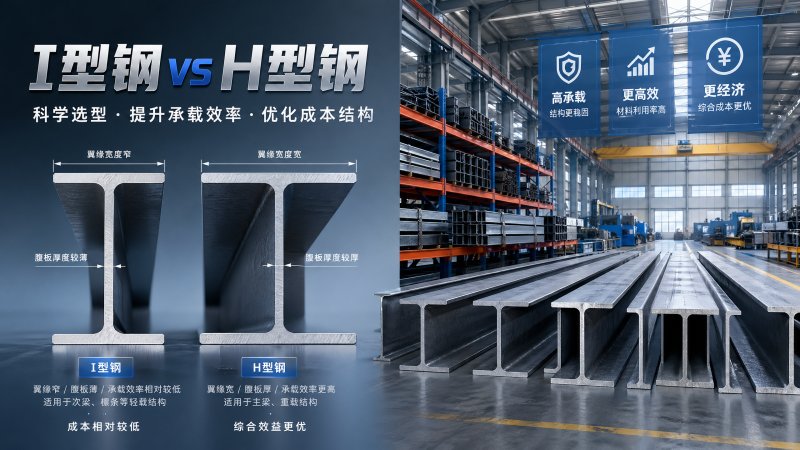
In steel projects, the cheaper beam on paper is not always the lower-cost choice after transport, cutting, welding, installation, inspection, and service life are considered. This is why the I beam vs H beam question matters to procurement teams, technical evaluators, project managers, and finance approvers. A beam section that saves 3% on unit price may still increase total project cost if it requires more reinforcement, more welding hours, or tighter installation control.
An I beam usually has a narrower flange and a web proportion suited to many conventional structural uses. An H beam typically has wider flanges, a more balanced cross-section, and stronger performance in applications where higher load capacity, better stability, or longer spans are needed. In practical purchasing, the decision often comes down to 4 core variables: section weight, structural efficiency, fabrication complexity, and supply availability.
For users in construction, industrial equipment frames, warehouses, platforms, and steel structures, beam selection affects not only steel tonnage but also project rhythm. A wrong choice can lead to redesign delays of 3–7 days, additional site welding, and repeated approval rounds. For distributors and resellers, it can also affect stock turnover because standard moving sizes differ by region and by code system such as ASTM, EN, JIS, and GB.
Hongteng Fengda supports global buyers as a structural steel manufacturer and exporter from China, supplying steel beams, channels, angle steel, cold formed profiles, and customized structural components. For beam cost control, stable production capacity, consistent section tolerance, and dependable lead times are often as important as quotation price, especially when projects run on 2–4 week material windows.
A practical way to view beam cost
Instead of focusing only on price per ton, many experienced buyers compare total installed cost. This approach is more useful in B2B projects because it combines material efficiency with execution risk.
- Material cost: section weight per meter, grade, coating, and order volume.
- Fabrication cost: cutting, drilling, welding, edge preparation, and assembly time.
- Logistics cost: bundle density, loading efficiency, shipping route, and destination handling.
- Project cost: erection speed, connection detailing, rework probability, and inspection requirements.
I beam vs H beam: side-by-side comparison for engineering and purchasing
Before ordering, teams usually need a fast comparison between profile geometry, load behavior, and procurement impact. The table below helps align engineers, buyers, and financial reviewers around selection logic instead of relying on habit or region-specific naming alone.
The key takeaway is simple: I beam is not always cheaper, and H beam is not always more expensive. In a warehouse extension, mezzanine, equipment base, or tower-related structure, the more economical profile depends on span, support spacing, connection method, and safety margin. This is why many procurement reviews use 3 comparison layers: price per ton, kg per meter, and installed cost per structural function.
For technical assessment, it is also important to compare by standard family. Dimensions and tolerances can vary under ASTM, EN, JIS, and GB systems. If design drawings and supplier production standards are not aligned early, the result can be section mismatch, bolt-hole adjustment, or unexpected shop revisions during the 1st or 2nd fabrication cycle.
When does I beam usually make more sense?
An I beam often delivers better value when the structure is moderate in load demand, the span is relatively controlled, and the project prioritizes standard stock availability. This is common in platforms, short transfer beams, building auxiliaries, and secondary framing where over-specifying a heavier profile only increases tonnage.
For buyers managing a budget-sensitive package, I beam can also simplify sourcing when standard sizes are readily available in regional markets. In orders where lead time is critical, using common sections may reduce the waiting period from 3–4 weeks to around 7–15 days, depending on mill schedule and processing scope.
When does H beam usually save more overall?
H beam often becomes the cost-saving option when the project requires better flange strength, longer spans, higher column capacity, or fewer structural members. In these situations, a higher unit price can be offset by lower fabrication hours, fewer connection points, and improved erection speed. This matters on sites where crane time, labor access, and schedule pressure can quickly increase indirect cost.
For project leaders, the economic advantage appears when 1 H beam can replace a heavier assembly approach or reduce the number of supporting members. Less site welding, fewer stiffeners, and simpler alignment checks can also improve quality control and safety management during installation.
How to calculate total cost, not just beam price
Many purchasing errors happen because the team compares quotations without a shared cost model. A better method is to review beam options across 5 cost checkpoints: raw steel price, weight per meter, processing cost, transport efficiency, and installation effect. This is especially useful for enterprise decision-makers and finance reviewers who need to approve structural packages with clear cost logic.
The basic formula for material comparison is straightforward: unit weight per meter × total length × quantity = estimated beam tonnage. After that, add drilling, welding, cutting, galvanizing or painting, packing, inland transport, ocean freight, and contingency for design adjustment. Even a 5%–8% difference in weight can be less important than a 10% reduction in fabrication hours or a shorter installation sequence.
The table below gives a practical framework for comparing beam options during RFQ review. It does not replace engineering design, but it helps teams identify where true savings come from in steel structure procurement.
This comparison method is also useful when a project combines different steel products. For example, some beam-based structures also require corrosion-resistant round sections for tower accessories, brackets, or connection components. In that case, buyers may also evaluate Galvanized Round Steel for related applications such as electric power towers, communication towers, highway protection, marine components, street light poles, and building steel structure components.
For such auxiliary steel parts, technical factors like diameter 16–250 mm, galvanized surface, tensile strength 570–820 MPa, customized length, and ISO h8 or h9 tolerance can influence overall project consistency. When a supplier can coordinate beams and related structural items under one quality control workflow, procurement becomes easier, especially for mixed orders requiring packaging, marking, and standard compliance under AiSi, ASTM, BS, GB, JIS, EN, or AS references.
A 4-step review process before order placement
- Verify design basis: confirm load case, span, support condition, and required standard system.
- Compare section efficiency: review I beam weight, H beam dimensions, and expected connection detailing.
- Check production and QC: confirm tolerance control, heat number traceability, and inspection records.
- Lock commercial terms: lead time, packing method, shipment batch, and document package.
This structured review helps reduce sourcing risk for contractors, resellers, and industrial buyers. It also creates clearer communication between engineering and procurement, which is often where hidden costs start.
Which beam fits different project scenarios better?
The best answer to I beam vs H beam depends on use case. In steel buildings, factory extensions, machinery support frames, distribution structures, and overseas fabricated steel packages, design conditions vary enough that one universal choice is unrealistic. Decision quality improves when the team reviews application-specific priorities rather than asking which profile is cheaper in general.
For instance, a short-span maintenance platform may benefit from an I beam because the loading is moderate and stock sizes are easy to source. A logistics warehouse with longer bays may gain more from H beam because wider flanges and higher section stability can reduce supporting members and speed up erection. In marine or outdoor conditions, the conversation must also include coating or galvanizing strategy because lifecycle cost can exceed initial section savings over several maintenance cycles.
Scenario-based selection guide
The table below is designed for project managers, technical reviewers, and distributors who need a fast commercial and engineering reference before requesting a formal quotation.
This scenario logic shows why no single section wins in every case. The real saving comes from matching the beam profile to the structural role. If a buyer only compares ex-works price, they may miss larger cost drivers like support quantity, welding hours, or transport batching.
Three common mistakes that raise project cost
- Using beam name alone without confirming actual dimensions under the required standard system.
- Comparing only price per ton without checking kg per meter and fabrication details.
- Ignoring coating, tolerance, and document requirements until after production starts.
These issues are especially costly in export projects, where corrections can extend shipping arrangements by 1–2 weeks. Working with a supplier familiar with global standards and customized structural steel solutions helps control that risk.
What should buyers, QC teams, and decision-makers check before approval?
A strong procurement process for steel beams should combine technical validation, commercial clarity, and quality control readiness. This matters not only to purchasing departments but also to safety managers, site operators, and distributors who need consistent repeat orders. In many projects, 6 checkpoints are enough to prevent most ordering problems.
First, confirm the exact standard and grade required by the drawing, such as ASTM, EN, JIS, or GB, and whether equivalent grades are acceptable. Second, verify section dimensions and tolerances. Third, confirm whether the order is raw beam only or includes drilling, cutting, welding preparation, or anti-corrosion treatment. Fourth, ask for packing and marking details. Fifth, confirm inspection documents. Sixth, align shipment batch and lead time with project schedule.
Hongteng Fengda serves global buyers with structural steel products and OEM solutions backed by modern manufacturing facilities and strict quality control. For customers across North America, Europe, the Middle East, and Southeast Asia, this means one practical advantage: beam procurement can be managed together with channels, angles, cold formed steel profiles, and customized structural components under consistent production and delivery coordination.
Buyer checklist for faster internal approval
- Section confirmation: exact beam type, dimensions, length range, and quantity by item.
- Material confirmation: grade, applicable standard, and substitution policy if needed.
- Quality confirmation: tolerance, traceability, inspection scope, and document package.
- Commercial confirmation: Incoterms, payment milestone, delivery cycle, and packing method.
- Project confirmation: end use, environmental exposure, and any required customized processing.
FAQ for beam cost and selection
Is H beam always more expensive than I beam?
Not always. H beam may have a higher section price or weight in some sizes, but it can still reduce total cost if it lowers member quantity, connection complexity, or installation time. The right comparison should include at least 3 factors: material tonnage, fabrication workload, and site efficiency.
How do I calculate I beam weight correctly for purchasing?
Use the section table from the required standard and multiply kg per meter by total length and quantity. Then add a reasonable allowance for cuts, end trimming, or project-specific processing. Procurement teams should avoid estimating by appearance alone because even similar-looking sections can vary by standard family.
Which beam is better for long-span steel structures?
In many long-span or higher-load applications, H beam is often preferred because of its wider flange and balanced structural performance. However, the final answer depends on span length, support conditions, design code, and connection strategy. A proper structural check is necessary before ordering.
What lead time should buyers normally expect?
For standard sections with limited processing, lead time may fit within 7–15 days in some cases. For customized fabrication, mixed-product orders, or export shipment planning, 2–4 weeks is a more common working range. Early drawing confirmation and standard alignment usually help shorten the cycle.
Why choose us for steel beam sourcing and cost control?
If your team is comparing I beam vs H beam for a current project, the most useful supplier is not simply the one giving a fast number. You need a structural steel manufacturer that can support section matching, standard alignment, production planning, and export delivery with fewer hidden risks. That is where Hongteng Fengda adds practical value for global construction, industrial, and manufacturing projects.
We support buyers who need standard steel beams, customized structural components, and coordinated supply across multiple product categories. Our capabilities in angle steel, channel steel, steel beams, and cold formed profiles help customers simplify sourcing while maintaining quality consistency. This is especially helpful when your project requires parallel review of load-bearing sections, tolerance-sensitive items, and anti-corrosion components.
You can contact us to discuss 6 practical topics before placing an order: beam type confirmation, section and weight calculation, grade and standard matching, processing scope, delivery schedule, and export packing requirements. If your project includes OEM or customized steel structure parts, we can also review drawings, quantity range, and compliance expectations for the target market.
For faster quotation and technical review, prepare your beam list, required standard, grade, lengths, processing details, coating requirement, destination port, and expected delivery window. With clear inputs, it becomes much easier to determine whether I beam or H beam saves more cost in your real application—not just in theory, but across the full procurement and project cycle.
Please give us a message


Please enter what you want to find