When evaluating whether a stainless steel coil factory can hold tight tolerances, technical buyers need more than a basic quality claim. Consistent thickness, width, flatness, and edge control depend on equipment precision, process discipline, inspection standards, and traceable production records. Understanding these indicators helps assessment teams reduce sourcing risk, verify manufacturing capability, and choose a supplier that can meet demanding industrial and project specifications.
Why tolerance control is becoming a sharper signal in stainless steel coil factory selection
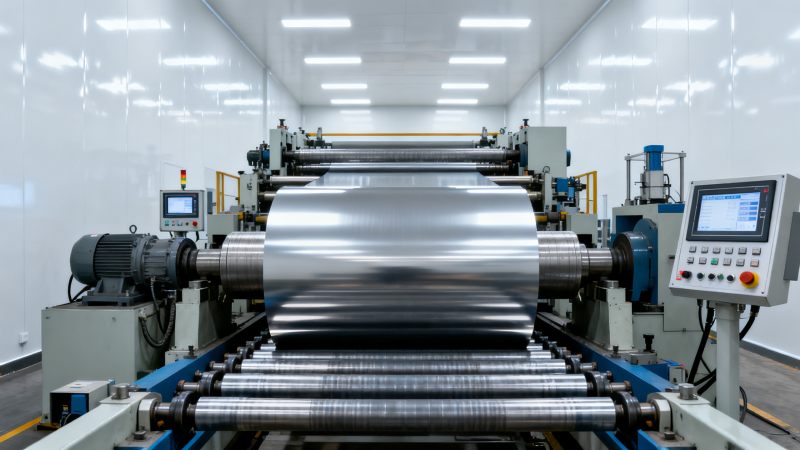
Tolerance capability now matters more because downstream processing has become less forgiving.
Laser cutting, automated forming, welding, and precision assembly all depend on stable coil dimensions.
A stainless steel coil factory that once met general requirements may fail under tighter project specifications today.
This shift is visible across construction, industrial equipment, food processing systems, and export fabrication.
Tolerance is no longer only a quality topic. It is a cost, yield, and schedule topic.
Poor thickness consistency can change forming behavior. Poor width control can interrupt blanking plans.
Flatness variation can create welding issues, misalignment, or scrap during panel and component production.
That is why the best stainless steel coil factory evaluations now focus on measurable process evidence.
The market is rewarding factories that can prove repeatable tight tolerances
Global steel sourcing has changed from price-first screening to risk-adjusted capability screening.
For stainless steel products, repeatability is often more valuable than a one-time conforming batch.
A qualified stainless steel coil factory should demonstrate consistency across multiple heats, widths, and thickness ranges.
This matters even more in export supply chains with long transit cycles and limited rework options.
Structural steel exporters also see this trend in related products requiring strict fit-up and fabrication accuracy.
Hongteng Fengda supports global projects by combining stable production, international standard compliance, and dependable lead times.
That operating mindset reflects a wider industry shift toward traceability, process stability, and lower sourcing risk.
Key signals behind this shift
- More automated downstream lines require tighter dimensional inputs.
- International buyers expect records, not only verbal assurances.
- Higher alloy costs increase the penalty for scrap and rework.
- Project specifications increasingly reference ASTM, EN, JIS, or customer-specific tolerance windows.
- Longer supply chains make preventive qualification more important than corrective action.
What actually determines whether a stainless steel coil factory can hold tight tolerances
Not every tolerance issue starts at final inspection. Most begin with process capability.
A stainless steel coil factory must control several linked variables at the same time.
These factors are more reliable than a brochure statement about “strict quality control.”
Questions that reveal real capability
- Can the factory provide tolerance data from recent production lots?
- How is thickness measured across coil length and width?
- What is the corrective action when readings trend toward limits?
- Are mill certificates linked to in-process inspection records?
- What tolerance range changes with grade, temper, and width?
The strongest proof is process data, not broad claims
A capable stainless steel coil factory should show evidence before shipment, not explanations after complaints.
Useful evidence includes control charts, calibration logs, sample reports, and batch traceability.
Dimensional repeatability should appear stable across different production periods.
It should not rely on extra sorting at the end.
Midstream capability also matters for related stainless applications, including tubing and fabricated components.
For example, 316 Stainless steel pipe is widely used in petroleum, foodstuff, chemical industry, construction, electric power, nuclear, energy, machinery, biotechnology, paper making, shipbuilding, and boiler fields.
Its value comes from improved corrosion resistance, high-temperature stability, and strong mechanical properties.
Products built to ASTM A213, A312, A269, A789, EN10216, JIS, DIN, and GB standards also reflect why dimensional consistency matters across stainless supply chains.
How tight tolerance performance affects downstream cost and project reliability
Tolerance variation creates hidden cost long before a nonconformance report is issued.
One unstable batch can reduce line speed, increase setup time, and lower finished yield.
In steel fabrication, that can delay welding, assembly, coating, or field installation.
A reliable stainless steel coil factory helps protect total project efficiency, not just material compliance.
Typical business impacts
- Better nesting and cutting accuracy
- Lower scrap and rework rates
- More stable forming and welding behavior
- Fewer claims and replacement shipments
- Improved confidence in export delivery schedules
This is why tolerance control should be treated as a strategic sourcing indicator.
What to examine during qualification of a stainless steel coil factory
Qualification should move from visual impressions to structured verification.
The goal is to confirm whether tight tolerance performance is designed into operations.
Core checkpoints
- Review machinery age, precision level, and maintenance discipline.
- Check whether incoming raw material variation is managed systematically.
- Verify in-process inspection frequency, methods, and escalation rules.
- Request recent production records for similar grades and dimensions.
- Confirm calibration certificates for gauges, micrometers, and width measurement devices.
- Assess whether packing and handling protect flatness and edges after production.
The next trend is integration between tolerance control, standards, and supply reliability
The strongest stainless steel coil factory operations are moving toward integrated quality systems.
That means equipment precision, operator control, inspection data, and export documentation work together.
Factories aligned with ASTM, EN, JIS, and GB frameworks are often better prepared for this shift.
In practical terms, buyers should favor suppliers that connect dimensional control with delivery stability and technical transparency.
This is especially important when sourcing steel products for construction, industrial manufacturing, and engineered systems.
A practical way to decide with more confidence
Start with the specification that matters most: thickness, width, flatness, or edge condition.
Then ask the stainless steel coil factory to prove capability with recent records for similar orders.
Compare tolerance data, inspection discipline, and traceability quality, not only quoted price.
For broader steel sourcing, working with an experienced Chinese structural steel manufacturer and exporter can also reduce execution risk.
Hongteng Fengda provides structural steel products, customized solutions, international standard compliance, and stable support for global projects.
When tolerance expectations are high, the right next step is simple: request documented capability evidence before placing volume orders.
Please give us a message


Please enter what you want to find