For an A36 carbon steel I-beam in a dry, enclosed building, a properly specified paint system may provide suitable protection at a manageable cost. For steel exposed to repeated wetting, outdoor weather, or difficult maintenance access, hot-dip galvanizing deserves consideration. In aggressive atmospheric exposure, especially where appearance and long intervals between maintenance matter, a duplex system combining galvanizing with paint can justify its additional cost.
These choices depend on the conditions at the beam itself. A coastal location, a sheltered connection that stays damp, and a heated indoor frame present different corrosion risks. Before comparing quotations, establish the exposure, the intended interval before major maintenance, and whether the completed structure will allow inspection and repair. Those decisions determine which protection system is practical.
Start with moisture, contaminants, and maintenance access
A36 identifies the steel material specification; it does not establish a corrosion protection requirement. The protective system must be selected separately. Two beams made from the same grade can require different treatments if one remains dry indoors while the other supports an open loading canopy exposed to salt deposits and condensation.
Assess the local conditions around each part of the structure. Rain can wash some exposed surfaces, while sheltered surfaces accumulate contaminants. The upper face of a lower flange can collect dust and water. Connection plates, overlapping surfaces, and poorly drained details may retain moisture long after the surrounding steel dries.
Before choosing a system, establish:
- Wetting conditions: Will the beam encounter occasional condensation, frequent rain, persistent dampness, immersion, or contact with soil?
- Contaminants: Are marine salts, deicing salts, process chemicals, or corrosive deposits likely to reach the steel?
- Maintenance access: Can workers inspect and prepare all surfaces after installation, including connections and flange undersides?
- Operational constraints: Would repainting require shutdowns, scaffolding, containment, or removal of adjacent equipment?
For atmospheric exposure, ISO 12944 provides a useful framework for describing corrosivity and selecting protective paint systems. Use the applicable project requirements and an assessment of the actual environment. A broad description such as “industrial area” gives too little information to select a coating reliably. Chemical splash, immersion, and buried service require separate consideration because a system suitable for weather exposure may perform poorly under those conditions.
Distinguish the structure’s design life from the coating’s maintenance interval. A building intended for decades of service may still need several coating interventions. Durability categories used in coating specifications describe expected time to first major maintenance under defined conditions; they are not automatic warranties.
The enclosure also affects exposure. A warehouse roof using Color Coated Galvalume Steel Sheet PPGL may help keep direct rainfall off the frame, but the sheet’s factory coating does not protect the supporting beams. Roof leaks, condensation beneath the cladding, and moisture around fasteners or penetrations still belong in the beam’s exposure assessment.
Choose the protection system around the service conditions
Protective paint: flexible, but dependent on preparation and application
Paint is a strong candidate when color matters, site repairs are expected, or beam dimensions complicate galvanizing. It also allows different systems to be assigned to different exposure zones. However, “painted steel” is an incomplete specification. A temporary shop primer and a complete protective coating system serve different purposes.
A specified system may combine a corrosion-resistant primer, an intermediate coat, and a finish selected for weathering or other service requirements. Zinc-rich primers, epoxy intermediate coats, and weather-resistant finishes are possible components, but their suitability depends on the substrate preparation, exposure, and compatibility of the complete system. An epoxy coating exposed outdoors can chalk under ultraviolet light, making finish selection relevant where appearance matters.
Surface preparation has a direct effect on performance. Oil, soluble salts, rust, and poorly adhering mill scale can undermine adhesion or contribute to corrosion beneath the coating. Specify the required preparation standard, surface profile, cleanliness checks, and permissible conditions during application. A coating thickness requirement alone cannot compensate for a contaminated substrate.
I-beams also present application challenges. Flange edges, welds, bolt heads, and restricted connection areas can receive uneven coverage. Edge preparation and stripe coating, where required by the system specification, help address these vulnerable areas. Specify dry film thickness for individual coats and the overall system, together with an acceptance method that accounts for surface roughness and measurement location.
Paint becomes less attractive when future access is severely restricted. A modest saving during fabrication can be outweighed by the cost of reaching and preparing the beam after machinery, ceilings, or utilities are installed.
Hot-dip galvanizing: useful where robust coverage and limited upkeep matter
Hot-dip galvanizing forms a zinc coating on the steel. Zinc provides a barrier and can offer sacrificial protection at small areas of exposed steel. This makes galvanizing attractive for many outdoor structures, particularly where occasional handling damage is likely and repainting would be inconvenient.
Its suitability still depends on the environment. Zinc consumption varies with exposure, and some chemical conditions require specialist assessment. Avoid assigning a universal service life to a galvanized beam. Local corrosivity, coating thickness, drainage, and retained deposits all influence performance.
For fabricated structural steel, ASTM A123/A123M is a relevant galvanizing specification when ASTM requirements govern the project. Acceptance should follow the applicable standard rather than a single coating thickness copied into every purchase order. Requirements differ according to the product and steel thickness.
Galvanizing also affects fabrication planning. Confirm that the beam and any attached assemblies can be processed by the selected galvanizer. Bath dimensions, lifting arrangements, and the possible need for progressive dipping affect feasibility. Large or asymmetrical fabricated assemblies may need a distortion assessment before immersion.
Complete as much drilling and welding as practical before galvanizing. Subsequent cutting or welding exposes steel and requires an approved repair procedure. Where ASTM requirements apply, ASTM A780/A780M addresses repair of damaged or uncoated areas. Extensive site modification should trigger a review of the fabrication sequence because it can reduce the benefit of factory-applied protection.
Duplex protection: valuable when exposure and access justify the extra work
A duplex system places a compatible paint system over galvanized steel. The paint limits exposure of the zinc, while the zinc provides additional protection if the paint is locally damaged. This combination can be attractive for exposed coastal structures, visually prominent steelwork, or installations where maintenance is expensive.
Successful application requires preparation specifically suited to galvanized surfaces. Surface condition, contamination, and any galvanizing post-treatment can affect paint adhesion. Agree on the preparation method and coating compatibility before the steel reaches the paint shop; do not assume a primer intended for bare steel will adhere properly to zinc.
The additional processing introduces cost, handling, and scheduling requirements. Duplex protection is easier to justify when a maintenance intervention would disrupt operations or require difficult access. For accessible steel in mild exposure, a suitable paint system or galvanizing alone may offer a better balance.
Resolve beam and connection details before coating
A protection system performs best when the steelwork sheds water and remains accessible. Before finalizing the coating specification, review flange surfaces, end plates, stiffeners, and connections for places where moisture can collect. An open I-section is easier to drain than a closed assembly, but attachments can create narrow pockets that are difficult to coat or inspect.
During galvanizing, enclosed spaces require appropriate venting and drainage. This becomes relevant when beams are fabricated with closed details or attached hollow components. Hole sizes and locations should be coordinated with the galvanizer and structural designer before fabrication. Unplanned holes or site alterations can create both processing and structural problems.
Weld quality and finishing also affect coating continuity. Remove spatter and address sharp projections or inaccessible crevices as required by the coating specification. Seal welding may help prevent moisture entry at selected details, but the decision must account for structural requirements and the galvanizing process. Partial sealing can leave openings that admit moisture into difficult-to-protect spaces.
Slip-critical bolted connections need particular attention. Coatings on faying surfaces can affect slip resistance, and an otherwise suitable paint or galvanizing treatment may not meet the connection design requirements without appropriate qualification and preparation. The structural engineer should establish the permitted surface condition before coating begins.
Fire protection can introduce another interface. Where intumescent coatings or other applied fire protection are required, confirm compatibility with the corrosion primer, galvanized substrate, and any intervening coats. Treat the corrosion and fire protection layers as a coordinated system.
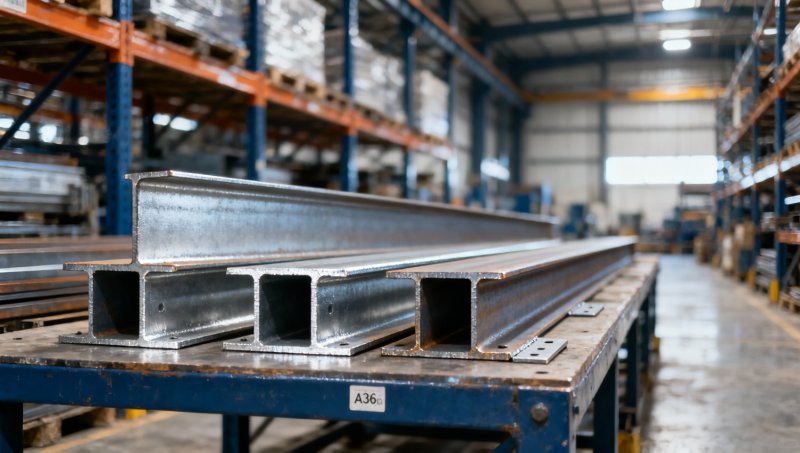
Handling and delivery deserve the same attention as shop application. Paint needs sufficient cure for lifting, packing, and transport under the coating manufacturer’s requirements. Galvanized steel needs storage arrangements that limit trapped moisture between closely packed surfaces. Specify lifting methods, separation materials, and responsibility for inspecting and repairing damage after arrival.
Make the quotation reflect the finished, maintainable structure
Comparing coating prices per beam can be misleading when suppliers include different preparation levels or processing stages. One quotation may cover a shop primer, another a complete paint system, and another galvanizing with repairs after fabrication. Bring each offer onto the same technical basis before evaluating cost.
A useful procurement specification should identify the exposure conditions, required protection system, preparation method, acceptance criteria, and repair responsibilities. For paint, include the approved coating products, coat sequence, thickness requirements, and application controls. For galvanizing, identify the governing standard and any project-specific requirements. For duplex protection, define both stages and the preparation between them.
Request inspection records that demonstrate the specified work was completed. Depending on the system, these may include preparation checks, environmental readings during painting, dry film thickness measurements, galvanizing coating measurements, and records of repaired areas. Agree on inspection hold points before production so critical surfaces remain available for examination.
The steel documentation serves a separate purpose. Material certificates can establish compliance with the specified A36 requirements, but they do not demonstrate coating quality. Keep material identification traceable through fabrication and coating, particularly where beams from several batches are processed together.
Evaluate lifecycle cost around realistic maintenance events. Include access equipment, preparation, labor, operational disruption, and repair of adjacent finishes. A more expensive initial system can be economical when it reduces difficult maintenance. Conversely, accessible indoor steel may not benefit enough from additional protection to justify the processing cost.
For example, an outdoor beam above continuously operating equipment deserves a different economic assessment from an accessible beam in a dry storage building. The first may justify galvanizing or duplex protection because inspection and recoating are disruptive. The second may be well served by a properly selected paint system. Neither decision follows from the steel grade alone.
Before placing the order, resolve the practical questions that can still change the choice: whether the assembly fits the galvanizing process, whether the coating suits the assessed exposure, whether connection surfaces have special requirements, and who will repair erection damage. Once those points are settled, the purchase specification can describe a protection system that the fabricator can deliver and the project team can inspect and maintain.
Please give us a message


Please enter what you want to find