How to Select a Carbon Steel Sheet Supplier Wisely
Choosing the right carbon steel sheet supplier is a critical decision for procurement teams managing cost, quality, delivery, and project risk.
With global steel sourcing becoming more competitive, buyers need more than a low price from any potential supply partner.
They need stable production capacity, certified materials, reliable lead times, and responsive technical support for demanding construction and manufacturing projects.
This guide explains the key factors procurement teams should evaluate before selecting a supplier and building a long-term sourcing relationship.
Start with the real procurement goal: lower total risk, not just lower unit price
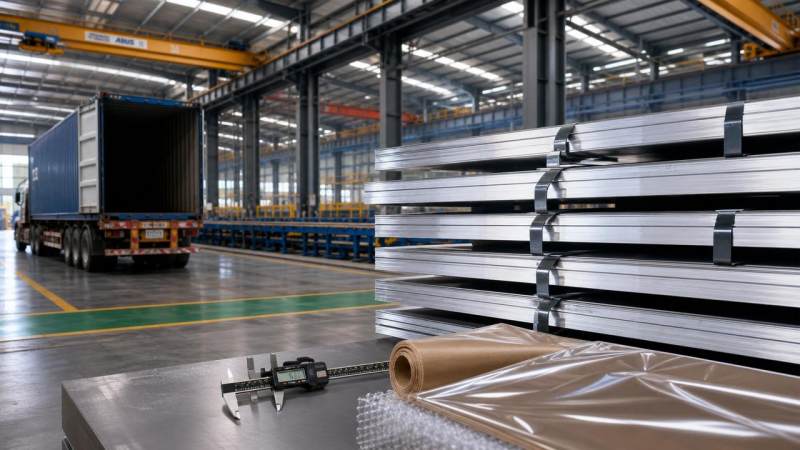
For most buyers, the best carbon steel sheet supplier is not simply the company offering the cheapest quotation.
The smarter choice is a supplier that helps you control total landed cost, avoid delays, and reduce quality disputes.
Carbon steel sheet is often used in structural, industrial, machinery, and fabrication applications where dimensional accuracy matters.
A small defect in thickness tolerance, flatness, surface condition, or chemical composition can create expensive downstream problems.
Procurement teams should therefore evaluate suppliers through a risk-based lens, not only through a price comparison table.
The most reliable supplier is usually the one that can prove consistent quality, transparent documentation, and stable delivery performance.
This mindset is especially important when sourcing internationally, where communication, logistics, customs, and standards must be managed carefully.
Confirm whether the supplier understands your application
Before comparing quotations, clarify exactly how the carbon steel sheet will be used in your project or production line.
Sheets for construction components, machinery bases, tanks, frames, automotive parts, and general fabrication may require different properties.
A professional supplier should ask about grade, thickness, width, length, tolerance, surface finish, processing needs, and applicable standard.
If a supplier only responds with a price and does not discuss usage conditions, procurement risk increases significantly.
Application knowledge helps the supplier recommend the correct grade and avoid over-specification or under-specification of materials.
For example, weldability, formability, yield strength, and surface requirements should match the fabrication process and final working environment.
A supplier serving global buyers should also understand ASTM, EN, JIS, GB, and other common international material standards.
This capability reduces confusion when technical drawings, purchase specifications, and inspection requirements come from different markets.
Check certification, test reports, and traceability carefully
Material certification is one of the first documents buyers should request from a carbon steel sheet supplier.
A mill test certificate should clearly show heat number, grade, chemical composition, mechanical properties, dimensions, and applicable standard.
Procurement teams should verify whether documents are complete, readable, consistent with the order, and traceable to delivered materials.
Traceability is essential when steel sheets are used in regulated, structural, or safety-related applications.
Reliable suppliers usually maintain quality records throughout production, inspection, packing, and shipment stages.
They should also support third-party inspection when buyers require SGS, BV, Intertek, or other independent verification.
Do not treat certification as a formality, because incomplete documents can delay customs clearance or project acceptance.
A supplier with strong quality control will welcome clear inspection requirements rather than avoid technical discussion.
Evaluate production capacity and supply stability
Stable production capacity is a major factor when buyers need repeat orders, project supply, or scheduled container shipments.
A supplier may offer competitive prices, but limited capacity can lead to delays during peak demand or market shortages.
Ask about monthly output, available inventory, standard sizes, custom processing ability, and emergency order handling procedures.
For large projects, procurement teams should also confirm whether the supplier can support phased deliveries.
Phased delivery helps control warehouse pressure, cash flow, and construction or fabrication schedules across different project stages.
Buyers should also ask how the supplier manages raw material procurement during volatile steel market conditions.
A dependable supplier will explain production planning, order confirmation, lead time control, and communication during schedule changes.
This transparency is more valuable than a vague promise that every order can be delivered quickly.
Compare price by total landed cost
Steel buyers often receive quotations that look similar at first glance but contain different commercial assumptions.
To compare fairly, confirm whether the price includes processing, packing, inland transport, port charges, ocean freight, insurance, and documents.
Incoterms such as EXW, FOB, CFR, and CIF can change the buyer’s actual cost responsibility.
Procurement teams should also consider loss caused by late delivery, rejected material, poor packing, or unclear documentation.
A slightly higher unit price may be more economical if the supplier reduces inspection failures and shipment uncertainty.
Ask for a detailed quotation that lists grade, standard, size, quantity, tolerance, surface condition, payment terms, and delivery time.
Clear quotations reduce misunderstanding and make internal approval easier for purchasing, engineering, finance, and project management teams.
The goal is not to avoid negotiation, but to negotiate from accurate and comparable information.
Inspect quality control from raw material to shipment
A serious carbon steel sheet supplier should have quality checks at multiple stages, not only before loading.
Important inspection points include raw material verification, dimensional measurement, surface inspection, mechanical testing, and final packing review.
Buyers should ask whether the supplier controls thickness tolerance, width tolerance, length accuracy, flatness, and edge condition.
Surface defects such as rust, scratches, oil stains, scale, pits, and lamination should be clearly addressed.
If sheets require cutting, slitting, leveling, drilling, or other processing, the supplier should define inspection criteria.
Photographic inspection reports before shipment can help overseas buyers review material status before containers leave the port.
Good packing is also part of quality control, especially for long-distance sea transportation.
Moisture protection, strong bundles, clear labels, and safe loading reduce the chance of damage during handling.
Assess communication speed and technical responsiveness
Procurement problems often become serious when suppliers respond slowly or avoid responsibility after order confirmation.
Before placing an order, observe how quickly the supplier answers technical questions and clarifies uncertain specifications.
A reliable supplier should confirm details in writing and provide practical suggestions when specifications are incomplete.
Good communication is particularly important for overseas buyers working across time zones, languages, and documentation systems.
Procurement teams should evaluate whether the sales, technical, production, and logistics teams coordinate effectively.
If every question receives a generic answer, the supplier may not manage complex orders well.
Strong suppliers usually provide drawings, standards references, packing photos, loading updates, and shipment documents in an organized way.
This responsiveness helps buyers reduce internal follow-up work and avoid last-minute surprises.
Consider whether the supplier supports related steel products
Many procurement teams prefer suppliers who can support broader structural steel requirements beyond carbon steel sheet alone.
This can simplify sourcing when projects also need beams, channels, angles, cold formed profiles, bars, or customized components.
For example, buyers sourcing reinforcement or general-purpose steel bar may also evaluate Wire Rod for related manufacturing needs.
Products made from carbon steel materials such as Q235, Q345, Q195, St37, and similar grades serve many applications.
Standards like ASTM, GB, EN, DIN, and JIS help buyers match materials with regional engineering requirements.
When one supplier understands multiple steel categories, procurement can reduce vendor management complexity and improve project coordination.
However, buyers should still confirm that each product category has proper specifications, inspection records, and delivery capability.
Broader supply ability is valuable only when it is supported by reliable technical control and documented quality assurance.
Review export experience and logistics capability
International procurement requires more than manufacturing capacity, because export documentation and logistics directly affect delivery reliability.
A qualified supplier should understand commercial invoices, packing lists, certificates of origin, bills of lading, and inspection documents.
They should also know how to arrange container loading, cargo securing, port delivery, and shipping schedule coordination.
For buyers in North America, Europe, the Middle East, and Southeast Asia, documentation accuracy can affect customs clearance.
Ask whether the supplier has experience shipping to your country or region and understands local import expectations.
Procurement teams should also confirm packaging methods for sea freight, especially when materials are exposed to humid environments.
A supplier with proven export experience can anticipate common shipping risks and communicate solutions before problems occur.
This capability protects project timelines and reduces hidden costs after the order leaves the factory.
Use samples, trial orders, and audits before committing large volumes
When selecting a new carbon steel sheet supplier, procurement teams should avoid placing a large first order without verification.
Samples, small trial orders, or third-party audits provide practical evidence of the supplier’s real capability.
A trial order allows buyers to test communication, production accuracy, packaging quality, documentation, and delivery performance.
If possible, compare the delivered material against drawings, standards, certificates, and internal inspection criteria.
Factory audits can also help buyers understand equipment, warehouse conditions, quality systems, and production management.
For strategic suppliers, an audit may reveal whether the company can support long-term growth and repeat purchasing.
Procurement teams should document trial results and create an approved supplier evaluation record.
This process turns supplier selection from personal judgment into a repeatable sourcing decision.
Build a supplier scorecard for objective comparison
A supplier scorecard helps procurement teams compare options using consistent criteria rather than relying on impressions.
Key evaluation items may include price competitiveness, material compliance, lead time, communication, documentation, export experience, and complaint handling.
Buyers can assign weighted scores based on project priorities, such as quality for structural use or delivery for urgent fabrication.
The scorecard should include both pre-order evaluation and post-delivery performance review.
Over time, this method helps identify which suppliers consistently meet expectations and which create recurring risk.
It also supports internal reporting when management asks why one supplier was selected over another.
Procurement teams should update the scorecard after every order, especially when market conditions or supplier capacity changes.
A structured evaluation system improves sourcing discipline and strengthens long-term supplier management.
Watch for warning signs before placing an order
Some warning signs should make buyers pause before confirming any purchase order with a new supplier.
Be cautious if the supplier avoids written specifications, refuses inspection, or cannot provide valid material documents.
Unusually low prices may indicate wrong grade, reduced thickness, poor quality, hidden charges, or unstable inventory.
Frequent changes in payment terms, unclear lead times, and inconsistent company information also deserve careful attention.
Procurement teams should verify business registration, export history, factory capability, and customer references when possible.
If the supplier cannot explain how quality problems are handled, after-sales risk may be too high.
Professional suppliers are usually transparent about what they can do and honest about limitations.
That honesty is often a stronger sign of reliability than exaggerated promises or unrealistic delivery claims.
Why long-term partnership matters in steel sourcing
A stable supplier relationship can create measurable value beyond a single transaction or short-term price advantage.
Long-term cooperation allows suppliers to understand buyer preferences, technical requirements, packing standards, and delivery expectations.
This reduces repeated clarification, improves order efficiency, and supports better planning during market fluctuations.
Reliable suppliers may also provide early market information, production schedule suggestions, and cost-saving alternatives.
For construction, industrial, and manufacturing projects, these advantages help procurement teams protect budgets and timelines.
However, long-term partnership should be earned through performance, not assumed after one successful shipment.
Buyers should maintain regular reviews, clear agreements, and performance tracking to keep the relationship productive.
The best supplier partnerships combine competitive pricing with trust, transparency, technical competence, and delivery discipline.
Conclusion: choose the supplier that protects your project outcome
Selecting a carbon steel sheet supplier wisely requires a balanced view of quality, cost, capacity, documentation, and service.
Procurement teams should look beyond the lowest quotation and evaluate how each supplier controls real sourcing risk.
The right partner understands your application, provides certified materials, communicates clearly, and delivers according to agreed schedules.
They also support inspection, export documentation, logistics coordination, and long-term supply planning for global buyers.
When these factors are reviewed systematically, supplier selection becomes a strategic decision rather than a price-driven gamble.
For buyers managing construction, industrial, or manufacturing projects, a dependable supplier can protect both budget and reputation.
Use clear specifications, objective scorecards, trial orders, and documented performance reviews to make every sourcing decision stronger.
In steel procurement, the wisest choice is the supplier that consistently helps you complete projects safely, efficiently, and reliably.
Please give us a message


Please enter what you want to find