For procurement teams, understanding stainless tube price means looking beyond the quoted number. Hidden costs can appear in material grade, wall thickness, tolerance, surface finish, standards compliance, packaging, and shipping terms. As a China-based structural steel manufacturer and exporter, Hongteng Fengda helps buyers evaluate real cost drivers, compare offers accurately, and make sourcing decisions that reduce risk while protecting project budgets.
In steel sourcing, a low offer can become an expensive purchase once testing, rework, delays, or freight adjustments are added. That is why buyers need a practical framework for reading stainless tube price in context, not as a single line item.
For projects in construction, industrial fabrication, petroleum, chemical processing, and mechanical equipment, procurement decisions often involve 4 to 6 variables at the same time: grade, dimensions, standards, quantity, delivery terms, and post-processing. Each one affects the real landed cost.
What stainless tube price really includes
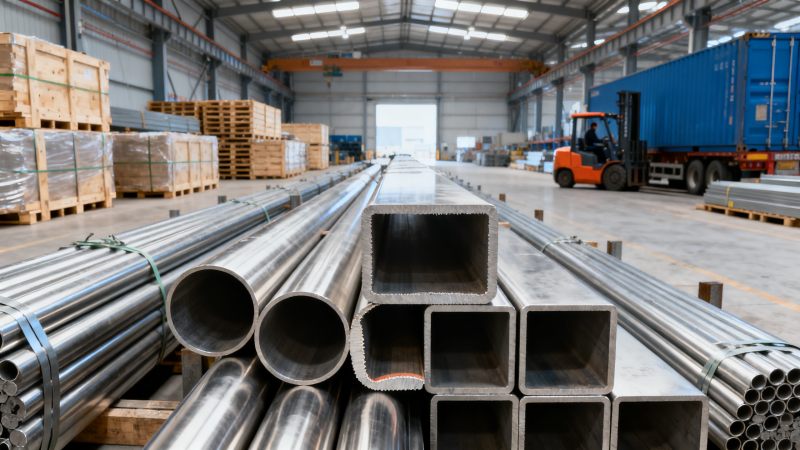
A stainless tube quotation usually starts with base material cost, but experienced buyers know that at least 7 cost layers may sit behind the final number. Ignoring even 1 of them can distort supplier comparison and create budget variance later.
Base metal cost is only the first layer
The first driver of stainless tube price is the alloy itself. Tubes made from 201, 304, 316, or 316L do not carry the same raw material value. Nickel and molybdenum content can change the price level significantly, especially when corrosion resistance is a key requirement.
For example, if a project specifies chloride exposure, selecting a lower grade to save 3% to 8% on purchase price can later increase maintenance, replacement frequency, or shutdown risk. In that case, a lower quote is not a lower total cost.
Dimensional details change cost more than many buyers expect
Tube outside diameter, wall thickness, and length tolerance directly affect weight, yield, and production method. A tolerance of ±0.2 mm is not priced the same way as ±0.5 mm, and a 3 mm wall is not interchangeable with a 2 mm wall when pressure, welding, or structural stability matters.
Buyers should also check whether the quote is based on theoretical weight or actual weight. This difference alone can shift the evaluated stainless tube price by 1% to 3%, especially on larger monthly volumes above 20 tons.
Common hidden line items in tube quotations
The table below shows how quoted price and real procurement cost can differ when technical and logistics details are not aligned from the start.
The key takeaway is simple: if two suppliers quote the same nominal specification but one excludes test certificates, tighter tolerances, or export packing, the stainless tube price is not directly comparable.
Standards compliance affects both price and risk
A tube produced to ASTM, EN, JIS, or GB may look similar on paper, but acceptance criteria and documentation can differ. Procurement teams should confirm the standard, edition, and any project-specific deviation before placing an order.
If compliance is discovered too late, hidden costs may include re-inspection, replacement, site rejection, or shipping back nonconforming goods. One missing document can delay installation by 7 to 21 days, especially on international jobs with strict QA procedures.
How procurement teams should compare supplier offers
A useful quotation review process should convert every offer into a like-for-like comparison. Instead of comparing only unit price per ton or per meter, buyers should review technical scope, delivery scope, and risk scope in the same sheet.
Use a 5-point comparison method
Procurement teams can reduce hidden cost exposure by checking 5 items before approving any stainless tube price: specification accuracy, standard compliance, inspection scope, packaging method, and Incoterms. If any 1 of these is missing, the offer remains incomplete.
- Confirm grade, size, finish, and tolerance line by line.
- Verify which standard applies and whether equivalent substitution is allowed.
- Check if MTC, third-party inspection, or pressure testing is included in the price.
- Review packaging for export, container loading, and corrosion protection.
- Match freight terms such as EXW, FOB, CFR, or CIF to your internal cost model.
This 5-step review often reveals why one quotation appears 5% lower but becomes 8% higher after logistics, inspections, and claim handling are added.
Read Incoterms carefully
One of the most common sourcing mistakes is comparing an EXW quote from one mill with a FOB or CIF quote from another supplier. The stainless tube price may look cheaper, but the missing inland transport, customs filing, port handling, or ocean freight can materially change the landed figure.
For international projects, lead time also matters. A tube order with a 15-day production cycle but poor booking support may arrive later than a 20-day order with more reliable export handling. Schedule disruption can cost far more than a small unit price difference.
A practical supplier comparison template
The following table gives procurement teams a simple way to compare offers from 3 suppliers without losing track of hidden cost variables.
When this format is used, price analysis becomes more transparent. Buyers can identify whether the premium in one offer is tied to measurable value such as better finish, lower rejection risk, or shorter lead time.
Technical factors that often create hidden cost after ordering
In stainless steel procurement, many extra costs do not appear at PO stage. They appear later during fabrication, installation, or operation. That is why technical review should happen before commercial approval, not after it.
Wall thickness and fabrication compatibility
If the purchased tube does not match bending, welding, punching, or cutting requirements, downstream fabrication loss can rise quickly. Even a 0.3 mm variance in wall thickness may affect fit-up quality or welding consistency on high-volume assemblies.
For buyers serving mechanical equipment or industrial lines, it is often better to request sample verification or production confirmation before releasing 1 full container. This usually saves 1 to 2 rounds of rework and lowers scrap exposure.
Surface finish, corrosion environment, and service life
A lower stainless tube price may reflect a finish that is acceptable for dry indoor service but unsuitable for salt, chlorine, or chemical exposure. Surface finish and grade selection must match the environment, not just the drawing.
In applications such as petroleum, chemical industry, and mechanical equipment, 316-series materials are often evaluated when corrosion resistance matters. One relevant option is 316L stainless steel pipe, available in round, square, and rectangle forms with BA surface options for projects that also need processing such as bending, welding, decoiling, punching, cutting, or moulding.
Because molybdenum is added to 316 stainless steel, this material is commonly selected where improved corrosion resistance and high-temperature stability are required over base 304 solutions. In chloride or salt-containing environments, paying more upfront can lower replacement frequency over a 3 to 5 year operating window.
When a higher-grade tube may lower total cost
The chart below outlines situations where a higher purchase price can still support a better procurement outcome.
This is why technical suitability should be calculated together with commercial price. A tube that performs exceptionally well in corrosive media may deliver a lower life-cycle cost even when the initial quote is higher.
How to reduce sourcing risk when buying from overseas suppliers
Cross-border steel procurement adds another layer to stainless tube price analysis. Besides material and processing cost, buyers must evaluate communication accuracy, production consistency, packaging discipline, and shipping coordination.
Ask for a complete pre-order checklist
A disciplined supplier should confirm 6 items before production starts: grade, dimensions, standard, finish, quantity, and shipment terms. For custom orders, drawing review and packing method should be added as item 7 and item 8.
- Confirm whether MOQ applies, especially for special grades or non-standard sizes.
- Check lead time by product type, often 15 to 35 days depending on mill schedule and processing scope.
- Ask whether export seaworthy packing, end caps, bundling, and marking are charged separately.
- Clarify claim handling process before shipment, not after arrival.
These steps are particularly important for procurement teams managing project deadlines, because a claim on imported steel material can take 2 to 6 weeks to resolve depending on evidence, stock replacement, and shipping availability.
Choose suppliers that support standards-based communication
Hongteng Fengda supports global buyers with structural steel and related steel product sourcing based on clear specifications, stable production capacity, and strict quality control. For procurement teams, that means easier comparison against ASTM, EN, JIS, or GB requirements and fewer avoidable gaps between technical and commercial documents.
A reliable exporter should help buyers move from inquiry to shipment through 3 practical stages: technical confirmation, production and inspection, then packing and delivery coordination. That workflow reduces ambiguity and helps protect schedule-sensitive project budgets.
Common mistakes buyers should avoid
Three errors appear frequently in tube sourcing. First, comparing offers with different Incoterms. Second, accepting “equivalent grade” without chemistry and standard review. Third, approving a stainless tube price before confirming tolerance, finish, and inspection scope.
Avoiding these mistakes does not require complex systems. It requires a consistent quotation checklist, supplier communication discipline, and a total-cost view that includes freight, compliance, fabrication, and replacement risk.
Final buying guidance for procurement teams
Reading stainless tube price correctly means translating every quote into total procurement cost. Grade, tolerance, finish, documents, packaging, and delivery terms all affect what the material will actually cost your project after it reaches the site or factory.
For buyers who need stable quality, standards-based production, and dependable export support, Hongteng Fengda provides a practical sourcing approach focused on cost control, risk reduction, and delivery reliability. If you are evaluating stainless tube options or related steel products for construction, industrial, or manufacturing use, contact us to get a tailored quotation, review technical details, and explore the right solution for your project.
Please give us a message


Please enter what you want to find