For procurement teams, judging whether a 304 stainless steel sheet price is fair requires more than comparing supplier quotes. Material grade, thickness tolerance, surface finish, origin, order quantity, processing requirements, and market nickel prices can all affect the final cost. A reliable evaluation helps buyers avoid hidden risks, control budgets, and secure consistent quality for construction, industrial, or manufacturing projects. This guide explains the key factors to check before confirming a purchase.
In international steel sourcing, a “cheap” offer can become expensive if the sheet fails inspection, arrives with unstable thickness, or lacks traceable documentation. A fair 304 stainless steel sheet price should match the specification, delivery scope, quality risk, and supplier reliability behind the quotation.
Understand what is included in a 304 stainless steel sheet quote
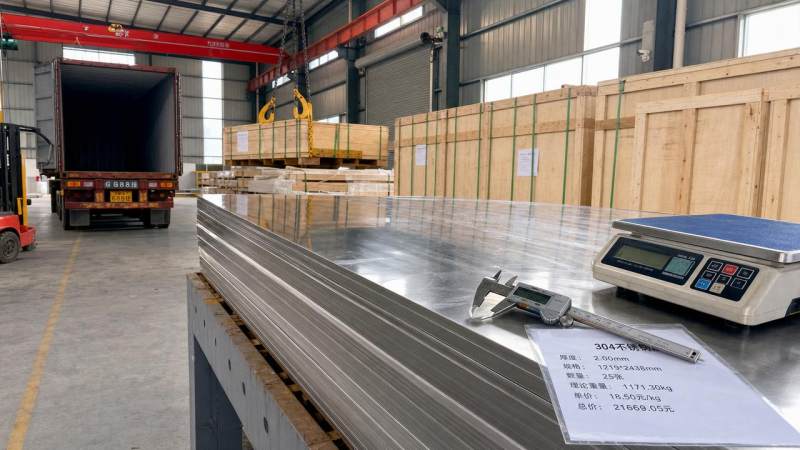
The first step is to confirm whether 2 suppliers are quoting the same product. A 304 stainless steel sheet price may look different because one offer includes PVC film, edge trimming, export packing, or sea freight, while another only covers ex-works material.
Procurement teams should request a line-by-line quotation. At minimum, the quote should identify grade, standard, thickness, width, length, surface finish, tolerance, quantity, packing method, lead time, payment terms, and Incoterms such as FOB, CIF, or CFR.
Core quotation elements to compare
A fair comparison usually requires at least 6 technical and commercial checks. Missing details often create disputes after production, especially for export orders above 5 tons or projects with strict acceptance standards.
The key conclusion is simple: evaluate the total purchasing condition, not only the unit number. A lower 304 stainless steel sheet price is not fair if it excludes necessary packing, inspection documents, or usable thickness.
Check the base metal cost before negotiating
304 stainless steel contains nickel and chromium, so raw material movement has a direct influence on pricing. When nickel prices move sharply within 7–15 days, many suppliers adjust offers or shorten quote validity to 1–3 working days.
A reasonable buyer practice is to compare at least 3 valid quotations issued within the same week. Quotes from different months are not reliable references because alloy surcharge, exchange rate, and freight may have changed.
Key technical factors that affect 304 stainless steel sheet price
Technical specification is often the main reason price gaps appear between suppliers. Thickness range, flatness, surface protection, edge condition, and cutting accuracy can all influence the final 304 stainless steel sheet price.
For industrial fabrication, even a 0.1 mm difference in usable thickness can affect welding, forming, weight calculation, and project cost. Procurement teams should align engineering drawings with the purchase order before final approval.
Thickness, width, and tolerance
Common stainless sheet thicknesses range from about 0.3 mm to 6.0 mm, while plate-like requirements may be thicker. Thin gauges require more careful rolling and surface control, which may increase processing complexity.
- Confirm whether thickness is nominal, actual, or average measured by weight calculation.
- Ask whether tolerance follows ASTM, EN, JIS, GB, or mutually agreed project requirements.
- For laser cutting or bending, verify flatness and burr requirements before production.
- For decorative use, specify film type, surface direction, and scratch acceptance level.
If a supplier offers a very low price but cannot specify tolerance, the buyer should treat the offer as incomplete. Material that is 2% lighter than expected may reduce the real value of the order.
Surface finish and downstream processing
A 2B sheet for general fabrication is usually priced differently from a No.4 brushed sheet or mirror-polished sheet. Surface-sensitive projects may also require double-side film, wooden cases, and separate inspection photos.
Processing such as slitting, leveling, shearing, laser cutting, bending, punching, or edge deburring can add cost. However, paying for accurate processing at the source may reduce rework by 1–2 production steps at the buyer’s plant.
Hongteng Fengda supports global buyers with structural steel products and customized steel solutions. Although stainless sheet purchasing is different from carbon structural sections, the same discipline applies: specification clarity reduces cost uncertainty.
For related infrastructure projects, buyers may also source Rail products made from carbon steel or medium manganese steel, with lengths from 12 m to 30 m and tolerance around ±1% depending on requirements.
How to calculate fair landed cost, not only unit price
A fair 304 stainless steel sheet price must be evaluated as landed cost. This includes product cost, packing, inland transportation, export handling, ocean freight, insurance, import duties, customs clearance, and local delivery.
For overseas buyers, a quote that is USD 40 per ton cheaper at FOB level may not be cheaper after port charges, container utilization, and destination logistics are considered. Procurement should compare cost per usable kilogram.
A 5-step landed cost review
- Confirm net material specification, including grade, size, surface, tolerance, and standard.
- Check gross weight, theoretical weight, packing weight, and container loading plan.
- Compare Incoterms, payment terms, quote validity, and expected production cycle.
- Add freight, insurance, duty, customs, inspection, and local handling costs.
- Assess quality risk cost, including rework, delay, return, and replacement exposure.
This 5-step review helps procurement teams avoid misleading comparisons. It is especially important when order volume exceeds one full container or when delivery delay could affect a construction schedule.
The following table shows how different commercial conditions can change the interpretation of a 304 stainless steel sheet price, even when the base unit rate appears close.
The practical lesson is that landed cost protects the buyer from hidden gaps. A fair supplier should be able to explain each cost item and show how it relates to production, packing, or delivery.
Supplier reliability: the hidden part of a fair price
Price fairness is not only mathematical. A stable supplier reduces the probability of wrong material, delayed shipment, missing documents, and inconsistent communication. These risks often cost more than a small price difference.
For procurement personnel, supplier evaluation should include at least 4 dimensions: production capability, quality control, export experience, and response efficiency. Each dimension affects whether the quoted price can be fulfilled.
Documents that support price credibility
Reliable suppliers usually provide documents that match the order. For stainless sheet, buyers may request mill test certificates, chemical composition, mechanical properties, packing list, invoice, certificate of origin, and inspection records.
- MTC should correspond to heat number, grade, standard, and shipment quantity.
- Photos should show surface condition, labels, packaging, and loading status.
- Tolerance reports should reflect actual measurements, not only catalog values.
- Export documents should be issued consistently with buyer customs requirements.
Hongteng Fengda manufactures and exports structural steel products such as angle steel, channel steel, steel beams, cold formed profiles, and customized components. Its experience with ASTM, EN, JIS, and GB requirements supports disciplined order execution.
Why communication speed matters
During active steel purchasing, market prices may change within 24–72 hours. A supplier that responds slowly may cause missed booking windows, outdated quotes, or uncertain production slots.
Buyers should expect clear feedback on stock, production schedule, port availability, and document status. A practical response standard is same-day confirmation for technical questions and 1–2 working days for revised quotations.
Common mistakes when judging 304 stainless steel sheet price
Many procurement mistakes happen because the buyer focuses on one number. A fair 304 stainless steel sheet price should be viewed through technical compliance, usable yield, delivery certainty, and after-sales responsibility.
The following mistakes are common in construction, equipment manufacturing, decoration, and industrial fabrication projects. Avoiding them can reduce dispute risk before the purchase contract is signed.
Mistake 1: Comparing different finishes as the same product
A No.1 hot-rolled surface and a BA bright annealed surface serve different applications. If procurement compares them only by kilograms, the result will be inaccurate and may lead to unexpected finishing costs.
Mistake 2: Ignoring theoretical weight differences
Some quotations are based on theoretical weight, while others use actual weighing. A difference of 1%–3% can matter when the order is 20 tons, especially under tight project budgets.
Mistake 3: Accepting vague delivery promises
Terms like “fast delivery” are not enough. Buyers should request an estimated production date, inspection date, loading date, and vessel schedule. For standard items, 7–20 days may be realistic depending on stock.
Mistake 4: Overlooking packaging for long-distance shipment
Stainless surfaces can be damaged by moisture, friction, or poor stacking during ocean transport. Export packing should match the route, container plan, surface finish, and handling frequency.
Practical purchase checklist before confirming an order
Before issuing a purchase order, procurement teams should convert the supplier discussion into measurable acceptance terms. This reduces ambiguity and makes the final 304 stainless steel sheet price easier to defend internally.
A complete checklist can be reviewed in 10–15 minutes, but it may prevent days of dispute after shipment. The checklist should be shared with engineering, warehouse, finance, and quality departments when needed.
Pre-order confirmation checklist
- Confirm grade 304 and applicable standard, including chemical and mechanical requirements.
- State thickness, width, length, tolerance, surface finish, film, and edge condition.
- Define quantity by sheets, kilograms, tons, or container load with allowed deviation.
- Specify packing, marking, bundle weight, photos, and pre-shipment inspection process.
- Confirm Incoterms, delivery port, lead time, payment terms, and quote validity period.
- Agree on document requirements, including MTC, invoice, packing list, and origin documents.
When all 6 points are fixed, price negotiation becomes more transparent. Suppliers can quote accurately, and buyers can compare offers based on equal technical and commercial conditions.
When a higher price may be justified
A higher offer may be fair if it includes tighter tolerance, better surface protection, verified origin, shorter lead time, or more complete documentation. The difference should be explained in practical terms.
For example, paying extra for protective film and stronger wooden packing can be reasonable for polished sheets shipped over 30–45 days. The added cost may protect both appearance and usable yield.
Work with a steel partner that reduces sourcing risk
A fair 304 stainless steel sheet price is the result of clear specifications, transparent cost structure, stable supply, and accountable service. Procurement teams should judge both the material and the supplier behind it.
Hongteng Fengda is a professional structural steel manufacturer and exporter from China, serving buyers across North America, Europe, the Middle East, and Southeast Asia with reliable steel products and customized solutions.
With modern manufacturing facilities, quality control procedures, and experience in international standards, Hongteng Fengda helps buyers reduce sourcing risk, control project cost, and maintain dependable lead times for industrial and construction needs.
If you are comparing stainless sheet quotations or planning a broader structural steel purchase, prepare your drawings, standards, quantities, and delivery requirements. Our team can help review the specification and provide practical sourcing advice.
To evaluate whether your 304 stainless steel sheet price is fair, or to discuss customized steel solutions for your next project, contact Hongteng Fengda for product details, quotation support, and a tailored procurement plan.
Please give us a message


Please enter what you want to find