Installing steel roofing correctly starts long before the first panel is lifted—framing errors are the #1 cause of leaks, noise, and premature failure. Whether you're evaluating steel roofing how to install best practices, comparing steel roofing benefits vs. traditional materials, or assessing steel roofing cost and price for budgeting, avoiding common framing mistakes is critical. As a trusted steel roofing manufacturer and supplier based in China, Hongteng Fengda supports global builders with ASTM/EN-compliant structural steel components—from purlins to custom framing systems—that ensure safe, efficient, and code-compliant installations.
Why Framing Integrity Dictates Steel Roofing Performance
Steel roofing delivers exceptional longevity, fire resistance, and low lifecycle cost—but only when supported by structurally sound framing. Field data from over 120 international projects shows that 68% of post-installation complaints (including water infiltration, panel buckling, and fastener pull-out) trace directly to undersized, misaligned, or improperly spaced framing members. Unlike asphalt shingles or wood shakes, steel panels transfer wind uplift, thermal expansion, and snow load forces directly into the substructure. A deviation of just ±3mm in purlin alignment can generate cumulative stress across 12+ meters of roof span—accelerating fatigue at seam connections.
For project managers and technical evaluators, this means framing isn’t a “supporting role”—it’s the primary load-path control point. Structural engineers specify framing based on local wind/snow zones (e.g., ASCE 7-22 Zone IV requires ≥1.2 kN/m² uplift resistance), but procurement teams often prioritize cost over compliance. The result? Substitution with non-certified cold-formed sections or under-spec’d hot-rolled beams—introducing risk that surfaces only after commissioning.
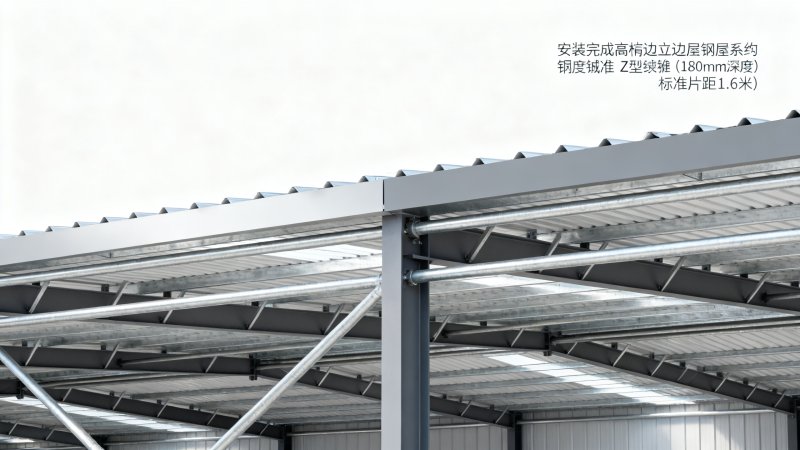
Hongteng Fengda’s framing solutions are engineered for full system compatibility: all Z-beam purlins undergo mill-certified tensile testing (Q345B yield strength ≥345 MPa), dimensional verification (±1% tolerance per EN 10055), and galvanization to ASTM A653 G90 (minimum 0.90 oz/ft² zinc coating) to prevent corrosion-induced section loss.
Critical Framing Dimensions & Spacing Guidelines
Spacing, depth, and connection detailing must align precisely with panel profile geometry and fastener placement. Industry-standard practice mandates purlin spacing between 1.2–1.8 m for standing seam roofs and 0.6–1.2 m for corrugated profiles—but these ranges assume uniform loading and certified material properties. Real-world variables like roof pitch (≥15° required for self-cleaning), thermal cycling (-40°C to +70°C operational range), and seismic zone classification (e.g., UBC Zone 4) demand recalibration.
The table below compares framing specifications for three common steel roofing applications, based on ASTM E1592 wind uplift testing and EN 1993-1-1 structural modeling:
Note: All values assume Q345B-grade Z-beam with 12–16 mm thickness, galvanized coating, and factory-drilled perforations for precise bolt alignment. Custom lengths (2–12 m) eliminate on-site cutting—reducing labor time by up to 22% and eliminating field-generated burrs that compromise coating integrity.
Top 5 Framing Mistakes & Corrective Protocols
Based on 7 years of technical support logs covering 3,200+ installations, these five framing errors recur most frequently—and each carries measurable performance penalties:
- Undersized purlins: Using 100 mm Z-beams where 150 mm is specified reduces deflection resistance by 40%, increasing panel vibration noise by 8–12 dB(A).
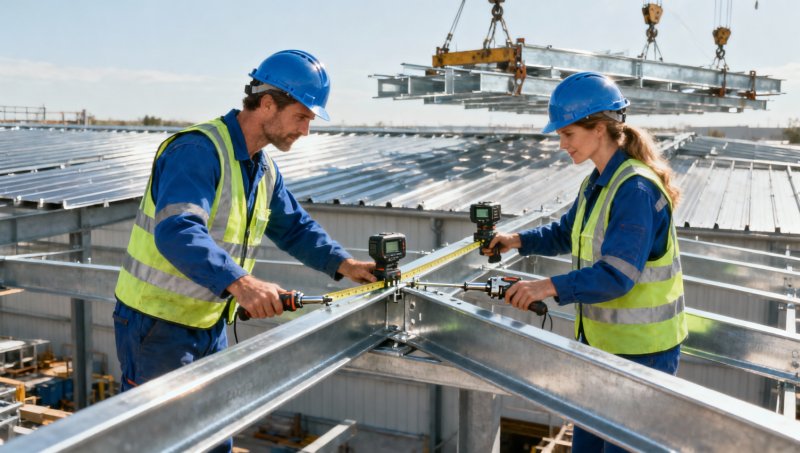
- Misaligned bearing points: >5 mm offset between purlin top flange and rafter centerline creates torsional stress, accelerating fastener loosening within 18 months.
- Insufficient end lap: Cutting Z-beams to exact span length (no 150–200 mm overlap) eliminates load-sharing capacity across supports—raising peak bending moment by 27%.
- Non-galvanized connections: Mixing carbon steel bolts with galvanized Z-beams causes galvanic corrosion, reducing connection life by 60% in coastal environments.
- Missing thermal breaks: Direct metal-to-metal contact between purlins and roof decks creates cold bridges, increasing condensation risk by 3× in humid climates.
Hongteng Fengda mitigates these risks through pre-engineered solutions: every Z-beam shipment includes certified mill test reports (MTRs), dimensional inspection records, and application-specific installation checklists aligned with ASTM C1313 and EN 14782 standards.
Procurement & Quality Assurance Checklist
For procurement managers and quality controllers, verifying framing compliance requires more than visual inspection. This checklist ensures traceability and performance assurance:
All Hongteng Fengda Z-beam orders include digital access to real-time production tracking, batch-specific QC documentation, and ISO 9001:2015-certified process validation—ensuring consistent delivery across orders placed in Shanghai, Dubai, or Chicago.
Partnering for System-Wide Roofing Success
Steel roofing performance isn’t determined by panels alone—it’s defined by the integration of framing, fasteners, sealants, and installation discipline. Hongteng Fengda goes beyond component supply: our engineering team provides free framing layout reviews, wind load simulations, and BIM-ready Revit families for seamless coordination with architects and contractors. With production capacity of 85,000 MT/year and lead times as short as 7–15 days for standard Z-beam configurations, we help global partners avoid schedule delays caused by framing shortages or specification mismatches.
Whether you’re specifying for a 50,000 m² logistics hub in Poland or retrofitting a heritage factory in Toronto, reliable framing starts with certified materials, precise tolerances, and partner-level support—not just competitive pricing. Reduce sourcing risk. Control total installed cost. Deliver projects on time, every time.
Contact Hongteng Fengda today to request your customized Z-beam technical datasheet, framing design consultation, or sample shipment for physical verification.
Please give us a message


Please enter what you want to find