Finding a stable cold rolled steel coil supplier is a critical step for procurement teams that need consistent quality, reliable delivery, and controlled sourcing costs.
In global steel purchasing, supplier instability can lead to production delays, specification mismatches, and unexpected price risks.
This guide explains how to evaluate suppliers from quality systems and production capacity to export experience, standards compliance, and long-term service support.
For procurement professionals, the key is not finding the lowest quotation, but identifying a supplier that can repeatedly deliver the right coil, on time.
Start with the real procurement risk, not only the quoted price
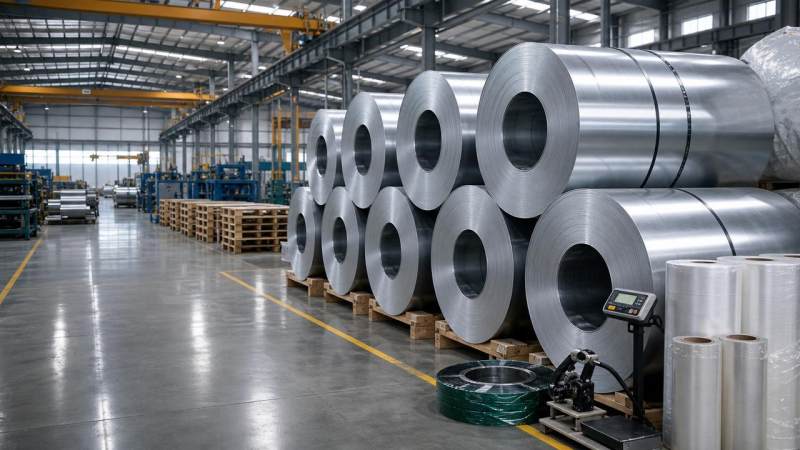
Most buyers search for a cold rolled steel coil supplier because they already face pressure from production schedules, customer deadlines, or cost control targets.
A low unit price may look attractive, but unstable quality, late shipment, or unclear documents can create much higher hidden costs.
The first evaluation question should be simple: can this supplier support repeated orders under changing market and logistics conditions?
Stable suppliers usually have predictable production capacity, clear inspection procedures, experienced export teams, and the ability to communicate risks early.
Unstable suppliers often depend on temporary stock, vague mill sources, or aggressive pricing that cannot be maintained during market fluctuations.
Procurement teams should therefore compare total sourcing reliability, including defect rates, delivery accuracy, documentation quality, and after-sales response speed.
Confirm whether the supplier understands your application requirements
Cold rolled steel coil is used across manufacturing, construction components, appliances, automotive parts, metal furniture, and precision fabrication.
Different applications require different priorities, such as surface finish, thickness tolerance, mechanical properties, flatness, coating compatibility, or stamping performance.
A reliable supplier should ask about end use before confirming grade, temper, surface condition, width, coil weight, and packing method.
If a supplier only responds with price and delivery time, they may not fully understand the technical risk behind your order.
For example, deep drawing applications require stable elongation and surface cleanliness, while roll forming projects may focus more on dimensional consistency.
Buyers should prepare basic application information and ask suppliers to recommend suitable specifications based on real processing conditions.
This conversation quickly reveals whether the supplier is a trading intermediary or a professional partner with technical sourcing capability.
Evaluate quality control systems before placing trial orders
Quality consistency is one of the strongest indicators of a stable cold rolled steel coil supplier.
Buyers should request details about incoming raw material control, rolling process monitoring, annealing control, surface inspection, and final coil testing.
Important documents include mill test certificates, chemical composition reports, mechanical property results, dimensional inspection records, and packing inspection photos.
Procurement teams should also ask whether testing follows ASTM, EN, JIS, GB, or other standards required by the destination market.
For international projects, documents must be traceable from production batch to shipment, especially when materials enter regulated manufacturing supply chains.
A professional structural steel manufacturer and exporter will normally maintain internal quality procedures and support third-party inspections when required.
Hongteng Fengda, for instance, supplies steel products under major international standards and focuses on consistent quality for global construction and industrial customers.
When reviewing supplier capability, buyers may also compare related product ranges, such as structural sections, cold formed profiles, and stainless products.
For projects requiring corrosion resistance or hygienic surfaces, a linked material option such as 304 Stainless Steel Plate may also be considered.
Its available finishes include BA, 2B, NO.1, NO.4, HL, and 8K, supporting applications from food equipment to chemical and ship components.
Check production capacity and supply continuity
Supplier stability depends heavily on whether the company can maintain output during peak demand, raw material shortages, or regional logistics disruptions.
Buyers should ask about monthly production capacity, regular stock levels, coil width range, thickness range, and minimum order quantity flexibility.
A stable supplier should explain which specifications are standard, which require production planning, and which may involve longer lead times.
Procurement teams should be cautious when every specification is promised as immediately available, especially for large or highly customized orders.
Real capacity verification can include factory videos, production line photos, past shipment records, loading photos, and references from similar markets.
If possible, compare the supplier’s claimed capacity with their actual export records, delivery frequency, and responsiveness during previous negotiations.
Consistent production capacity is particularly important for buyers managing rolling contracts, project phases, or repeat manufacturing schedules.
A supplier with stable capacity helps buyers reduce emergency purchasing, avoid production stoppages, and negotiate better long-term pricing structures.
Review standards compliance and specification accuracy
Specification errors are among the most expensive problems in steel procurement because they may only appear after processing or customer inspection.
A dependable cold rolled steel coil supplier should clearly confirm grade, standard, thickness tolerance, width tolerance, coil ID, surface condition, and edge type.
Buyers should avoid ambiguous descriptions such as “commercial quality” unless the required standard and acceptance criteria are also clearly stated.
Common purchasing standards may include ASTM, EN, JIS, GB, DIN, or customer-specific technical specifications.
If the destination market requires certification, buyers should confirm whether SGS, BV, ISO-related documentation, or other inspection support is available.
Technical accuracy also matters when comparing substitute materials, because similar grades may differ in yield strength, elongation, chemistry, or surface performance.
Procurement teams should request written confirmation before payment, ensuring that the proforma invoice matches technical documents and final packing details.
A disciplined supplier will not treat specification confirmation as paperwork; they treat it as a risk prevention step.
Assess export experience and logistics reliability
For overseas buyers, manufacturing capability alone is not enough. Export experience directly affects delivery reliability, customs clearance, and document accuracy.
A stable supplier should understand export packing, anti-rust protection, sea freight requirements, container loading, and destination market documentation.
Cold rolled steel coils require careful packaging to prevent moisture damage, edge deformation, surface scratches, and transportation-related claims.
Buyers should ask for packing standards, including waterproof paper, steel sheet protection, edge guards, inner rings, outer rings, and strapping methods.
Logistics experience is also reflected in how suppliers handle booking, loading supervision, shipment photos, bill of lading checks, and customs documents.
Delays often occur when suppliers lack coordination between production, warehouse, freight forwarders, and documentation teams.
Exporters serving North America, Europe, the Middle East, and Southeast Asia usually understand different port requirements and buyer documentation habits.
This experience reduces communication friction and helps procurement teams plan inventory arrivals with greater confidence.
Use trial orders to test real supplier performance
A trial order is not only a small purchase; it is a practical test of supplier reliability from inquiry to delivery.
During the trial, buyers should track response speed, technical clarity, quotation transparency, document consistency, production updates, and final product condition.
A professional supplier will provide realistic lead times, explain payment terms clearly, and avoid changing commitments after receiving the order.
Inspection results from the trial order should be compared with promised standards, not only with minimum acceptable requirements.
Buyers should record thickness variation, surface defects, coil condition, packing quality, label accuracy, and material certificate consistency.
If the supplier handles problems quickly and responsibly, that response may be as important as the problem itself.
A stable long-term partner does not claim that issues never happen; they demonstrate a system for solving them efficiently.
Compare quotations with a total cost perspective
Price comparison remains necessary, but it should be connected to quality stability, delivery performance, payment security, and after-sales responsibility.
A very low quotation may hide thinner actual tolerance, downgraded surface quality, uncertain coil source, weak packing, or delayed shipment risk.
Procurement teams should compare quotations using the same standard, thickness tolerance, surface requirement, coil weight, payment term, and shipping condition.
It is also important to clarify whether the price includes inspection, special packing, documentation, bank charges, or inland transportation.
For long-term purchasing, stable pricing mechanisms often matter more than one-time discounts, especially during volatile steel market cycles.
A strong supplier can explain price movements based on raw material costs, production schedules, exchange rates, and market demand.
This transparency helps buyers prepare budgets and reduces conflict when future orders are negotiated.
Look for communication discipline and service continuity
Stable cooperation depends on communication discipline. Procurement teams need timely answers, clear responsibility, and accurate technical confirmation.
A reliable supplier should assign knowledgeable sales and technical support staff who understand both material specifications and export procedures.
Good communication includes written order confirmation, production progress updates, inspection coordination, shipment scheduling, and quick response to document revisions.
Buyers should be cautious if a supplier avoids difficult questions, delays technical confirmation, or provides inconsistent answers through different contacts.
Service continuity also matters after shipment, especially when buyers need repeat orders, claim handling, replacement planning, or new specification development.
Long-term suppliers should support customers with stable documentation archives, order history tracking, and practical recommendations for future purchasing.
This type of support reduces internal workload for procurement teams and improves confidence across engineering, production, and finance departments.
Build a supplier scorecard for objective decision-making
A supplier scorecard helps procurement teams avoid decisions based only on personal impressions or the lowest initial price.
Useful evaluation categories include quality stability, standards compliance, production capacity, export experience, quotation transparency, communication efficiency, and problem-solving ability.
Each category can be weighted according to business priorities, such as delivery reliability for project buyers or surface quality for manufacturers.
Buyers should update the scorecard after trial orders, repeat shipments, quality inspections, and after-sales interactions.
This process creates a clear internal record and supports better decisions when comparing multiple cold rolled steel coil supplier options.
It also helps management understand why a slightly higher-priced supplier may offer lower total risk and better long-term value.
When a China-based structural steel exporter can be a strong option
China remains an important sourcing base for global steel buyers because of broad production capacity, mature export systems, and competitive manufacturing costs.
However, the key is selecting manufacturers and exporters with stable systems, not simply searching for the cheapest available quote.
Hongteng Fengda is a structural steel manufacturer and exporter from China, supplying angle steel, channel steel, steel beams, and cold formed profiles.
The company supports standard specifications and OEM solutions for construction, industrial, and manufacturing projects across multiple international markets.
For procurement teams, this combination of manufacturing capability, standards awareness, and export experience can reduce sourcing complexity.
Buyers seeking related stainless options can also review technical items like tensile strength, yield strength, elongation, hardness, density, and surface finish.
Such information is especially useful when projects involve both carbon steel structures and corrosion-resistant components.
Conclusion: choose the supplier that reduces risk over time
Finding a stable cold rolled steel coil supplier requires more than collecting quotations and comparing unit prices.
Procurement teams should evaluate technical understanding, quality control, production capacity, export experience, documentation accuracy, and long-term service reliability.
The best supplier is not always the cheapest one, but the one that helps you avoid delays, claims, and specification failures.
By using trial orders, supplier scorecards, and clear technical confirmation, buyers can make decisions based on evidence instead of assumptions.
A stable steel partner ultimately protects production schedules, controls sourcing costs, and supports stronger long-term competitiveness in global markets.


