Choosing the right carbon steel supplier is critical for long-term project success, cost control, and supply stability. For business decision-makers, evaluating a supplier goes beyond price—it requires reviewing manufacturing capability, quality standards, delivery performance, and customization support. This guide explains the key factors to help you identify a reliable partner for sustainable procurement and efficient global operations.
What business buyers really need to evaluate in a carbon steel supplier
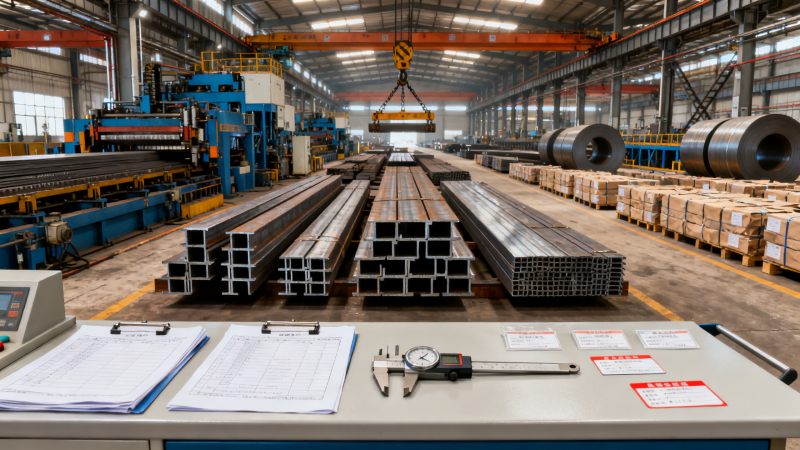
When companies search for a carbon steel supplier, they are usually not looking for the lowest quote alone. They want predictable quality, dependable delivery, and lower sourcing risk over time.
For decision-makers, the core question is simple: can this supplier support your business consistently across multiple orders, projects, and market cycles without creating hidden cost or operational disruption?
That means supplier evaluation should focus on long-term fit. A cheap first order can become expensive if quality claims rise, lead times slip, or communication breaks down during execution.
The best approach is to assess the supplier as an operating partner, not just a seller. You need evidence of production capability, process discipline, export experience, and commercial reliability.
Start with manufacturing capability, not just trading claims
One of the first steps is to confirm whether the company is a true manufacturer, a trader, or a hybrid supplier. This matters because it affects price control, customization, and schedule stability.
A real manufacturer usually offers better visibility into raw material sourcing, processing capacity, technical tolerances, and production planning. That makes it easier to manage large or recurring procurement programs.
Ask for factory details, equipment lists, workshop photos, production flow, and annual capacity. If possible, request videos or conduct a virtual audit to validate that the operation matches the sales presentation.
For structural and industrial buyers, this check is especially important. Products such as angle steel, channel steel, steel beams, and cold formed profiles require process consistency to meet project expectations.
Suppliers with modern manufacturing facilities and stable production systems are better positioned to support repeat orders, standard products, and OEM requirements without frequent quality variation.
Review quality systems through evidence, not promises
Quality is one of the biggest risk factors in long-term steel sourcing. Business buyers should evaluate how the supplier controls material grades, dimensions, surface condition, and documentation before shipment.
Do not stop at broad statements like “strict quality control.” Ask what standards the supplier follows and how compliance is verified for each production batch and export order.
Reliable suppliers should be able to work with major international standards such as ASTM, EN, JIS, and GB, depending on the market and end-use requirements.
Also review available certifications and third-party inspection support. Documents from ISO-based systems or recognized organizations help, but they should be combined with mill test certificates and inspection records.
Ask practical questions: how are incoming materials checked, how are tolerances measured, how are nonconforming products handled, and how is traceability maintained from raw steel to final shipment?
These details reveal whether the supplier can deliver stable quality at scale. For enterprise buyers, process discipline often matters more than a polished catalog or aggressive pricing.
Assess delivery reliability and supply continuity
For long-term use, a carbon steel supplier must protect your schedule, not just fill a single purchase order. Delivery performance affects project milestones, inventory planning, and customer commitments.
Evaluate average lead times, on-time delivery rates, and capacity during peak demand periods. A supplier may perform well on small trial orders but struggle when order volume increases.
Ask how production is scheduled, whether safety stock is available for recurring items, and how the supplier handles urgent orders or specification changes.
Export buyers should also examine packaging standards, loading methods, port experience, and document accuracy. Delivery risk is not only about manufacturing time; it includes the full fulfillment chain.
A dependable exporter should understand destination market requirements and support smooth coordination for North America, Europe, the Middle East, and Southeast Asia or other target regions.
Long-term partnerships become stronger when lead times are realistic and consistently met. Predictability usually creates more value than occasional speed combined with frequent exceptions.
Look at customization capability if your projects are not fully standard
Many industrial and construction buyers need more than standard catalog products. They may require custom lengths, punching, forming, coating, or component-based supply for efficient downstream installation.
This is where supplier flexibility becomes commercially important. A capable manufacturer can reduce your internal processing work, lower site waste, and simplify coordination across multiple vendors.
For example, in structural applications, buyers may need formed profiles tailored to project drawings and regional standards. That support can improve installation efficiency and reduce total project cost.
One example is Z-beam supply for purlins, wall beams, lightweight roofs, brackets, and light manufacturing structures. Customization options such as perforated or non-perforated configurations can be important.
Business buyers should check whether the supplier can provide grades like Q235B, Q345B, S355, A36, or A572, while also meeting tolerances such as ±1% and custom lengths from 2 to 12 meters.
Support for galvanized finishes, roll forming technology, export packaging, and third-party certification like CE, SGS, BV, or ISO can further reduce sourcing friction for international projects.
Compare total cost of ownership, not only unit price
Price matters, but experienced procurement leaders know that the cheapest quote may not offer the best commercial outcome. Total cost of ownership is a better framework for supplier comparison.
Look beyond the per-ton price and review scrap rates, rework costs, claim handling, logistics efficiency, packaging quality, customs document accuracy, and the administrative effort required to manage the supplier.
A slightly higher-priced supplier may still save money if product consistency improves installation speed, reduces project delays, and lowers the frequency of disputes or replacement shipments.
Also assess payment terms, currency flexibility, and quotation transparency. Clear cost structures make budgeting easier and reduce unpleasant surprises after order confirmation.
For long-term contracts, ask whether the supplier can support volume planning, price review mechanisms, or framework agreements tied to raw material fluctuations. That can improve cost control over time.
Evaluate communication quality and problem-solving responsiveness
Many sourcing failures happen because communication is slow, incomplete, or unclear. This becomes more serious in international trade, where time zones, language, and technical interpretation can create delays.
Decision-makers should observe how the supplier handles inquiries before the first order. Fast replies are useful, but accuracy and accountability matter more than speed alone.
Can the supplier explain technical details clearly? Do they confirm drawings, standards, tolerances, and packing requirements carefully? Do they proactively identify risks before production starts?
Also ask how claims are managed. A trustworthy partner should have a defined process for issue investigation, corrective action, and replacement or compensation if a problem is verified.
Long-term supplier value is strongly linked to service maturity. Good communication reduces mistakes, shortens decision cycles, and protects project execution when changes occur unexpectedly.
Check export experience and compliance readiness
For buyers sourcing from overseas, export capability is a core evaluation factor. A supplier may produce acceptable steel but still create delays if paperwork, labeling, or shipment coordination is weak.
Ask about experience in your target market and whether the supplier regularly works with local standards, inspection expectations, and packaging requirements for your region.
Suppliers serving global construction and manufacturing customers should understand the documentation needed for customs clearance, quality verification, and project acceptance.
This includes commercial invoices, packing lists, mill test certificates, inspection reports, and any required origin or conformity documents. Errors here can increase landed cost and project risk.
An experienced exporter also tends to communicate more effectively with freight forwarders, inspection agencies, and overseas customers, which helps keep the transaction smooth from factory to site.
Use a practical supplier scorecard before making a long-term decision
To avoid subjective decisions, create a simple evaluation scorecard. Rate each carbon steel supplier across the factors that matter most to your business model and risk tolerance.
Common categories include manufacturing capability, quality control, standards compliance, customization support, delivery performance, communication, export experience, commercial terms, and after-sales handling.
Assign weight based on strategic priorities. For example, a project-driven business may value delivery and drawing accuracy most, while a distributor may emphasize consistency, packaging, and replenishment speed.
It is also wise to start with a pilot order. A controlled first purchase lets you verify product quality, responsiveness, lead time accuracy, and documentation performance before scaling the relationship.
After the trial, review measurable outcomes with your procurement, quality, logistics, and technical teams. Long-term supplier selection should be based on cross-functional evidence, not sales claims alone.
What a strong long-term supplier relationship should look like
The best supplier relationship is not transactional. It should steadily improve sourcing efficiency, reduce operational uncertainty, and support your growth in new projects or markets.
A strong partner offers stable capacity, consistent quality, and professional support for both standard and customized structural steel needs. They help you control risk instead of transferring it to your team.
For buyers in construction, industrial manufacturing, and infrastructure supply, a supplier with broad product capability and international standard compliance can create significant long-term value.
Companies like Hongteng Fengda, as a structural steel manufacturer and exporter from China, illustrate what many global buyers seek: stable production capacity, strict quality control, standard and OEM support, and dependable lead times.
That combination is especially relevant when procurement decisions affect project delivery, cost performance, and customer satisfaction across multiple regions and order cycles.
Conclusion
Evaluating a carbon steel supplier for long-term use is ultimately about reducing risk while improving business performance. Price is important, but it should never be the only decision factor.
Decision-makers should prioritize manufacturing capability, quality systems, delivery reliability, customization support, export readiness, and communication discipline. These are the factors that protect long-term value.
If a supplier can consistently meet standards, deliver on time, respond professionally, and support your operational needs, they are far more likely to become a reliable strategic sourcing partner.
Use evidence, trial orders, and a clear scorecard to compare options. That approach leads to better procurement decisions and a more resilient supply chain over the long term.
Please give us a message


Please enter what you want to find