When comparing galvanizing thickness across hot dip galvanized coil suppliers, precision matters—especially for structural applications using angle steel, DX51D steel, or carbon steel pipe. At Hongteng Fengda, a trusted structural steel manufacturer and exporter from China, we ensure consistent coating integrity for hot dip galvanized coil used in steel angle bending, steel metal angle fabrication, and 304L stainless steel pipe integration. Whether you’re a procurement professional, project manager, or quality controller, understanding how thickness impacts corrosion resistance, lifespan, and compliance with ASTM/EN/GB standards is critical. Let’s break down the key metrics—and why supplier transparency makes all the difference.
Why Galvanizing Thickness Isn’t Just a Number
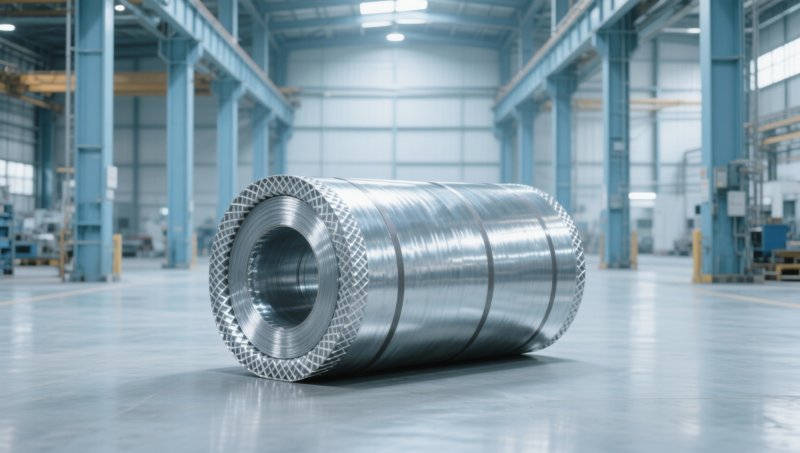
Galvanizing thickness directly governs service life in corrosive environments. A deviation of just 5–10 µm can reduce expected lifespan by 15–25% in industrial or coastal exposure zones. For structural components like Structural I Beam, where weldability and bending performance rely on uniform zinc adhesion, inconsistent coating introduces risk of localized rust initiation at cut edges or cold-formed bends.
Unlike decorative coatings, hot-dip galvanizing forms a metallurgical bond—zinc-iron alloy layers (Gamma, Delta, Zeta) topped by pure zinc. Thickness affects not only barrier protection but also cathodic protection range: thinner coatings (<45 µm) may deplete faster near weld seams or mechanical damage points, especially under cyclic loading in bridge or warehouse framing applications.
At Hongteng Fengda, every hot dip galvanized coil batch undergoes three-point magnetic induction measurement per EN ISO 1461 and ASTM A123, with full traceability to coil ID, bath temperature (445–465°C), immersion time (≥45 sec), and post-dip cooling rate. This ensures thickness remains within ±5% tolerance—critical when fabricating load-bearing angle steel or channel steel for seismic-rated structures.
How to Compare Suppliers: 5 Non-Negotiable Verification Steps
Comparing galvanizing thickness isn’t about quoting a single number—it’s validating consistency, methodology, and context. Here’s what top-tier buyers check before finalizing supply agreements:
- Measurement method alignment: Confirm whether thickness is reported as “average” (minimum 5 readings per sample) or “minimum local value”—ASTM A123 requires the latter for compliance verification.
- Substrate condition reporting: Surface roughness (Ra >3.2 µm) increases zinc consumption by up to 20%. Reputable suppliers disclose base steel surface profile pre-galvanizing.
- Batch-level documentation: Each coil must include a test report showing thickness distribution across head/middle/tail sections—not just one representative sample.
- Adhesion testing records: Bend tests per ASTM A143 and impact resistance per EN ISO 1461 verify coating ductility, especially important for cold-formed steel profiles.
- Third-party audit access: Verified labs (e.g., SGS, Bureau Veritas) should confirm calibration of thickness gauges against NIST-traceable standards every 90 days.
Suppliers skipping any of these steps often mask variability through averaging—or worse, rely on theoretical calculations instead of physical measurement. That’s why Hongteng Fengda provides full digital QA dossiers with timestamped thickness maps for every order.
Thickness Standards vs. Real-World Performance: What You Need to Know
While ASTM A653 and EN 10346 define minimum nominal thicknesses (e.g., Z275 = 275 g/m² ≈ 20 µm per side), real-world durability depends on application-specific thresholds. Below is how thickness translates to field performance across common structural use cases:
Note: These values assume proper handling during fabrication—no grinding, flame-cutting without post-treatment, or welding with excessive heat input (>1200°C). For Structural I Beam used in marine terminals, Hongteng Fengda applies double-dip process with controlled inter-coat cooling to achieve Z450+ (≈32 µm/side) while maintaining dimensional tolerances within ±1%.
Beyond Thickness: The 3 Hidden Factors That Impact Your Project Timeline & Cost
Even with identical nominal thickness, delivery readiness and total cost vary significantly based on upstream controls:
- Zinc bath chemistry management: Iron content >0.03% causes spangle instability and uneven deposition. Top suppliers monitor Fe/Zn ratio hourly and filter slag every 8 hours—reducing rework rates by 30%.
- Decoiling & tension control: Variance >±5% in uncoiling tension leads to edge thickening or thinning. Hongteng Fengda uses servo-driven decoilers calibrated to ±1.2% accuracy for coils up to 25 tons.
- Certification turnaround time: EN 10204 3.1 mill certificates require 72–96 hours post-production. We issue certified reports within 24 hours via secure portal—accelerating customs clearance by 3–5 working days.
These operational disciplines directly affect your project’s critical path—especially when coordinating steel angle bending, decoiling, and welding schedules across multiple subcontractors.
Why Partner With Hongteng Fengda for Hot Dip Galvanized Coil
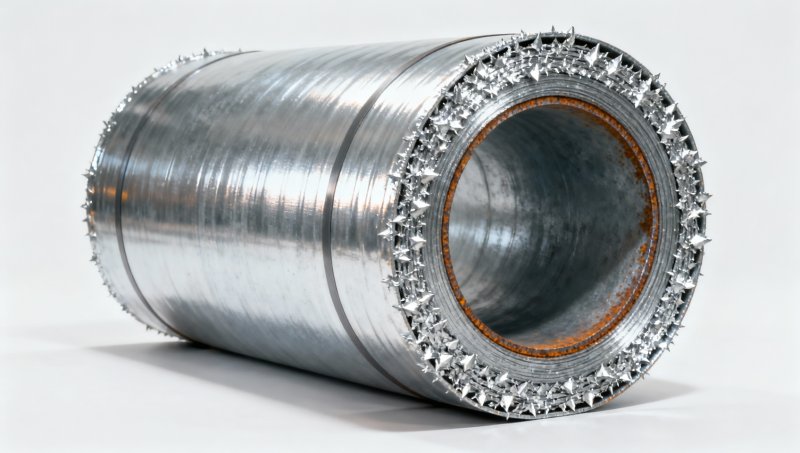
As a structural steel manufacturer and exporter from China, we don’t just supply galvanized coil—we engineer it for your exact application. Our integrated facility handles everything from raw material sourcing (GB/T 700 Q235/Q345, ASTM A36, EN S235JR) to final inspection—eliminating third-party handoffs that introduce thickness inconsistency.
You get guaranteed thickness compliance (Z180–Z450), full EN/ASTM/GB certification support, and production flexibility: small-batch orders (min. 5 tons) delivered in 12–18 days; large-volume contracts (500+ tons) with staggered shipments aligned to your fabrication calendar.
Ready to validate galvanizing specs for your next order? Contact us for: coil-specific thickness distribution reports, bend-test video evidence, ASTM A123-compliant QA documentation, or custom thickness validation against your project’s C5-M or ISO 12944 environment classification.
Please give us a message


Please enter what you want to find