Selecting the right electrical conduit galvanized for wet locations is critical for safety, compliance, and long-term performance—especially in demanding infrastructure and industrial projects. Whether you're evaluating electrical conduit galvanized alongside API 5L Steel Pipe for corrosion resistance, comparing zinc coated wire integration, or specifying SPCE steel for precision-formed components, material choice directly impacts system integrity. As a trusted structural steel manufacturer & exporter from China, Hongteng Fengda delivers ASTM/EN-compliant, hot-dip galvanized conduits and API pipe solutions engineered for high-humidity, marine, or outdoor applications—supporting engineers, procurement teams, and project managers with reliable, traceable, and cost-efficient sourcing.
Why Galvanized Electrical Conduit Must Meet Wet-Location Standards
Wet locations—including coastal zones, chemical plants, food processing facilities, and outdoor substations—expose electrical systems to persistent moisture, salt spray, condensation, and aggressive contaminants. Standard black steel conduit corrodes within 3–5 years in such environments, risking short circuits, grounding failures, and fire hazards. Hot-dip galvanized (HDG) conduit resists corrosion through a metallurgically bonded zinc layer of minimum 85 µm thickness per ASTM A123—a requirement verified via cross-section microscopy and adherence testing.
Unlike electro-galvanized or zinc-plated alternatives (typically 5–15 µm), HDG provides cathodic protection even at cut edges or minor scratches. Real-world data shows HDG conduit maintains structural integrity for 25+ years in ISO 9223 C4 corrosivity zones (e.g., Singapore port infrastructure or Gulf Coast refineries). Failure to specify true HDG—not just “zinc-coated”—is the #1 cause of premature conduit replacement in global EPC projects.
For integrated structural-electrical systems, compatibility matters: galvanized conduit must align with supporting steel members’ corrosion class. That’s why Hongteng Fengda supplies both HDG conduit and certified structural profiles—like I Beam Manufacturers—under unified EN 10369 and ASTM A123 quality audits, eliminating mismatched zinc spalling risks during thermal cycling.
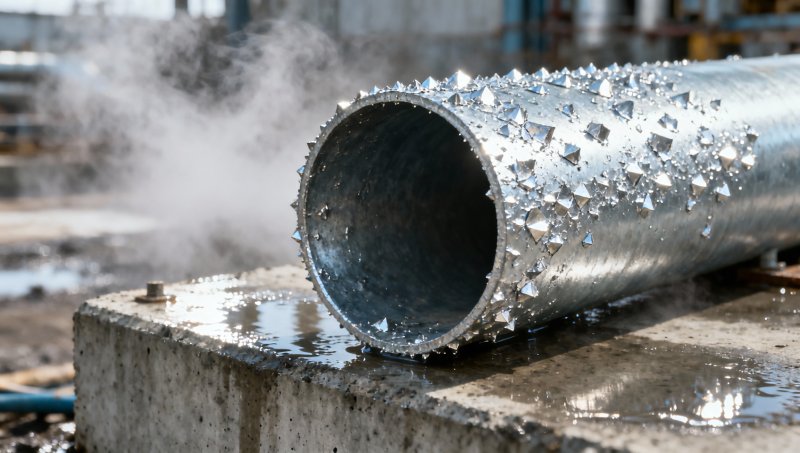
Key Technical Specifications for Wet-Location Galvanized Conduit
Not all galvanized conduit meets wet-location demands. Critical parameters go beyond surface appearance—they include base steel grade, zinc coating mass, uniformity, adhesion, and dimensional tolerances. Per UL 6, IEC 61386, and GB/T 20041.1, conduit for Class I, Division 2 hazardous areas requires minimum 610 g/m² zinc coating (≈85 µm), tensile strength ≥370 MPa, and bendability without flaking at 180° around a mandrel diameter equal to conduit OD.
Hongteng Fengda’s HDG conduit uses Q235B or S235JR carbon steel base (yield strength 235–255 MPa), hot-dip galvanized in controlled bath temperatures (445–465°C), then quenched to prevent intermetallic layer overgrowth. Each coil undergoes batch-certified testing: coating thickness (per ISO 1460), adhesion (per ASTM D3359), and salt-spray resistance (≥1,000 hours to white rust per ASTM B117).
This consistency ensures seamless integration with other structural elements—such as channel steel supports or custom cold-formed brackets—without field rework due to misalignment or coating inconsistency.
How to Verify Genuine Hot-Dip Galvanizing (Not Just Zinc Plating)
Procurement teams often mistake shiny, thin zinc plating for HDG. True verification requires three objective checks: visual grain pattern (spangle size ≥1 mm), coating thickness measurement (using magnetic induction gauge on ≥5 points per pipe), and bend test per ASTM A90. Electroplated conduit fails bend tests visibly—zinc flakes off within 3–5 bends; HDG remains intact up to 20+ bends.
Hongteng Fengda provides mill test reports (MTRs) with every shipment, including zinc mass per square meter, base steel chemistry (C ≤0.22%, Mn 0.30–0.70%), and mechanical test results. For OEM projects, we offer third-party inspection by SGS or Bureau Veritas—covering coating uniformity across 6-meter lengths (≤10% variation allowed per EN ISO 1461).
A common oversight: ignoring conduit end treatment. Cut ends must be re-galvanized or sealed with zinc-rich paint (≥95% Zn by weight) to maintain cathodic protection. We provide pre-cut, double-end-sealed conduit in standard 6-m lengths—or custom lengths up to 12 m with end-protection certification.
Integration With Structural Steel Systems: Why Material Alignment Matters
In large-scale infrastructure—like LNG terminals or offshore wind substations—electrical conduit isn’t isolated. It’s mounted on I-beams, welded to steel ladders, or embedded in concrete with anchor channels. Mismatched galvanizing leads to galvanic corrosion: if conduit zinc (−0.76V) contacts uncoated carbon steel (−0.44V), accelerated anode dissolution occurs at contact points.
That’s why Hongteng Fengda offers full-system material alignment: HDG conduit + matching HDG I Beam Manufacturers (Q345, SS400, St52 grades) with identical zinc bath chemistry and cooling protocols. Our I-beams feature flange widths from 100–400 mm, web thicknesses 6–28 mm, and length tolerance ±1%—ensuring precise bracket mounting and load distribution across humid, vibration-prone environments.
Our structural and conduit products share traceability down to heat number, enabling full lifecycle documentation for ISO 55001 asset management systems.
Procurement Best Practices for Global Buyers
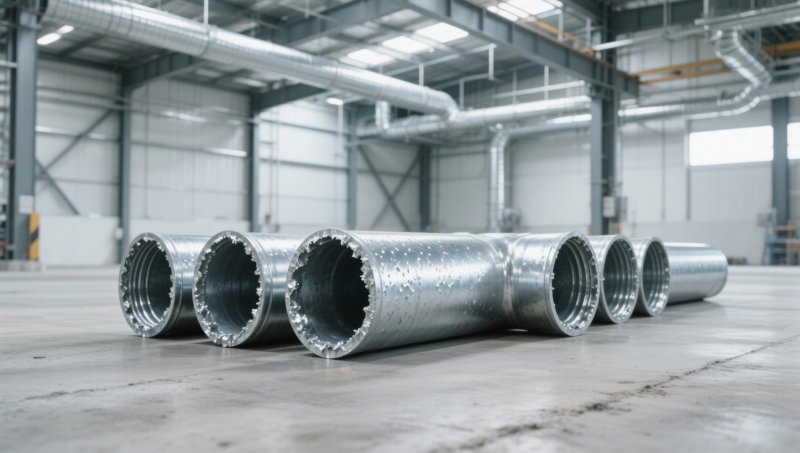
Global procurement teams face four recurring challenges: inconsistent zinc thickness across batches, lack of test report traceability, extended lead times for custom lengths, and unclear compliance mapping (e.g., ASTM vs EN equivalency). Hongteng Fengda addresses these with fixed lead times (within 20 days for standard orders), EN/ASTM dual-certification, and digital MTR access via our portal—updated in real time with production batch logs.
We recommend specifying conduit with explicit clauses: “Hot-dip galvanized per ASTM A123 Class B, minimum 650 g/m², tested per ASTM A90 bend test, supplied with MTRs showing heat number, zinc mass, and tensile results.” Avoid vague terms like “galvanized finish” or “zinc-coated.”
For high-volume projects (>50 tons), we offer consignment warehousing in Rotterdam, Dubai, and Los Angeles—reducing landed cost by 12–18% and enabling JIT delivery with 72-hour dispatch SLA.
Conclusion: Engineering Reliability Into Every Meter
Choosing electrical conduit galvanized for wet locations isn’t about price—it’s about system longevity, regulatory compliance (NEC Article 352, IEC 61386-24), and total cost of ownership. Hongteng Fengda combines deep expertise in carbon steel metallurgy, precision galvanizing control, and structural-electrical integration—backed by ISO 9001-certified processes and 100% traceable supply chains.
From API 5L pipe to I Beam Manufacturers, our portfolio supports unified material specifications across entire projects—reducing engineering review cycles by up to 40% and eliminating interface-related delays.
Contact Hongteng Fengda today for a customized wet-location conduit specification package—including sample MTRs, corrosion modeling reports, and OEM co-engineering support.
Please give us a message


Please enter what you want to find