Choosing the right structural steel angle for load support directly affects strength, stability, and project cost. For technical evaluation, load path, section size, steel grade, and code compliance must be checked together.
This guide explains how to compare structural steel angle options across real use cases. It also shows how better selection can reduce sourcing risk, avoid overdesign, and improve installation efficiency.
When load support conditions change, structural steel angle selection also changes
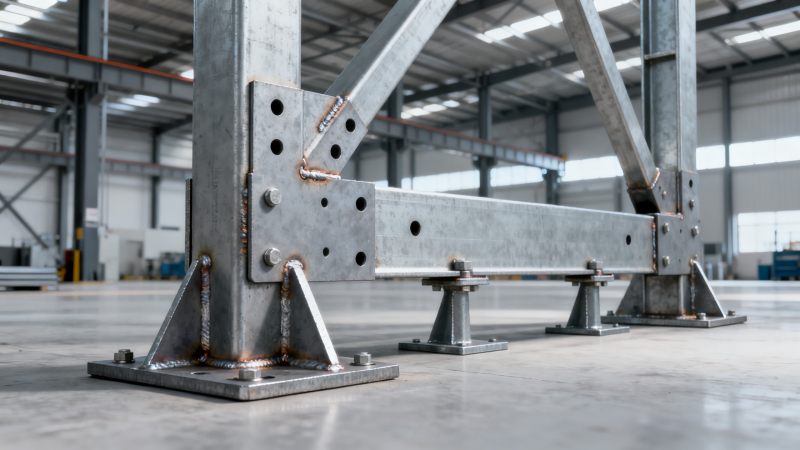
A structural steel angle does not perform the same in every project. Support type, connection detail, span, and exposure conditions can change the required section significantly.
For example, a lightly loaded equipment frame may need simple equal angles. A heavily loaded platform brace may require thicker legs, better weldability, and tighter dimensional control.
The main question is not only how much load exists. The real question is how that load reaches the structural steel angle and how the member resists it.
Key load support factors to review first
- Dead load, live load, impact load, and occasional overload
- Compression, tension, bending, or combined stress
- Unbraced length and risk of buckling
- Connection method, including bolting or welding
- Indoor, outdoor, humid, or corrosive service environment
- Applicable ASTM, EN, JIS, or GB standard requirements
How to judge structural steel angle needs in common support scenarios
Building frames and secondary supports
In building projects, structural steel angle is often used for lintels, bracing, edge supports, stair framing, and equipment mounting. These applications usually combine moderate loads with practical installation constraints.
Selection should focus on leg length, thickness, bolt hole layout, and connection clearance. Equal angles are often easier for symmetrical loading, while unequal angles can fit limited spaces better.
Industrial racks, machinery bases, and support brackets
Industrial applications often create concentrated loads, vibration, and repeated stress. In these cases, structural steel angle must be checked for local deformation, weld quality, and fatigue-sensitive details.
Thicker sections may improve stiffness, but connection design remains critical. Poorly placed holes or undersized welds can reduce real support capacity far below theoretical section strength.
Where base plates or mounting surfaces are needed, support systems are often combined with plate components. In these assemblies, Mild Steel Plate Supplier solutions can complement angle sections for brackets, support plates, and mechanical mounting plates.
Bridges, towers, and heavy-duty structural bracing
Heavy-duty projects place higher demands on steel grade consistency, dimensional accuracy, and traceable certifications. The structural steel angle may serve in bracing systems, transmission towers, or bridge support details.
In these scenarios, higher strength materials and full standard compliance become more important. Buckling resistance, net section loss, and transport length limits should be reviewed early.
Which section details matter most for structural steel angle load support
A structural steel angle is usually defined by leg dimensions, thickness, radius, and mass per meter. These values affect capacity, fabrication, and total installed cost.
Equal angle or unequal angle
Equal angles suit balanced support conditions and common frame details. Unequal angles help when one leg must connect to a larger surface or when eccentricity must be managed.
Thickness and stiffness
Thin sections may satisfy basic strength but still deflect too much. For load support, stiffness often controls service performance before ultimate strength becomes the main limit.
Leg size and connection space
Larger legs provide more connection area and can simplify bolting or welding. However, oversizing may increase weight, coating cost, and fabrication waste without improving overall system efficiency.
How standards and material grades affect structural steel angle decisions
Different markets specify different standards, so a structural steel angle should be reviewed against project documents, not only supplier catalogs. ASTM, EN, JIS, and GB may differ in tolerances, chemistry, and mechanical properties.
Steel grade selection should match structural demand and fabrication method. For welded support assemblies, weldability and heat-affected performance are as important as minimum yield strength.
Projects using plate-and-angle assemblies may also compare material compatibility across components. For example, low-carbon or low-alloy high-strength plates such as A572 or S355JR are often used with structural sections in construction, bridges, heavy machinery, racks, and support plates.
Where custom fabrication is required, matching certifications such as ASTM, EN, JIS, ISO, or DIN can simplify inspection and reduce approval delays across international projects.
Differences between common scenarios and what they require
Practical ways to match structural steel angle to the right application
- Define the actual load type, not just the load value.
- Check whether bending, compression, or connection failure controls design.
- Compare equal and unequal angle layouts against available space.
- Review standard, grade, and certification requirements before ordering.
- Confirm fabrication details, including holes, welds, cut lengths, and coatings.
- Consider whether angle sections must work with plates or other steel profiles.
If the support assembly includes plates, choosing compatible components helps fabrication quality. A properly specified Mild Steel Plate Supplier option may support welded brackets, bridge panels, support plates, and construction equipment structures.
Common mistakes when choosing structural steel angle for load support
One common mistake is selecting only by section weight. A heavier structural steel angle does not always solve issues caused by poor connection geometry or excessive unbraced length.
Another mistake is ignoring service conditions. Outdoor humidity, corrosive environments, and coating damage can shorten service life even when strength calculations look acceptable.
Some projects also overlook tolerance and straightness requirements. Misalignment can slow installation and create unexpected stresses in bolted or welded support systems.
Finally, standards mismatch can create inspection problems. A structural steel angle supplied to one standard may not automatically satisfy another project's compliance documents.
A better next step for reliable structural steel angle sourcing
The best structural steel angle choice comes from matching section shape, size, grade, and standard to the real support scenario. That approach improves safety, cost control, and fabrication efficiency.
Prepare a simple review list before sourcing: load case, span, connection type, environment, required standard, and any custom processing. This makes supplier communication faster and more accurate.
For global construction and industrial projects, stable quality, consistent production, and dependable lead time matter as much as section data. Clear specifications lead to better structural steel angle performance and lower project risk.
Please give us a message


Please enter what you want to find