Choosing a reliable S275JR hot rolled carbon steel sheet exporter is essential for procurement teams that need stable quality, compliant specifications, and on-time delivery. For buyers sourcing from China, the right partner should offer proven manufacturing capability, strict quality control, and export experience to reduce purchasing risks and support efficient project execution.
In practical steel procurement, price is only one part of the decision. Sheet flatness, chemical consistency, mechanical properties, mill documentation, packing quality, and shipment coordination can affect fabrication efficiency and project deadlines more than a small unit price difference.
For procurement professionals buying S275JR steel sheet for construction, fabrication, equipment frames, or general structural use, supplier evaluation should be based on measurable standards. A dependable S275JR hot rolled carbon steel sheet exporter should be able to support technical review, production planning, inspection, and international delivery with clear communication at every step.
China remains a major sourcing market because it combines broad manufacturing capacity, flexible processing options, and competitive export logistics. However, buyers still need a structured method to compare exporters, verify quality claims, and reduce the risks of specification mismatch, delayed shipment, or inconsistent batches.
What procurement teams should expect from a reliable exporter
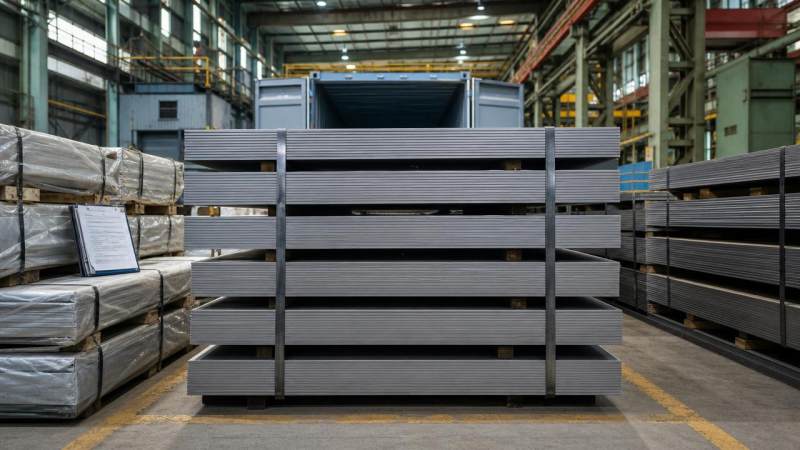
When evaluating a S275JR hot rolled carbon steel sheet exporter, the first question is whether the supplier is only a trader or whether it has real production and quality coordination capability. For many projects, that distinction determines lead time control, tolerance consistency, and response speed when technical issues arise.
Core capabilities that matter in real purchasing
A qualified exporter should manage at least 4 critical areas: raw material sourcing, rolling or processing coordination, inspection execution, and export shipment handling. If one of these links is weak, buyers may face delivery delays of 7–21 days or rework costs during fabrication.
- Stable supply of hot rolled sheet in common thickness ranges such as 2.0–25.0 mm
- Clear compliance with EN material requirements and agreed tolerances
- Routine support for MTC, dimensional checks, and third-party inspection
- Export packing suitable for sea freight, humidity exposure, and long transit periods
- Reliable communication on MOQ, production slot, and vessel schedule
Why manufacturing background matters
A manufacturer-exporter usually provides better control than a pure intermediary, especially when buyers need customized cutting, slit width adjustment, OEM marking, or mixed loading. Companies with modern facilities and strict quality procedures can better align products with ASTM, EN, JIS, or GB related requirements depending on project needs.
Hongteng Fengda, for example, operates as a structural steel manufacturer and exporter from China, supplying steel products and customized solutions for global construction and industrial projects. This type of supplier profile is especially useful for procurement teams that need both standard products and project-based coordination across multiple steel categories.
The table below shows the practical difference between a dependable exporter and a higher-risk supplier from a procurement perspective.
For procurement teams, the key takeaway is simple: exporter reliability is demonstrated through process visibility and document control, not marketing language. Buyers should request evidence before placing a trial order or annual contract.
How to verify S275JR sheet quality before placing an order
The second step is technical verification. S275JR is widely used for structural applications, so buyers need more than a quotation sheet. They need a clear confirmation of grade, dimensions, surface condition, and supply condition to avoid mismatch during downstream cutting, welding, or forming.
Check the specification in 6 key points
- Material grade confirmation as S275JR under the agreed standard
- Thickness range and tolerance for each sheet size
- Width and length, including cut-to-size requirements
- Surface condition, scale level, and edge condition
- Mechanical property expectations for the intended application
- Mill Test Certificate and inspection document availability
Tolerance and processing impact
Even a thickness deviation of 0.2–0.5 mm can affect nesting plans, weight calculation, and welding preparation, especially on repeat production jobs. Flatness issues may also reduce efficiency if the steel sheet is used in laser cutting, base plate fabrication, or structural assemblies with tight fit-up requirements.
Some buyers also source multiple steel products from the same exporter to simplify purchasing and logistics. In that case, it helps if the supplier can coordinate related structural materials and tubular products under one shipment plan, such as a106 gr b Seamless Pipe for industrial line packages or structural support projects.
Before confirming mass production, procurement teams can use the following checklist to assess whether the quoted material is likely to meet project expectations.
This review process is especially valuable for first orders, trial lots, or project-critical deliveries. A disciplined exporter will treat these checks as standard workflow rather than as special requests.
Export experience, lead time control, and logistics coordination
For many buyers, the biggest risk is not the sheet itself but delivery uncertainty. A good S275JR hot rolled carbon steel sheet exporter should provide a realistic delivery plan that covers production, inland transport, customs documentation, and vessel booking instead of quoting a single vague timeline.
Typical lead time structure
A normal export order may involve 3 stages: production in 15–30 days, port and customs preparation in 3–7 days, and sea transit in 10–40 days depending on destination. Customized cutting, third-party inspection, or mixed-container loading can extend the schedule by another 3–10 days.
Questions buyers should ask before PO confirmation
- What is the confirmed production window for the required tonnage?
- Can the exporter support partial shipment or split delivery if needed?
- What export documents are included: invoice, packing list, MTC, COO, BL draft?
- How is cargo packed to reduce rust, sheet edge damage, and loading scratches?
- What is the procedure if quantity deviation or visible damage is found at destination?
Experienced exporters serving North America, Europe, the Middle East, and Southeast Asia usually understand port documentation requirements, buyer labeling needs, and transit protection standards. This reduces avoidable delays caused by incomplete paperwork or unsuitable packing methods.
Procurement teams working on wider industrial packages may also value cross-category supply support. For example, when structural sections and piping materials are sourced together, one coordinated supplier can simplify scheduling. In some cases, products such as a106 gr b Seamless Pipe may be reviewed alongside plate, beam, and profile orders to consolidate shipment planning.
Common sourcing mistakes and how to avoid them
Even experienced buyers can face problems when steel sheet orders are rushed. The most common mistakes usually come from incomplete technical alignment, poor sample review, or overreliance on the lowest quotation. In steel procurement, small omissions can create expensive consequences after cargo arrival.
Four frequent mistakes in S275JR sheet procurement
- Ordering by price only without confirming standard, tolerance, or surface expectations
- Accepting generic certificates that do not match actual heat numbers or shipment lots
- Ignoring packing details for long-distance sea transport and humid storage conditions
- Not setting acceptance rules for thickness deviation, rust level, or quantity variance
A better procurement control method
A practical approach is to use a 5-step control routine: RFQ clarification, technical confirmation, sample or record review, pre-shipment inspection, and document verification before balance payment. This approach takes more discipline at the start, but it can significantly reduce claims and emergency replenishment later.
Buyers should also compare total procurement cost rather than sheet price alone. If one supplier offers a unit price that is 2% lower but causes a 10-day project delay, additional freight, crane scheduling changes, and fabrication standby can easily eliminate any initial savings.
How to build a long-term relationship with the right Chinese steel exporter
Once a supplier passes initial evaluation, procurement value increases when both sides move from transactional buying to repeatable supply management. This is especially true for buyers who order structural steel sheets, beams, channels, angle steel, cold formed profiles, or custom fabricated components across multiple projects each year.
What long-term cooperation should look like
A strong exporter relationship usually includes quarterly demand planning, agreed documentation format, standard packaging rules, response time targets, and clear issue escalation contacts. Even simple alignment on these 5 items can improve purchasing efficiency and reduce repetitive clarification work.
Supplier traits worth prioritizing
- Consistent quality control across repeat orders and mixed sizes
- Ability to support both standard steel products and OEM project requirements
- Transparent communication on production capacity and schedule changes
- Familiarity with international standards such as ASTM, EN, JIS, and GB
- Willingness to solve problems with documentation and corrective actions, not excuses
Hongteng Fengda focuses on structural steel manufacturing and export with support for standard specifications and customized solutions. For procurement teams looking to reduce sourcing risk, a partner with stable production capacity, quality discipline, and dependable lead time management can make a clear difference in project execution.
If you are selecting a S275JR hot rolled carbon steel sheet exporter for ongoing construction, industrial, or manufacturing demand, the best choice is the supplier that combines technical clarity, export reliability, and responsive service. Contact us to discuss specifications, request a quotation, or get a customized steel supply solution for your next project.
Please give us a message


Please enter what you want to find