Choosing the right carbon steel pipe supplier for structural steel projects is critical for bridge safety, long-term durability, and cost control.
For bridge applications, supplier quality affects welding performance, load reliability, corrosion behavior, and delivery stability across every construction stage.
A dependable carbon steel pipe supplier for structural steel projects should combine certified production, traceable materials, standard compliance, and responsive export support.
The questions below explain how to evaluate suppliers, compare risks, and make sourcing decisions that support durable and efficient bridge construction.
Why does supplier selection matter so much in bridge steel sourcing?
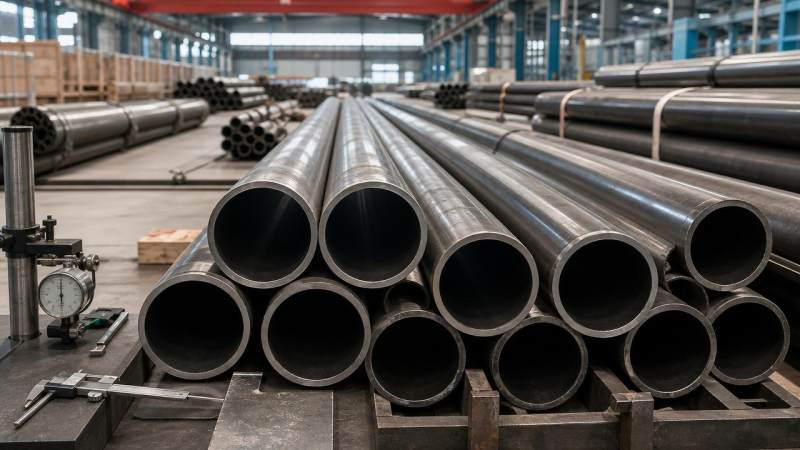
Bridge structures operate under dynamic loads, weather exposure, vibration, and strict inspection requirements.
If the supplier cannot maintain chemical consistency and dimensional accuracy, fabrication problems can appear early.
Poor pipe roundness, wall thickness deviation, or weak weld seam quality may increase fitting difficulty on site.
That can slow installation, raise labor costs, and create quality disputes between contractors and fabricators.
A reliable carbon steel pipe supplier for structural steel projects helps control these risks before materials leave the factory.
For bridge work, product stability matters as much as price.
Stable sourcing supports predictable welding, coating adhesion, machining, and structural assembly.
It also improves confidence during third-party inspection and final acceptance.
What certifications and standards should a bridge pipe supplier provide?
Start with material standards required by the project drawings and governing code.
For international bridge projects, common references include ASTM, EN, JIS, and GB specifications.
The supplier should clearly confirm which grades, dimensions, and tolerances are available under each standard.
Ask for mill test certificates, heat numbers, and traceability records for every production batch.
Quality management documents such as ISO 9001 are also valuable, but they are only a starting point.
Bridge sourcing often requires extra verification beyond routine factory paperwork.
Useful checks include:
- Mechanical property reports for yield, tensile strength, and elongation
- Chemical composition reports for carbon, manganese, sulfur, and phosphorus
- Dimensional inspection reports for diameter, thickness, and straightness
- Non-destructive testing records where required
- Coating or surface treatment verification, if specified
A professional carbon steel pipe supplier for structural steel projects should provide these documents promptly and accurately.
Delayed or incomplete documentation is often an early warning sign.
How can you judge manufacturing capability and production stability?
Bridge projects usually run on fixed schedules with little room for supply disruption.
That is why production capacity should be reviewed together with quality performance.
Check whether the supplier operates modern forming, welding, cutting, and inspection equipment.
Also confirm whether raw material sourcing is stable during market fluctuations.
A capable exporter should explain lead times by size range, grade, and processing requirements.
If custom fabrication is needed, supplier engineering support becomes even more important.
This is also the point where broader material experience adds value.
Some infrastructure projects combine carbon steel with corrosion-resistant components in service areas.
For example, 304 Stainless steel pipe is widely used in residential decoration, food and medical sectors, and industrial piping systems.
It offers excellent corrosion resistance, good mechanical properties, strong workability, and high cost-effectiveness.
Available finishes include No.1, 2B, BA, 2K, and 8K.
Typical dimensions include length 3000-12000mm, outside diameter 6mm-2500mm, and thickness 0.6mm-30mm.
A supplier with experience across structural steel and related pipe categories often handles specifications more efficiently.
When reviewing factories, focus on these practical indicators:
- Monthly output and past export volume
- Batch consistency over multiple orders
- In-house testing capability
- OEM and customized processing support
- Packaging standards for ocean shipment
How do you compare suppliers beyond the quoted price?
The lowest offer is not always the best bridge sourcing decision.
A low unit price can hide weak tolerances, slower delivery, poor communication, or noncompliant materials.
Those issues often create higher total project cost later.
Compare suppliers using total value, not headline price alone.
A strong carbon steel pipe supplier for structural steel projects usually performs well across most of these areas.
Balanced performance often beats extreme pricing.
What common sourcing risks should be avoided?
Several avoidable mistakes appear repeatedly in bridge steel procurement.
The first is assuming all compliant-looking documents reflect actual production quality.
Documents must match real material traceability and inspection results.
The second mistake is ignoring logistics planning.
Long bridge pipes require careful bundling, port handling, and container or bulk shipment planning.
The third mistake is failing to define acceptance criteria before production begins.
That can lead to disputes about tolerance, coating, ends, marking, or testing scope.
Key risk reminders include:
- Do not approve production using only a commercial quotation
- Do not overlook sample checks for critical dimensions
- Do not ignore third-party inspection for major orders
- Do not accept unclear delivery schedules
- Do not separate quality review from logistics review
These points help narrow the field to a trustworthy carbon steel pipe supplier for structural steel projects.
How should a final supplier evaluation process be structured?
A structured process improves consistency and reduces emotional decision-making.
Start by aligning technical requirements, commercial terms, and delivery expectations in writing.
Then compare shortlisted suppliers using the same checklist.
A useful sequence looks like this:
- Confirm grade, size range, standard, and end use
- Request certificates, testing examples, and reference orders
- Review production lead time and available capacity
- Check export packaging and shipping capability
- Arrange sample review or third-party inspection plan
- Evaluate quotation against total supply risk
Chinese structural steel exporters with international experience can be strong options when they combine quality control with dependable lead times.
Suppliers such as Hongteng Fengda support global construction needs with structural steel products, OEM solutions, and compliance with major standards.
That kind of capability is valuable when bridge schedules, documentation, and quality expectations are all demanding.
FAQ summary: what should be checked before placing a bridge pipe order?
Selecting a carbon steel pipe supplier for structural steel projects requires more than checking a catalog and comparing prices.
Bridge success depends on verified quality, manufacturing stability, standard compliance, and shipment reliability.
Use a structured review process, define acceptance standards early, and request full documentation before production starts.
When the supplier can support quality control, customization, and international delivery, sourcing becomes safer and more efficient.
For upcoming bridge work, review technical requirements now and shortlist a carbon steel pipe supplier for structural steel projects with proven export and structural steel experience.
Please give us a message


Please enter what you want to find