Choosing the right stainless steel sheet supplier is critical for quality, cost control, and project success. Whether you source stainless pipe, compare I beam weight per foot, or need prefab structural steel and structural steel for construction, careful supplier vetting reduces risk. This guide explains the key factors buyers should review, from certifications and production capacity to lead times, pricing, and consistency, helping you make confident sourcing decisions.
Most buyers searching “how to vet a stainless steel sheet supplier” are not looking for theory. They want a practical way to avoid late delivery, inconsistent material quality, certification problems, hidden costs, and supplier communication issues. The safest approach is to evaluate a supplier across five areas: technical compliance, manufacturing capability, quality control, commercial reliability, and service responsiveness. If a supplier is strong in all five, the sourcing risk is much lower.
What buyers really need to verify before choosing a supplier
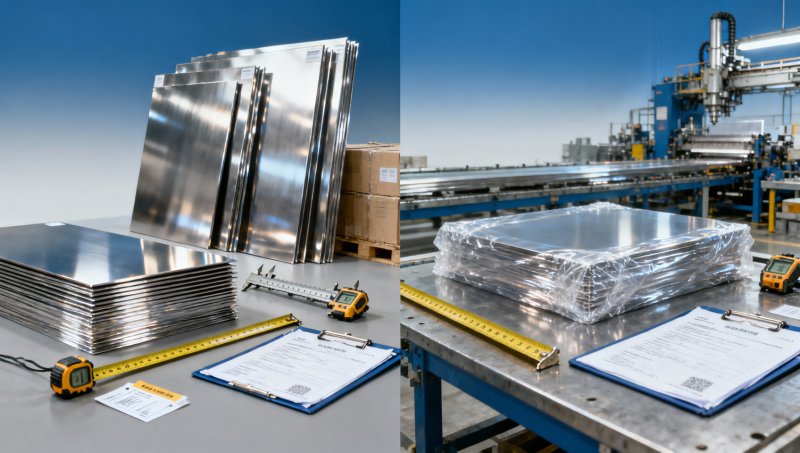
For procurement teams, engineers, quality managers, and project leaders, the biggest concern is simple: can this supplier deliver the right material, with the right documents, at the right time, and at the agreed quality level? A good stainless steel sheet supplier should not only quote a competitive price, but also prove that it can meet technical and commercial expectations consistently.
When screening suppliers, focus on these questions first:
- Do they supply the exact grade, finish, thickness, and tolerance you need?
- Can they provide mill test certificates and traceable quality documents?
- Do they have stable production capacity and realistic lead times?
- Are their export processes mature enough for your destination market?
- Can they respond quickly when specifications change or issues arise?
If the answer to any of these is unclear, the supplier should be investigated more deeply before approval.
Check technical compliance first, not just product price
Price matters, but technical mismatch causes far bigger losses than a higher unit cost. Stainless steel sheet procurement often fails when buyers approve a supplier based on a low quote without confirming standards, tolerances, or processing capability.
Start by reviewing whether the supplier can meet the required international standards such as ASTM, EN, JIS, or GB, depending on your market and application. Then verify:
- Available stainless grades and their chemical/mechanical properties
- Thickness range and dimensional tolerance control
- Surface finish options
- Flatness, edge condition, and sheet consistency
- Cutting, slitting, punching, bending, or fabrication services if needed
Ask for recent test reports, sample inspection records, and photos or videos of finished products. For technical evaluators, this is often the fastest way to detect whether the supplier understands specification control or simply acts as a trader forwarding inquiries.
It also helps to see whether the supplier handles related steel products for structural and industrial projects. For example, companies serving construction and manufacturing buyers often support not only stainless products but also formed structural sections. In many projects, buyers source multiple categories from fewer approved vendors to simplify coordination. A practical example is Metal C Beam, which is commonly used in purlins, wall beams, lightweight roof trusses, brackets, and light industry structural components. Products like this typically require compliance with standards such as ASTM, DIN, GB, or JIS, along with controlled thickness, galvanized or coated surfaces, and processing services like punching, welding, or cutting. A supplier able to manage such specification-driven products often demonstrates stronger production discipline and broader project support capability.
Evaluate manufacturing capability and consistency, not only catalog range
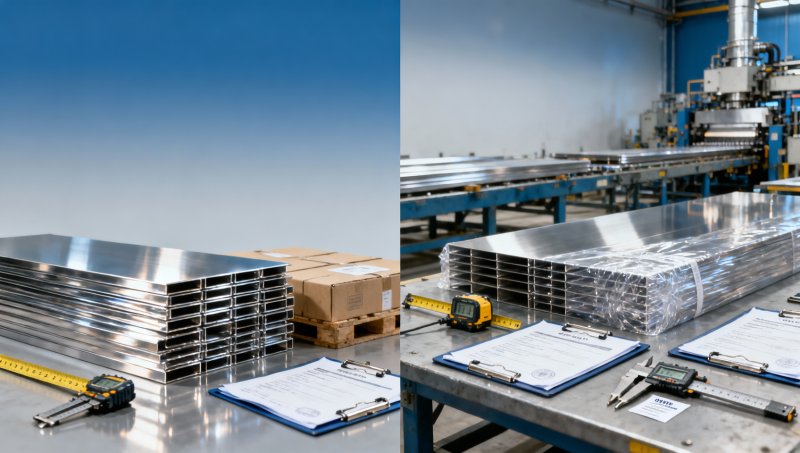
A polished catalog does not prove stable supply. Buyers should check whether the supplier has real manufacturing capacity, process control, and the ability to maintain consistency across repeated orders.
Key points to verify include:
- Factory size, production lines, and equipment condition
- Monthly or annual output capacity
- Ability to handle custom sizes or OEM requirements
- Raw material sourcing stability
- Packaging and loading methods for export shipments
For larger or recurring purchases, ask the supplier how they handle peak-season demand, urgent orders, and batch-to-batch consistency. A reliable manufacturer should be able to explain its workflow clearly, from raw material intake to production, inspection, packing, and shipping.
If possible, request a factory audit or remote video audit. This is especially important for enterprise decision-makers and financial approvers, because supplier instability often creates hidden costs through delays, claims, and replacement purchases.
Review quality assurance systems and traceability in detail
Quality control is where many supplier evaluations become too superficial. A supplier may claim “strict inspection,” but buyers need to know exactly what is inspected, how often, and how records are maintained.
Look for evidence of:
- ISO-based quality management systems
- Third-party certifications such as SGS, BV, CE, or other relevant approvals
- Incoming material inspection procedures
- In-process and final inspection checkpoints
- Batch identification and traceability systems
- Non-conformance handling and corrective action procedures
For quality control personnel and safety managers, traceability is especially important. If a material issue appears after installation or during fabrication, can the supplier identify the batch, provide the original test certificate, and support root-cause analysis? If not, your risk remains high even if the quoted price looks attractive.
A dependable supplier should also be open to pre-shipment inspection, sample approval, and specification confirmation before mass production.
Assess commercial reliability: lead time, payment terms, and total cost
A supplier can meet technical requirements and still be a poor business partner if delivery performance or commercial execution is weak. Procurement and business evaluation teams should review the total sourcing model, not only the ex-works or FOB price.
Compare suppliers on:
- Quoted lead times versus actual historical delivery performance
- Minimum order quantity flexibility
- Payment terms and financial stability
- Incoterms and export shipping experience
- Packaging cost, documentation cost, and destination compliance risk
- Claim response speed and after-sales support
Ask for references from export markets similar to yours. A supplier experienced in North America, Europe, the Middle East, or Southeast Asia is often better prepared for documentation, marking, packaging, and logistics requirements. This matters because customs delays and document errors can quickly erase any savings from a low unit price.
Also consider whether the supplier is transparent about price changes tied to raw material fluctuations. Honest communication on cost drivers is usually a sign of a more professional long-term partner.
Use a simple supplier vetting checklist before final approval
To make decisions easier across departments, use a weighted evaluation checklist. This helps procurement, technical teams, finance, and management review the same supplier using shared criteria.
A practical checklist may include:
- Specification fit: grades, sizes, tolerance, finish, processing options
- Standards compliance: ASTM, EN, JIS, GB, and required certificates
- Factory capability: equipment, output, customization, manpower
- Quality system: inspection process, traceability, third-party verification
- Delivery reliability: lead times, production planning, shipment history
- Commercial terms: pricing clarity, payment, logistics, claim handling
- Communication: speed, accuracy, technical understanding, problem solving
Before placing a major order, many buyers also reduce risk by following this sequence:
- Shortlist 3 to 5 suppliers
- Compare technical documents and certificates
- Request samples or trial orders
- Audit the factory or verify through third-party inspection
- Review total landed cost, not only product price
- Approve a supplier only after internal cross-functional review
This process takes more time at the start, but it usually prevents larger procurement and project problems later.
Final thoughts
Vetting a stainless steel sheet supplier is really about reducing risk and improving long-term sourcing reliability. The best supplier is not always the one with the lowest quote, but the one that can consistently meet your technical requirements, quality expectations, delivery schedule, and service needs.
If you evaluate suppliers based on technical compliance, manufacturing capability, quality assurance, commercial reliability, and communication responsiveness, you will make far better purchasing decisions. For buyers involved in construction, industrial manufacturing, and structural steel for construction, this approach creates stronger supply continuity, fewer quality disputes, and better project outcomes.
In short, choose a supplier you can verify, not just a supplier that sounds convincing. That is the basis of safe, cost-effective, and scalable steel sourcing.
Please give us a message


Please enter what you want to find