Choosing the right carbon steel sheet supplier is a critical sourcing decision for cost, quality, delivery, and compliance control.
Global projects require stable specifications, reliable lead times, and verified standards. A low quote alone rarely protects a project from risk.
This guide explains how to evaluate a carbon steel sheet supplier with a practical checklist for construction, industrial, and manufacturing applications.
Why a Checklist Matters When Choosing a Carbon Steel Sheet Supplier
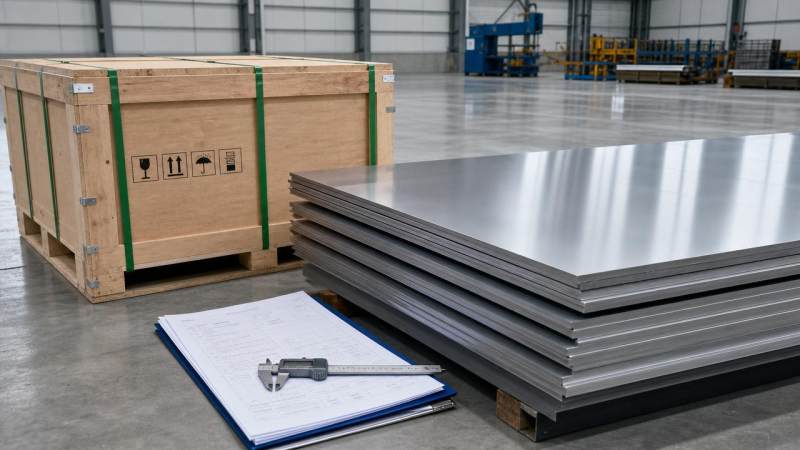
Carbon steel sheet is often used in structural parts, equipment panels, fabricated components, and general industrial assemblies.
Small differences in grade, thickness tolerance, surface condition, or packaging can affect fabrication efficiency and final performance.
A structured checklist helps compare each carbon steel sheet supplier using facts instead of assumptions.
It also reduces communication gaps between inquiry, quotation, production, inspection, and shipment.
Core Checklist for Vetting a Carbon Steel Sheet Supplier
Use the following checklist before confirming a purchase order with any carbon steel sheet supplier.
- Verify business scope, export history, and steel product specialization before discussing price or delivery terms.
- Request mill certificates, test reports, and standard references such as ASTM, EN, JIS, or GB.
- Confirm steel grade, chemical composition, mechanical properties, and equivalent grades for the target market.
- Check thickness tolerance, flatness, surface finish, edge condition, and dimensional accuracy requirements.
- Review production capacity, inventory support, and ability to handle repeat orders without specification drift.
- Ask how raw materials are sourced, inspected, stored, and traced throughout production.
- Evaluate packaging methods for sea freight, inland transport, moisture protection, and handling safety.
- Confirm inspection options, including third-party inspection, pre-shipment photos, and loading supervision.
- Compare payment terms, lead time commitments, quotation validity, and documentation accuracy.
- Assess response speed, technical clarity, and willingness to clarify non-standard project requirements.
Check Manufacturing Capability, Not Only Trading Access
A strong carbon steel sheet supplier should understand production control, not only spot-market availability.
Ask whether the supplier manages rolling, cutting, slitting, leveling, coating, or value-added processing.
If the supplier depends only on temporary stock, delivery and consistency may change quickly.
For repeat projects, stable manufacturing arrangements matter more than one attractive trial order price.
Questions to Ask Before Shortlisting
- Ask which grades and thickness ranges are produced regularly, not only theoretically available.
- Ask how many tons can be supplied monthly under the same technical specification.
- Ask whether customized sheet sizes, surface protection, or bundled export packaging are supported.
- Ask how non-conforming material is identified, separated, reported, and corrected.
Evaluate Quality Control and Documentation
Quality control is where a professional carbon steel sheet supplier proves real reliability.
Documentation should match the goods, shipment, and purchase order without vague or inconsistent descriptions.
Review mill test certificates for heat number, grade, thickness, width, mechanical values, and standard compliance.
If a certificate looks generic, request traceability between the certificate, coil number, package mark, and shipment photos.
Essential Quality Documents
- Mill test certificate showing chemical composition, mechanical properties, heat number, and reference standard.
- Packing list identifying bundle quantity, net weight, gross weight, dimensions, and markings.
- Inspection report covering appearance, dimensions, surface condition, and random measurement records.
- Commercial invoice, bill of lading draft, certificate of origin, and required customs documents.
Review Materials Adjacent to Carbon Steel Sheet Supply
Some projects require related coated steel, formed profiles, or corrosion-resistant alternatives beside carbon steel sheet.
A supplier with broader steel processing knowledge can support better material selection and sourcing efficiency.
For example, AZ150 Galvalume Steel Coil may be considered where corrosion resistance, paintability, and workability are required.
Typical options include SGCC, SGCD, SGHC, DC51D, DX52D, DX53D, DX54D, and S250GD-S550GD materials.
Available parameters may include 30-1500 mm width, 0.125-2.0 mm thickness, and 3-10 tons per coil.
Surface choices can include chromated, skin pass, oiled, slight oiled, dry, AFP, and non-AFP finishes.
This type of product insight shows whether a carbon steel sheet supplier can discuss performance needs beyond basic dimensions.
Application Scenarios That Change Supplier Requirements
Different end uses require different evaluation priorities. A carbon steel sheet supplier should match the actual application.
Construction and Structural Fabrication
Construction applications often need predictable strength, weldability, dimensional control, and compliance with project standards.
Check whether the supplier can coordinate steel sheet with beams, channels, angles, and fabricated components.
Industrial Equipment and Machinery
Machinery parts may require tighter flatness, cleaner surface conditions, and controlled cutting dimensions.
Ask the carbon steel sheet supplier how sheets are leveled, protected, stacked, and handled before shipment.
Manufacturing and OEM Components
OEM projects may involve repeat orders, drawings, special tolerances, and batch consistency.
A qualified carbon steel sheet supplier should manage revision control, sample approval, and production feedback clearly.
Common Risks Often Missed During Supplier Evaluation
Some risks appear only after production starts or cargo arrives. Identify them before signing the contract.
Unclear Grade Equivalence
Do not accept grade substitution without written confirmation. Equivalent grades may differ in chemistry, strength, or forming behavior.
Inconsistent Thickness Tolerance
A small thickness variation can affect weight, cost, bending performance, and assembly fit.
Weak Export Packaging
Poor packaging can cause rust, edge damage, deformation, and claims after long-distance transport.
Missing Communication Records
Keep written records for specifications, tolerances, shipment terms, inspection scope, and documentation requirements.
Practical Steps Before Placing an Order
A careful process makes supplier comparison easier and reduces sourcing mistakes.
- Prepare a specification sheet with grade, standard, thickness, width, length, tolerance, surface, and quantity.
- Request a formal quotation with validity, lead time, payment terms, packaging, and shipment terms.
- Compare quotations using total landed cost, not only unit price per ton.
- Confirm inspection timing, acceptance criteria, and document submission before balance payment.
- Start with a controlled trial order when long-term supply volume is expected.
A reliable carbon steel sheet supplier will welcome clear specifications because they reduce disputes and production uncertainty.
How Hongteng Fengda Supports Steel Sourcing
Hongteng Fengda is a structural steel manufacturer and exporter based in China.
The company supplies angle steel, channel steel, steel beams, cold formed profiles, and customized structural steel components.
Products can follow major international standards, including ASTM, EN, JIS, and GB.
For global steel projects, stable production capacity, consistent quality, and dependable lead times are essential.
These capabilities help reduce sourcing risk when evaluating a carbon steel sheet supplier or broader structural steel partner.
Summary and Next Action
Vetting a carbon steel sheet supplier requires more than comparing price lists.
Focus on manufacturing capability, traceable quality documents, dimensional control, packaging, export experience, and communication discipline.
Before placing an order, prepare a complete specification sheet and request written confirmation for every critical requirement.
The right carbon steel sheet supplier should provide stable materials, clear documentation, and practical support from inquiry to delivery.
Please give us a message


Please enter what you want to find