For procurement teams, choosing reliable a36 round bar suppliers requires more than comparing prices and lead times. Inconsistent material properties or incomplete documentation can create costly delays, quality disputes, and compliance risks.
A thorough supplier review should examine mill test reports, heat number traceability, inspection practices, and the ability to deliver consistent specifications across orders.
This guide outlines the key checks buyers can use to assess suppliers, verify product quality, and make more confident sourcing decisions.
Start With the Evidence That Matters Most
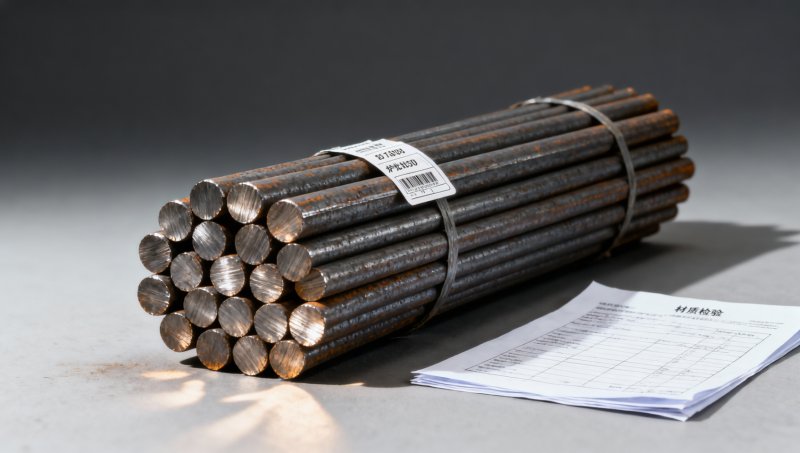
A qualified supplier should demonstrate three things: the material meets the purchase specification, each delivered bundle can be traced to its manufacturing heat, and subsequent orders remain consistent.
Ask for a representative mill test report, a sample bundle label, and an explanation of how the supplier links those records to an actual shipment.
Then check whether the supplier can identify the producing mill, disclose any processing subcontractors, and explain what happens when bars are cut, repacked, or mixed.
These checks are especially important when buying through a stockholder or exporter. A trading company can provide reliable material, but its documentation must preserve the original manufacturing trail.
Do not treat a company certificate, polished brochure, or low quotation as proof that a specific shipment conforms. Shipment-level evidence is what supports acceptance.
Define the A36 Requirement Before Requesting Quotes
Give every bidder the same technical requirements. Otherwise, differences in origin, dimensions, testing, and documentation can make apparently competitive quotations difficult to compare.
Specify ASTM A36/A36M, the applicable edition if required by your contract, round-bar diameter, length, quantity, permitted tolerances, delivery condition, and intended use.
ASTM A36/A36M covers structural steel products, but buyers should confirm with the supplier that the ordered round bars and dimensions fall within the applicable specification and requirements.
Also identify requirements beyond the base standard, such as surface condition, straightness, cutting, end finish, special testing, or restrictions on mixed heats within a bundle.
For fabrication projects, provide drawings or a written acceptance specification. A nominal diameter alone does not define the dimensional tolerances or finish needed by your operation.
If the bar will be welded, machined, galvanized, or used in a critical connection, involve engineering early. The purchase specification should reflect the actual fabrication and design requirements.
Do not accept Q235, another carbon steel grade, or a reinforcing-bar grade as A36 simply because a supplier calls it equivalent. Any substitution requires documented engineering approval.
How to Check an A36 Mill Test Report
A mill test report, often called an MTR or mill certificate, records material identification and test results. Its value depends on whether it matches the delivered product.
Before ordering, request a sample report for comparable A36 round bar. Review the actual shipment documents before release or payment whenever the contract permits.
Check the following information against the purchase order, bundle markings, and applicable specification. Ask the supplier to explain missing fields or conflicting values before shipment.
- Producer and product: Identify the producing mill, product description, applicable specification, and grade. Confirm the report covers the material being supplied, not merely a similar product.
- Heat identification: Find the heat number and verify that it can be matched to the shipment labels, packing list, and traceability records.
- Chemical analysis: Review the reported elements against the applicable A36 limits for the product and thickness, including any contractual restrictions.
- Mechanical properties: Check reported yield strength, tensile strength, and elongation against the relevant requirements, including any applicable dimensional qualifications.
- Test details: Review specimen information, test methods, units, and any supplementary tests required by the order. Ask how representative samples were selected.
- Authorization: Confirm that the document is issued or authenticated by the responsible organization and that alterations or reissued reports are controlled.
For A36, the commonly cited minimum yield strength is 36 ksi, or approximately 250 MPa. Apply the standard’s actual requirements and qualifications to the ordered product.
A report showing acceptable numbers is not enough if its heat number cannot be connected to the delivered bars. Likewise, a matching heat number does not replace compliance review.
Where a distributor provides a certificate based on a mill report, request the original mill document and a documented link through all subsequent handling stages.
Can the Supplier Trace Every Bundle Back to Its Heat?
Heat traceability links finished material to the steelmaking batch and its supporting records. It helps buyers contain problems without quarantining an entire unrelated inventory.
Ask the supplier to walk through one recent order from mill production to packing and dispatch. The demonstration should use actual records, with confidential details appropriately removed.
A practical traceability chain may include the mill report, receiving record, internal stock identifier, processing record, bundle label, packing list, and final invoice or shipment reference.
Check whether labels show the heat number directly or use an internal code that can be reliably cross-referenced. Both approaches require controlled records and clear responsibility.
Cutting and repacking are common points of failure. Require the supplier to transfer identification before original markings are removed and to record the relationship between parent and finished bundles.
For mixed-heat shipments, ask whether each bundle contains one heat or multiple heats. Agree in advance on marking, segregation, and documentation for every heat supplied.
Run a reverse-traceability test: provide a sample bundle identifier and ask the supplier to retrieve its mill report and processing history within an agreed period.
Also test forward traceability. Given a heat number, the supplier should be able to identify which bundles and customer shipments contain material from that heat.
Assess Whether Quality Will Stay Consistent Across Orders
One satisfactory sample does not prove a stable supply. Ask for documentation from several comparable heats or deliveries, subject to confidentiality and availability.
Compare chemical composition, mechanical results, dimensions, surface condition, and originating mills. Look for unexplained changes, missing data, or performance close to acceptance limits.
Confirm who actually produces the bar and whether the quoted source can change. If multiple mills are used, require advance notification and approval when your project needs source control.
Ask how the supplier qualifies new mills and processing subcontractors, monitors recurring defects, and handles changes in rolling source, cutting location, or inspection arrangements.
Review inspection frequency rather than accepting a generic quality-control statement. Understand which checks occur at the mill, at the processor, and before export packing.
For repeat orders, establish measurable acceptance criteria for diameter, length, straightness, surface defects, identification, and documentation. Record any agreed sampling method and inspection responsibility.
A supplier’s quality certification can support the review, but verify its scope, issuing body, and validity. Certification alone does not establish conformity of a particular heat.
For higher-risk purchases, consider an initial trial order or independent inspection. Set acceptance criteria beforehand so inspection findings lead to a clear release decision.
Inspect the Bars and Packaging Before Acceptance
Document review should be paired with a physical inspection appropriate to the order. Confirm who performs it, when it occurs, and which equipment and sampling plan apply.
Measure diameter and length at agreed locations, check straightness and surface condition, and compare the findings with the specified tolerances and acceptance criteria.
Inspect bundle labels and count pieces against the packing list. For each sampled bundle, verify the heat or traceability code against its supporting documents.
Look for damage that could affect use, including severe corrosion, deep surface defects, bent bars, or damaged ends. Define rejection limits rather than relying on subjective descriptions.
Packaging should protect identification and reduce handling damage during the planned transport. Agree on bundling, label durability, lifting requirements, and corrosion protection where needed.
If independent chemical or mechanical testing is required, specify the laboratory, methods, sampling location, frequency, and consequences of failed results before placing the order.
Independent testing can confirm selected properties, but it does not automatically establish the identity or conformity of every bar in a shipment. Traceability remains essential.
Compare Quotes Using Total Procurement Risk
The lowest price may omit services that another supplier includes. Build a comparison around equivalent specifications, inspection obligations, documentation, freight terms, and delivery schedules.
Ask each bidder to identify the producing mill, country of origin, production lead time, available stock, minimum order quantity, and validity period of the offer.
For international orders, specify the Incoterms rule and named place, then compare freight, insurance, duties, unloading, customs costs, and responsibilities on a consistent basis.
Confirm when documents will be available and whether pre-shipment review is allowed. A lower initial price can quickly disappear if missing certificates delay customs clearance or fabrication.
Check commercial remedies as carefully as technical claims. The contract should define notification deadlines, evidence requirements, disposition of rejected goods, replacement timing, and cost allocation.
For repeat purchasing, agree on how changes in source, grade, dimensions, or processing are communicated. Unapproved changes can undermine an otherwise successful qualification.
Questions to Ask Before Placing an Order
Use a consistent questionnaire for shortlisted a36 round bar suppliers. Request written answers and supporting evidence rather than relying solely on verbal assurances.
- Which mill will produce the material, and will you notify us before changing the source?
- Can you provide a sample MTR and show how its heat number appears on a finished bundle?
- How are identification and records maintained during cutting, storage, repacking, and subcontracted processing?
- What inspections are performed, who performs them, and which results will be included with the shipment?
- Can we approve documents before dispatch and arrange an independent inspection if required?
- How do you segregate mixed heats and investigate a discrepancy between labels and certificates?
- What are the production schedule, shipping terms, claim procedure, and proposed remedy for nonconforming material?
Score responses against your project’s risk. A supplier that cannot explain its traceability process should not receive the same rating as one that demonstrates it with records.
Keep Related Steel Products and Grades Separate
Procurement teams may also source other round steel products for different manufacturing or construction requirements. Similar shapes do not make their specifications or intended applications interchangeable.
For example, Wire Rod is presented with several material and standard options. Confirm the exact grade, product form, dimensions, and applicable standard with the supplier.
Reinforcing grades such as ASTM A615 Grade 60 and GB HRB400 have different specification requirements from ASTM A36. Do not substitute them without project-specific technical approval.
Similarly, do not rely on a broad carbon-content range or a general weldability claim to establish A36 compliance. Require the applicable specification and heat-specific evidence.
Make the Final Supplier Decision
Choose a supplier that can connect the purchase specification, physical bundles, mill reports, and shipment records without gaps. Verify that connection before committing to a major order.
Then weigh consistency, inspection capability, delivery reliability, and commercial remedies alongside price. Document the approved source and requirements so the same controls apply to future purchases.
When evidence is incomplete, resolve the discrepancy or qualify an alternative supplier before shipment. Clear requirements and verifiable records give procurement teams a defensible basis for acceptance.
Please give us a message


Please enter what you want to find