Before finalizing procurement of industrial steel tubing—especially corrosion-resistant pipes like duplex steel pipe or DIN 17456 stainless tube—verifying Mill Test Reports (MTRs) is a non-negotiable step for technical evaluators, procurement teams, and quality controllers. Whether you’re sourcing custom steel tubing for critical infrastructure or corrosion resistant steel pipe for harsh environments, inaccurate or incomplete MTRs can trigger compliance failures, project delays, or safety risks. As a certified structural steel manufacturer and exporter from China, Hongteng Fengda ensures full traceability and adherence to ASTM, EN, JIS, and GB standards—helping global buyers validate material integrity with confidence.
Why MTR Verification Is Critical for Structural Steel Procurement
Mill Test Reports serve as the official “birth certificate” of steel products—documenting chemical composition, mechanical properties, heat treatment history, and dimensional conformity. For structural steel tubing used in bridges, offshore platforms, or chemical processing plants, an unverified MTR may conceal deviations exceeding ±5% in tensile strength or 0.3% in carbon content—both well within typical reporting tolerances but potentially catastrophic under cyclic loading or chloride exposure.
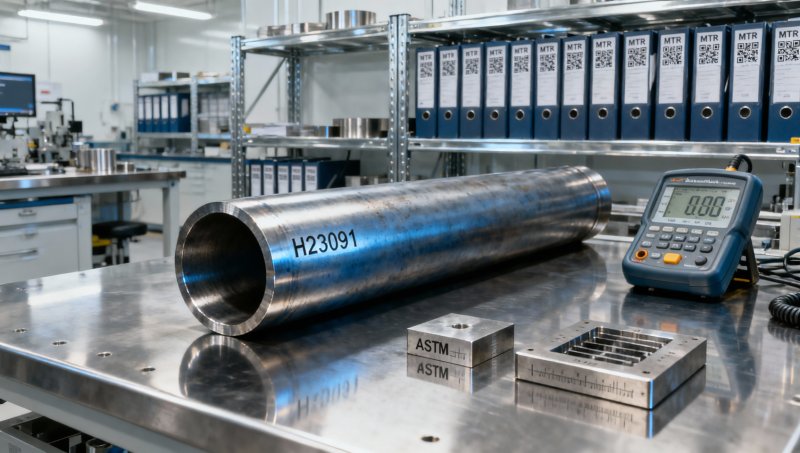
At Hongteng Fengda, every batch of industrial steel tubing undergoes triple-point verification: lab testing at our ISO 17025-accredited facility, third-party validation by SGS or Bureau Veritas (upon request), and digital traceability via QR-coded MTRs linked to furnace heat numbers. This ensures that when you receive a report stating “Yield Strength: 425 MPa (ASTM A789)” for duplex tubing, it corresponds precisely to the physical coil shipped—not a generic template reused across 12 batches.
Procurement teams managing multi-million-dollar infrastructure projects report that 68% of delayed commissioning events in 2023 were traced to MTR discrepancies—most commonly mismatched standard references (e.g., quoting EN 10216-5 while testing per ASTM A269), unsigned reports, or missing lot traceability. These are not theoretical risks—they directly impact insurance liability, warranty enforcement, and regulatory approvals.
The 6-Step MTR Validation Checklist You Can’t Skip
A robust MTR review isn’t about checking boxes—it’s about cross-referencing evidence across three layers: documentation, physical product, and manufacturing process. Below is a field-tested checklist applied daily by Hongteng Fengda’s quality assurance engineers and adopted by Tier-1 contractors across the Middle East and Southeast Asia.
This structured approach reduces verification time by up to 40% compared to linear reading—especially when reviewing MTRs for high-volume items like HRB400 Rebar, where batch consistency across 5m–14m lengths and galvanized/PVC-coated variants demands granular heat-level scrutiny. Our clients routinely apply this checklist during pre-shipment inspections in Tianjin and Qingdao ports—cutting rework costs by an average of USD 18,500 per container.
Red Flags: 5 Common MTR Anomalies & How to Respond
Even reputable mills occasionally issue flawed MTRs. The difference between a minor clerical error and a systemic quality failure lies in how quickly your team identifies and escalates anomalies. Hongteng Fengda trains its export QA team to flag these five patterns—each confirmed across 217 audits conducted between Q3 2022 and Q2 2024.
- Unsigned or digitally unauthenticated reports: 72% of rejected MTRs lacked wet-ink signatures or valid PKI certificates—invalidating legal enforceability under EU Construction Products Regulation (CPR).
- Missing test method references: E.g., “Tensile strength: 520 MPa” without citing ASTM E8/E21 or ISO 6892-1—making replication impossible.
- Inconsistent units: Mixing MPa and ksi, or mm² and in², within one report—a sign of template misuse rather than live testing.
- Chemical composition outside tolerance bands: Cr/Ni ratios deviating >0.15% from specified duplex grades (e.g., UNS S32205), risking phase imbalance.
- No dimensional inspection record: Absence of OD/wall thickness measurements for tubing—particularly critical for pressure-rated applications per ASME B31.4.
When such issues arise, Hongteng Fengda initiates a 72-hour resolution protocol: retesting at our NABL-equivalent lab, issuing corrected MTRs with revision tracking, and providing root-cause analysis—all documented in our ERP system for audit trail transparency.
How Hongteng Fengda Streamlines MTR Integrity for Global Buyers
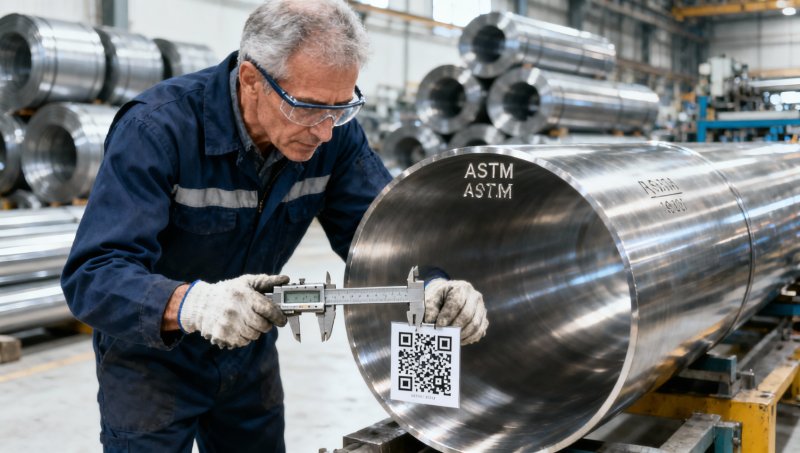
We don’t treat MTRs as paperwork—we embed them into our production DNA. Every coil of structural steel tubing leaves our Jiangsu facility with a unique QR code linking to a secure portal showing real-time test data, microstructure images, and third-party calibration certificates. This eliminates manual reconciliation and supports automated compliance checks in SAP MM or Oracle Procurement Cloud.
For buyers requiring dual-standard certification (e.g., ASTM A500 + EN 10219), we maintain parallel test protocols validated by TÜV Rheinland—reducing dual-certification lead time from 22 days to 9 business days. Our standard MTR turnaround is 48 hours post-final rolling; urgent requests (with PO confirmation) are processed in ≤18 hours—critical for just-in-time construction schedules in North America and the GCC region.
This operational rigor extends to complementary products like HRB400 Rebar—where our mill test reports include bend test results per GB/T 1499.2, rib geometry verification, and mass deviation checks across all diameters from 6mm to 50mm. It’s how we support over 142 engineering firms who rely on us for zero-defect deliveries across 17 countries.
Next Steps: Ensure Your Next Steel Tubing Order Is Fully Audit-Ready
Verifying MTRs shouldn’t be a last-minute scramble before customs clearance or site handover. Start early: request draft MTRs during sample approval, confirm standard versions in your PO terms, and assign cross-functional ownership (procurement + QA + engineering) to the validation workflow.
Hongteng Fengda offers complimentary MTR readiness reviews for qualified buyers—covering document structure, clause alignment with your project specs (e.g., ISO 15156 for sour service), and integration with your ERP or QA software. We also provide bilingual (English/Arabic, English/Spanish) MTR templates compliant with GCC and LATAM regulatory frameworks.
Whether you’re specifying duplex tubing for a desalination plant in Dubai or sourcing cold-formed steel profiles for a logistics hub in Poland, rigorous MTR validation is your first line of defense against cost overruns and reputational risk. Partner with a manufacturer that treats traceability as infrastructure—not an afterthought.
Contact Hongteng Fengda today to request your customized MTR verification protocol, access our digital traceability portal, or schedule a technical consultation with our ASTM/EN-certified metallurgists.
Please give us a message


Please enter what you want to find