Choosing a reliable steel rebar supplier can directly affect project quality, schedule, and overall steel rebar cost. Before shortlisting any steel rebar manufacturer, buyers should look beyond price and assess product standards, production capacity, quality control, and export experience. This guide explains the key signs that help contractors, importers, and project teams identify a supplier worth serious consideration.
For procurement teams, engineers, distributors, and project managers, the real question is not simply who can quote the lowest number per ton. It is who can deliver compliant steel rebar consistently, document quality properly, respond quickly when specifications change, and support delivery across borders without creating avoidable risk.
In international steel sourcing, a supplier may look competitive on paper yet fail in 3 critical areas: material consistency, lead time reliability, and technical communication. A disciplined shortlist should therefore be built around measurable indicators, not sales promises.
Check Whether the Supplier Meets the Right Product and Compliance Baseline
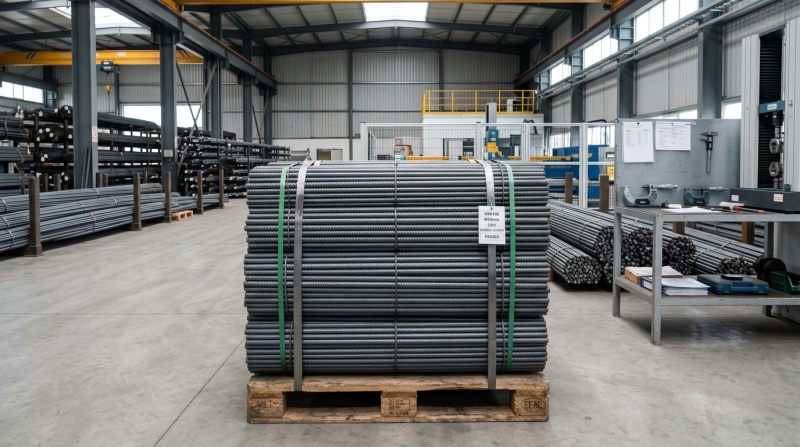
The first filter for any steel rebar supplier is standards compliance. If a supplier cannot clearly explain which grades, mechanical properties, and dimensional tolerances they can supply, they are not ready for serious project bidding. Buyers should verify alignment with ASTM, EN, BS, JIS, or GB requirements based on project location and structural design needs.
A qualified supplier should be able to provide mill test certificates, chemical composition data, tensile strength ranges, yield strength values, and elongation results. For many projects, even a small deviation in bar diameter tolerance or strength class can affect steel fixing, concrete bonding, and inspection approval at site level.
This is especially important when the buyer is comparing 2 to 5 candidate factories. One supplier may offer a lower unit rate, but if documentation is incomplete or if traceability stops at the batch level, the hidden cost can be far higher than the initial quote difference.
Core Documents You Should Request Early
Shortlisting becomes faster when buyers ask for the same document pack from every supplier. This should happen before sample approval or price negotiation enters the final round. A supplier that takes 7 to 10 days to provide standard paperwork for routine products may also delay production documents later.
- Mill test certificate showing grade, heat number, and test values.
- Product standard reference such as ASTM, EN, JIS, or GB.
- Dimensional tolerance sheet covering diameter, length, and weight deviation.
- Quality inspection flow from raw material intake to final dispatch.
- Export packing and marking method, especially for mixed-size shipments.
The table below shows what a practical first-round compliance review should include when evaluating a steel rebar manufacturer.
A supplier worth shortlisting should pass all 3 categories without hesitation. If any answer is vague, inconsistent, or delayed, buyers should treat that as a warning sign rather than a paperwork issue.
Assess Production Capacity, Delivery Stability, and Processing Flexibility
The second sign of a serious steel rebar supplier is dependable production planning. Capacity is not only about how many tons a factory can produce in one month. It also includes whether they can maintain quality across repeated batches, whether they can coordinate rolling and downstream processing, and whether they can reserve slots during peak demand periods.
For project buyers, late delivery by even 7 to 14 days can disrupt rebar fixing, concrete pouring, labor scheduling, and cash flow. A supplier that cannot explain lead time by raw material stage, rolling stage, inspection stage, and shipment stage is difficult to trust for time-sensitive work.
This is also where broader structural steel capability becomes relevant. Some buyers prefer suppliers that can support rebar alongside other steel sections for integrated procurement. For example, cold-formed profiles and support members are often sourced in parallel for roof, wall, and light steel structure packages.
A Useful Mid-Project Indicator: Can the Supplier Support Adjacent Steel Needs?
A manufacturer with wider structural steel experience is often better equipped to understand project sequencing, packaging coordination, and specification control. In many industrial and construction applications, buyers may source not only rebar but also cold formed sections such as Z-beam for purlins, wall beams, lightweight roofs, brackets, and light manufacturing frames.
Typical material options for this profile include Q235B, Q345B, Q420C, Q460C, SS400, S235, S355, A36, and A572. Common thickness ranges are 6–25mm, standard lengths are 2–12m or customized, and tolerance can be controlled within ±1%. Buyers that need perforated or galvanized coated sections should confirm this before consolidating shipments.
Products of this type are frequently supplied with CE, SGS, BV, or ISO-related documentation, and may be used in large-scale steel workshops together with roofing and panel accessories. While it is not the same product as rebar, this kind of capability shows whether the supplier understands broader steel project delivery instead of isolated commodity sales.
Questions That Reveal Real Capacity
- What is the standard lead time for 1 container, 500 tons, and 1,000 tons?
- Can the supplier split shipments by size or project phase within 2 to 3 delivery windows?
- What is the backup plan if raw material supply or rolling schedule changes?
- Can they support OEM marking, bundle labels, or custom cut lengths if needed?
The table below helps buyers compare delivery capability beyond basic quoted price.
A shortlist should favor suppliers that can explain both capacity and constraints. Honest planning is more valuable than aggressive commitments that later become shipping delays.
Review Quality Control, Inspection Discipline, and Claim Handling
Even when a steel rebar manufacturer claims compliance with major standards, the real differentiator is process control. Buyers should ask how many inspection points exist between raw material intake and container loading. In many practical sourcing programs, 4 to 6 control points are enough to reveal whether quality management is active or only document-based.
Reliable suppliers typically define checks for raw material verification, rolling dimensions, mechanical property testing, visual surface condition, bundle identification, and packing integrity. If the supplier cannot explain rejection criteria, retesting procedure, or non-conformance handling, the purchasing risk remains high even if test certificates look acceptable.
Buyers should also review how a supplier handles disputes. A good supplier does not wait for a claim to happen; they already have a documented process for sample retention, traceability, batch isolation, and response time. For export business, a first technical response within 24 to 48 hours is a practical benchmark.
What Quality Teams and Site Managers Should Ask
- Are test samples taken per heat, per rolling batch, or per shipment lot?
- What is the procedure if measured diameter or weight deviates from agreed tolerance?
- Can third-party inspection be arranged before loading?
- How are photos, labels, and packing lists linked for traceability?
The following table provides a practical review framework for quality and claim control.
When comparing suppliers, quality control should be viewed as a cost-protection mechanism. A slightly higher rebar price may be justified if the supplier can prevent one rejected batch, one delayed pour schedule, or one documentation-related customs issue.
Evaluate Export Experience, Communication Efficiency, and Commercial Reliability
Export capability is often underestimated in steel rebar sourcing. A supplier may manufacture acceptable material, but if shipping marks are inconsistent, export packing is weak, or commercial documents contain errors, the buyer still absorbs serious operational cost. This matters even more for importers serving North America, Europe, the Middle East, or Southeast Asia where document accuracy and schedule coordination are essential.
Experienced exporters usually communicate in a more structured way. They confirm specification details, Incoterms, packing method, container loading plan, and expected dispatch dates before production starts. They can also explain how they handle partial shipment, document revision, or port-related delays without creating confusion across teams.
Commercial reliability also includes payment discipline and quotation transparency. Buyers should confirm whether the offer clearly states grade, size range, quantity basis, tolerance, packing, inspection terms, and validity period. Missing details can create disputes later, especially when the order includes multiple diameters or mixed steel products.
Shortlisting Signals That Matter in B2B Steel Procurement
A dependable structural steel manufacturer and exporter from China should show stable production logic, familiarity with international standards, and a responsive service process. Companies serving global buyers across multiple regions are usually more aware of shipment timing, document consistency, and cross-border expectations than suppliers focused only on spot trading.
Buyers should pay attention to response speed as well. If a supplier needs more than 3 working days to answer basic technical questions, or more than 1 week to revise a formal quotation correctly, that inefficiency usually appears again during order execution.
A Simple 5-Point Shortlist Method
- Verify product standards and certificates.
- Check lead time for at least 2 order volumes.
- Review quality control and claim process.
- Confirm export document accuracy and shipment planning.
- Assess communication quality across sales, technical, and operations teams.
For many buyers, the best supplier is not the one with the lowest first quote, but the one that can reduce sourcing risk over 6 to 12 months of repeated purchasing or across multiple project stages.
Common Buyer Mistakes and Final Selection Advice
One common mistake is evaluating steel rebar suppliers only by unit cost per ton. That approach ignores yield consistency, documentation quality, container optimization, and schedule risk. A lower rate can quickly become a higher landed cost if re-inspection, demurrage, or replacement is required.
Another mistake is relying on general company introductions without checking project-specific capability. A strong supplier should be able to discuss real operating details such as tolerance control, bundle identification, production slot planning, and export packing methods. If they stay at brochure level, the shortlist should remain cautious.
Buyers should also avoid approving a supplier after reviewing only one good batch. Where possible, compare at least 2 orders, 2 communication cycles, or 2 document sets. Consistency is a better indicator than a single successful shipment.
Final Checklist Before You Shortlist
- The supplier can match required standards and provide complete testing records.
- Lead times are realistic, staged, and supported by production planning.
- Quality control includes defined checkpoints and traceability.
- Export handling is organized, with clear packing and document control.
- Communication is professional, timely, and technically accurate.
A steel supplier with these strengths is far more likely to support stable procurement, cost control, and smooth project execution. For buyers sourcing from China, manufacturers with broad structural steel experience, modern production facilities, and familiarity with ASTM, EN, JIS, and GB standards can offer added confidence for international orders.
If you are comparing suppliers for construction, industrial, or manufacturing projects, now is the right time to review specifications, delivery targets, and supporting steel product needs together. Contact us to discuss your requirements, request a tailored quotation, or learn more about practical structural steel solutions for global sourcing.
Please give us a message


Please enter what you want to find