Choosing the right steel rebar supplier can directly affect project safety, budget, and delivery performance. Whether you are comparing steel rebar cost, checking a steel rebar manufacturer, or sourcing steel rebar for construction alongside steel plate for construction, knowing how to identify true reliability helps reduce procurement risk and ensures consistent quality from order to site.
For buyers, engineers, quality managers, distributors, and project leaders, supplier reliability is rarely defined by price alone. A dependable source must show stable manufacturing capability, transparent quality control, practical export experience, and the ability to keep commitments under changing project conditions. In steel procurement, even a small deviation in chemical composition, dimensional tolerance, or shipping lead time can create weeks of disruption on site.
In the structural steel industry, the best supplier relationships are built on evidence. That means verified standards such as ASTM, EN, JIS, or GB, clear testing documents, predictable production scheduling, and responsive technical support before and after shipment. For importers sourcing from China or comparing multiple regions, the right evaluation method helps separate a truly reliable partner from a trading source that looks strong only on paper.
What Reliability Really Means in Steel Rebar Supply
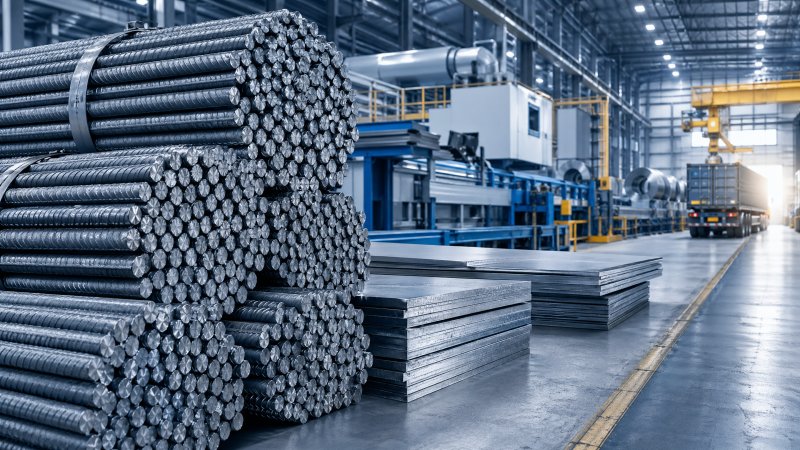
A reliable steel rebar supplier is not simply a company that can quote quickly or offer a lower unit price per ton. In practical procurement, reliability means the supplier can deliver the specified grade, diameter, bundle condition, documentation, and shipping schedule consistently across repeated orders. For construction projects, that consistency often matters more than a 2% to 5% price difference.
For technical evaluators, reliability begins with product conformity. Rebar must meet the mechanical and chemical requirements stated in the purchase contract. Yield strength, elongation, rib geometry, straightness, and weight tolerance all affect installation, welding compatibility, and structural performance. If a supplier cannot explain these points clearly, the procurement risk increases immediately.
For project managers and finance approvers, reliability also includes delivery performance. A supplier that promises 15 days but regularly ships in 30 to 45 days may trigger crane idle time, labor rescheduling, and penalty exposure. In international business, reliability should be measured across at least 4 dimensions: quality consistency, production capacity, documentation accuracy, and on-time delivery.
For distributors and long-term importers, a dependable supplier should also support mixed product sourcing. Many buyers need more than rebar alone. They may need structural sections, steel beams, channels, angle steel, or related materials for a broader construction package. Suppliers with wider structural steel manufacturing capability can often reduce coordination costs and lower the risk of specification mismatch between product categories.
Core signs of a dependable supplier
- Clear compliance with recognized standards such as ASTM, EN, JIS, or GB.
- Ability to provide mill test reports, packing details, heat numbers, and inspection records.
- Stable lead times, often within a defined production window such as 2 to 4 weeks for standard items.
- Responsive communication within 24 to 48 hours for technical and commercial questions.
- Traceable export processes covering loading, marking, bundling, and shipping documents.
The table below shows how professional buyers often distinguish a trustworthy source from a higher-risk option during early supplier screening.
The key takeaway is simple: reliability in steel rebar supply is measurable. It can be checked through documents, process discipline, response speed, and repeated order performance, not just sales claims.
How to Verify Manufacturing Strength and Quality Control
One of the fastest ways to assess a steel rebar manufacturer is to examine whether the company has genuine production and quality control capability behind its quotation. A manufacturer with modern facilities and disciplined inspection procedures is usually better positioned to maintain dimensional accuracy, mechanical stability, and batch-to-batch consistency over 50 tons, 500 tons, or recurring monthly supply.
Ask for evidence of production scope, not only product photos. A serious steel supplier should be able to explain what product categories it manufactures, what standards it follows, what testing is routine, and how non-conforming materials are handled. For construction buyers, this is especially important when sourcing multiple products for one project package, such as rebar, structural shapes, and steel plate for construction.
Companies with broader structural steel experience often offer better project coordination. For example, a supplier like Hongteng Fengda, which focuses on angle steel, channel steel, steel beams, cold formed steel profiles, and customized structural steel components for export markets, may provide better support to buyers who need consistent standards, dependable lead times, and lower sourcing risk across several steel categories.
Quality control should also be practical, not theoretical. Buyers should check whether the supplier performs incoming raw material inspection, in-process checks, final inspection, and document review before shipment. A good quality system usually includes 3 checkpoints at minimum: raw material verification, dimensional and mechanical testing during production, and pre-shipment identity confirmation.
Questions worth asking during supplier evaluation
- Which international standards can you supply against: ASTM, EN, JIS, GB, or mixed project specifications?
- Can you provide certified mill test reports for each heat or batch?
- What is your typical lead time for standard production, such as 15 to 30 days?
- How do you control dimensional tolerance, bundle weight, and loading condition?
- What happens if third-party inspection finds a non-conforming item before shipment?
The following table outlines the quality verification points that procurement teams, QC staff, and site users should review before placing a large order.
If a supplier can support these checks with consistent documents and clear process explanations, the probability of procurement failure drops significantly. This is particularly important for projects shipping to North America, Europe, the Middle East, and Southeast Asia, where compliance expectations and import documentation can vary.
Commercial Reliability: Pricing, Lead Time, and Export Execution
A supplier may have acceptable product quality but still be commercially unreliable. This often happens when quotations are unclear, Incoterms are poorly defined, or shipping schedules are based on optimistic assumptions instead of actual production planning. Buyers comparing steel rebar cost should always evaluate total landed cost, not only the base ex-works or FOB price per ton.
Commercial reliability includes quote transparency. A professional offer should state grade, size range, tolerance basis, unit weight logic, packaging method, MOQ if any, delivery term, payment term, and validity period. If these details are missing, hidden cost can appear later through altered bundle weights, extra packing fees, or shipment delays. In many international orders, a 7 to 10 day delay can cause more loss than a modest price difference.
Export execution is another strong indicator. Reliable steel exporters understand booking windows, customs documentation, loading supervision, and moisture protection during ocean transport. They also know that damaged bundles, poor labeling, or mixed heat numbers can create receiving delays even when the material itself is compliant.
This is also where broader manufacturing support becomes useful. For buyers sourcing ancillary steel items for industrial or construction use, some dependable suppliers can integrate related products into one sourcing plan. A practical example is Premium Galvanized Cold Drawn Steel Wire Rod (1.6mm - 6mm), which may be relevant for projects involving construction, infrastructure, fasteners, agricultural applications, or telecommunications components where galvanized wire products are procured alongside structural steel materials.
What to review in a quotation and shipping plan
- Price basis: EXW, FOB, CFR, or CIF, and whether local port charges are included.
- Lead time: standard production cycle, stock availability, and peak-season adjustment.
- Packaging: bundle security, corrosion protection, coil or straight length handling, and labeling.
- Document package: commercial invoice, packing list, test reports, certificate of origin if needed.
- Claim process: response time, evidence requirements, and replacement or settlement method.
Example of related product transparency
When a supplier presents technical details clearly across product categories, it usually reflects stronger commercial discipline. For instance, the galvanized cold drawn wire rod product noted above is available in diameters from 1.6mm to 6.0mm, with tensile strength ranging from 350 MPa to 900 MPa and zinc coating from 40g/m² to 300g/m² depending on application and temper. That level of detail helps buyers assess fitness for use and compare offers on real specifications instead of vague descriptions.
Commercial reliability is therefore not just about getting a good number on a quote sheet. It is about whether the supplier can convert that quote into a shipment that arrives complete, traceable, protected, and usable without costly surprises.
Practical Red Flags and a Safer Supplier Selection Process
Experienced buyers rarely rely on one conversation or one sample order. Instead, they use a structured evaluation process that reduces exposure before committing to a large contract. In steel rebar procurement, the biggest mistakes usually come from moving too quickly on price, assuming all mills follow the same tolerances, or failing to check whether the exporter can handle project documentation correctly.
Common red flags include inconsistent answers about standards, refusal to provide test records, vague lead times, and frequent changes to payment or product terms. Another warning sign is when the supplier avoids discussing production constraints during high-demand periods. In steel supply, honest capacity communication is more valuable than aggressive promises that collapse later.
A safer selection method is to score suppliers across technical, commercial, and operational categories. For many B2B purchasing teams, a 100-point matrix works well: 40 points for quality and standards, 30 points for delivery capability, 20 points for commercial clarity, and 10 points for service responsiveness. This approach helps align procurement, engineering, QC, and finance instead of letting one factor dominate the decision.
If you are sourcing from China, supplier selection should also include export readiness. This means checking whether the company has stable experience serving overseas markets, understands destination-market expectations, and can support repeat orders rather than only one-off shipments. Long-term supply stability often matters more than a short-term discount.
Recommended 5-step evaluation process
- Pre-screen documents: company profile, product range, standards, sample MTC, and export records.
- Technical review: confirm rebar grade, tolerance, test scope, and application fit.
- Commercial review: compare price structure, payment terms, MOQ, and delivery windows.
- Risk review: check claim handling, packaging, third-party inspection support, and schedule resilience.
- Trial or phased order: begin with a controlled volume before scaling to full project demand.
The matrix below can help cross-functional teams make supplier decisions more objectively.
Using a process like this does not guarantee zero issues, but it substantially reduces avoidable risk. It also makes it easier to justify sourcing decisions to management, finance, and project stakeholders.
FAQ for Buyers Comparing Steel Rebar Suppliers
Many procurement teams ask similar questions when comparing steel rebar suppliers across countries, mills, and trading channels. The answers below focus on practical risk control rather than general sales language.
How can I tell whether a supplier is a real manufacturer or only an intermediary?
Ask for production-related evidence, not just a catalog. Useful indicators include product scope, standard capability, typical lead times, sample inspection records, packaging photos from actual shipments, and consistent technical answers. Some exporters combine manufacturing and trading functions, which is not automatically a problem, but they should still be transparent about where and how the material is produced.
What documents should I request before placing a large order?
At minimum, request a quotation with full specification details, sample mill test reports, packing method description, delivery schedule, and payment terms. For international shipments, buyers often also review packing lists, certificates of origin where required, and inspection procedures. For projects with strict QC requirements, third-party pre-shipment inspection can be added as a further control step.
How much does lead time matter compared with price?
Lead time matters heavily when steel is tied to site sequencing. A price saving of a few dollars per ton may be insignificant if delayed material causes labor downtime, storage issues, or missed pouring schedules. In many project environments, a stable 3-week to 4-week lead time is more valuable than an uncertain promise of 10 days.
Should I combine steel rebar procurement with other structural steel items?
If the supplier has genuine capability and export experience across multiple structural steel categories, bundled sourcing can simplify coordination, reduce communication gaps, and improve schedule control. This is especially useful for contractors, distributors, and industrial buyers managing mixed material lists across beams, channels, angle steel, cold formed profiles, or selected wire products.
A truly reliable steel rebar supplier shows consistency in product quality, documentation, delivery execution, and communication under real project conditions. Buyers should evaluate more than steel rebar cost: they should verify standards compliance, production discipline, traceability, and export readiness before committing to large volumes.
For global construction and industrial procurement, working with an experienced structural steel manufacturer and exporter can reduce sourcing risk and improve coordination across related product categories. Hongteng Fengda supports overseas buyers with stable manufacturing capability, strict quality control, and customized structural steel solutions aligned with international standards.
If you are reviewing suppliers for an upcoming project, now is the right time to compare technical documents, confirm delivery expectations, and assess whether your current sourcing strategy is resilient enough for repeat orders. Contact us to get a tailored steel supply proposal, discuss product details, or explore broader structural steel and wire rod solutions for your market.
Please give us a message


Please enter what you want to find