Sourcing industrial steel tubing safely means balancing quality, compliance, cost, and supplier reliability from the start. Whether you are comparing ASTM steel pipe, Q235 steel plate, or complete structural steel solutions, understanding specifications, certifications, and real application needs helps reduce procurement risks and project delays. This guide explains how buyers can evaluate products, suppliers, and quality standards with confidence.
For procurement teams, engineers, project managers, distributors, and safety personnel, industrial steel tubing is not a simple commodity purchase. A mismatch in grade, wall thickness, coating, or dimensional tolerance can create delays of 2–6 weeks, raise fabrication costs, or introduce safety risks during installation and service.
In global sourcing, especially when buying from overseas structural steel manufacturers, safe purchasing depends on a disciplined review process. That process should cover standards, raw material traceability, manufacturing capability, inspection methods, packing, shipping, and supplier communication. Buyers who define these checkpoints early usually control both risk and budget more effectively.
Understand the Real Technical Requirements Before Requesting a Quote
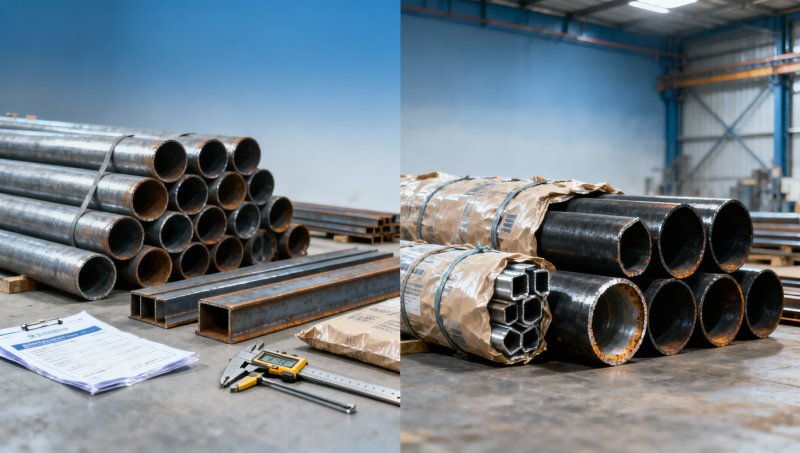
Many sourcing problems begin before production starts. Buyers often request “steel tubing” without defining whether the application is structural, mechanical, pressure-related, or corrosion-sensitive. In practice, safe sourcing starts with 4 basic questions: what load the tube must carry, what environment it will face, which standard applies, and what fabrication steps come next.
For example, a tube used in a dry indoor support frame may accept a different finish than tubing used in marine, mining, or outdoor construction conditions. If your project involves welding, bending, drilling, or hot-dip galvanizing after fabrication, the base steel chemistry and tolerance range must support those operations. A small deviation of ±0.5 mm in wall thickness can affect fit-up, welding speed, and final structural performance.
Standards should also be tied directly to the market and project. North American buyers may focus on ASTM dimensions and test expectations, while European projects often require EN-aligned material documentation. For mixed-market sourcing, manufacturers that can produce to ASTM, EN, JIS, and GB specifications offer more flexibility and lower substitution risk.
Key specification items buyers should confirm
- Steel grade and equivalent standard, such as ASTM, EN, JIS, or GB, with clear substitution approval rules.
- Outside diameter, wall thickness, length, and tolerance limits, including straightness and squareness if fabrication is required.
- Surface condition, such as black, pre-galvanized, hot-dip galvanized, pickled, oiled, or painted.
- Mechanical requirements, including yield strength, tensile strength, elongation, and impact requirements when relevant.
- Inspection scope, such as chemical analysis, tensile testing, coating thickness checks, dimensional inspection, and third-party review.
A reliable RFQ should describe not only the product, but also the application. If tubing will support platforms, racks, frames, equipment skids, or transport structures, that context helps the supplier recommend a more suitable specification. In many projects, the lowest quoted price becomes the most expensive option after rework, coating failure, or shipment rejection.
The following comparison helps buyers align material selection with operational risk and procurement priorities.
The main lesson is simple: safe sourcing starts with technical clarity. A supplier can only provide the correct industrial steel tubing when the buyer defines the operating condition, required standard, and inspection scope in measurable terms.
Evaluate Supplier Capability, Traceability, and Quality Control
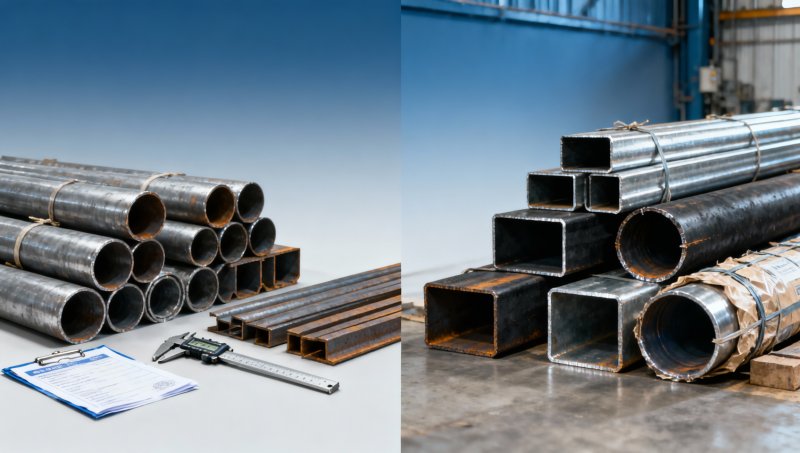
Once the specification is clear, the next step is supplier qualification. A dependable structural steel manufacturer should be able to explain its production process, inspection sequence, material sourcing, and export workflow in practical detail. For international buyers, this matters as much as the unit price because weak process control often leads to quality variation between batches.
A strong supplier review usually includes 5 checkpoints: mill source control, manufacturing equipment, in-process inspection, document accuracy, and shipment protection. If the supplier cannot provide heat number traceability, dimensional records, or standard-based inspection reports, buyers should treat the offer with caution. Missing paperwork can create customs or project acceptance delays even when the material itself is usable.
For structural and industrial applications, factories with modern lines and stable production capacity reduce the risk of inconsistent thickness, out-of-tolerance lengths, and surface defects. This is especially important for projects requiring repeated deliveries over 2–4 batches, where consistency matters more than one-time sample performance.
What a qualified export supplier should provide
When sourcing from China, many global buyers prefer manufacturers that can support standard and customized structural steel products, including angle steel, channel steel, steel beams, cold formed steel profiles, and fabricated components. Suppliers serving North America, Europe, the Middle East, and Southeast Asia usually understand the documentation and packaging expectations of different markets.
Basic supplier verification checklist
- Confirm supported standards such as ASTM, EN, JIS, and GB for the target application.
- Request sample inspection reports showing chemistry, tensile data, dimensions, and coating results where required.
- Verify lead time by order size, such as 15–30 days for common sections and longer cycles for custom fabrication.
- Check export packing methods for bundle security, corrosion prevention, marks, and container loading plans.
- Clarify complaint handling, reinspection procedure, and response time, ideally within 24–48 hours for technical issues.
Industrial buyers often focus on steel tubing, but many projects also require related load-bearing or lifting components. In corrosion-prone applications such as marine handling, mining, cranes, elevators, and drilling support systems, buyers may also review products like Galvanized Steel Wire Rope. Common constructions include 6X7+FC, 6X19+IWR, and 8x19S+FC, with diameters from 1.0 mm to 22 mm and normal tensile strength from 1470 MPa to 1960 MPa. Matching corrosion class and mechanical demand across all steel components improves whole-system safety.
For example, zinc coating groups for rope products may range from 15–135 g/m2 for mild corrosion exposure up to 75–260 g/m2 for severe environments. This same mindset applies to tubing procurement: coating choice should follow actual service conditions rather than price alone. Buyers who define environment classes early can avoid under-specification and unnecessary overspending.
The table below shows how procurement teams can assess supplier reliability beyond the initial quotation.
A supplier that can explain both manufacturing details and export execution is generally a safer long-term partner. This is where experienced structural steel exporters create value by reducing sourcing risks, not just by offering steel products.
Control Compliance, Inspection, and Delivery Risks Before Shipment
Safe sourcing does not end when the order is placed. The highest-risk stage is often the 7–10 days before shipment, when material is bundled, marked, loaded, and documented. If dimensions, count, coating, or paperwork are not checked against the purchase order, buyers may discover issues only after customs clearance or site unloading.
Inspection planning should match the project criticality. For routine industrial steel tubing, buyers may rely on factory inspection plus material certificates. For high-value or schedule-sensitive orders, a pre-shipment inspection by the buyer or a third party is often worth the added cost. This review can include dimensional sampling, quantity confirmation, coating verification, weld appearance, and packaging inspection.
Delivery safety also depends on packaging details. Tubes and structural sections can suffer end damage, bundle deformation, or coating scratches during handling. Proper steel strapping, end protection, water-resistant wrapping where needed, and clear bundle marks reduce the chance of confusion and loss during inland transfer and container unloading.
Pre-shipment control points
- Verify that product marking matches the purchase order, heat number, size, and standard.
- Check quantity by bundle count, unit length, and theoretical or actual weight as agreed.
- Review test documents before dispatch, not after vessel departure.
- Confirm container loading sequence for mixed sizes or fabricated parts to avoid unloading inefficiency.
- Ask for photos or video records for the final packed condition, especially for first orders.
For many project teams, delivery timing is as important as material quality. If a construction schedule depends on steel tubing arriving within a 3-week installation window, even a 5-day delay can affect labor coordination, crane booking, and downstream fabrication. That is why reliable suppliers discuss lead times with realistic buffers instead of aggressive promises.
Documentation should include the commercial invoice, packing list, inspection records, and standard-related material certificates required by the destination market. Where project approval depends on traceability, each bundle should correspond to documented material identity. This reduces disputes between procurement teams, site supervisors, and quality managers.
Build a Safer Sourcing Strategy for Long-Term Steel Procurement
The safest buyers are rarely the ones chasing the lowest number on the first quotation sheet. They are the ones building a repeatable sourcing system. For industrial steel tubing and structural steel products, that system usually combines technical review, supplier screening, staged inspection, and post-delivery feedback. Over time, this can reduce rejection rates, shorten procurement cycles, and improve budget forecasting.
For distributors, EPC contractors, manufacturers, and project owners, a practical sourcing strategy should separate critical items from standard items. Critical items may require stricter sampling plans, dual approval for substitutions, and earlier production tracking. Standard sections may follow faster reorder procedures once the supplier has proven consistency over 2–3 successful batches.
A practical 6-step sourcing framework
- Define end use, standard, dimensions, coating, and inspection scope before RFQ release.
- Compare at least 2–3 technically aligned quotations instead of comparing price alone.
- Review supplier production capability and export experience in your target market.
- Lock approved specifications, tolerances, documents, and delivery terms in writing.
- Arrange in-process or pre-shipment verification for first orders or high-risk projects.
- Track site performance and feed back issues for future purchasing improvement.
Companies sourcing from experienced Chinese structural steel manufacturers often gain an advantage when they need standard products and custom solutions from one source. This can simplify communication across angle steel, channel steel, steel beams, cold formed profiles, and fabricated components. It also helps when project teams want fewer vendors and more consistent technical interpretation.
FAQ: common questions from buyers and technical teams
How do I know whether a lower quotation is actually safe?
Check whether the lower price includes the same standard, steel grade, coating type, tolerance, testing scope, packing method, and delivery term. In many cases, a quote that is 3%–8% lower may exclude testing, reduce coating thickness, or apply broader tolerances that create higher downstream cost.
What documents matter most for industrial steel tubing?
The most important documents are usually the material certificate, inspection report, packing list, invoice, and bundle identification details. For project work, traceability between physical goods and paperwork is often more important than having many documents with unclear linkage.
When should I use third-party inspection?
It is especially useful for first orders, custom fabrication, large-value shipments, or time-sensitive projects where replacement would be costly. Even a focused inspection covering 10–20 key checks can prevent much larger claims after arrival.
How long is a normal production lead time?
Lead time varies by product and complexity. Standard steel sections may be available in 15–30 days, while customized structural steel components can require 4–8 weeks depending on fabrication steps, coating requirements, and order volume.
Safe industrial steel tubing sourcing depends on technical accuracy, supplier credibility, measurable inspection, and realistic delivery planning. Buyers who treat steel procurement as a controlled process rather than a simple price negotiation are better positioned to reduce delays, manage compliance, and protect project outcomes.
Hongteng Fengda supports global buyers with structural steel products, customized solutions, stable production capacity, and export-oriented quality control across ASTM, EN, JIS, and GB requirements. If you are evaluating tubing, structural sections, or related steel solutions for construction, industrial, or manufacturing use, contact us to discuss specifications, request technical support, or get a tailored sourcing plan for your project.
Please give us a message


Please enter what you want to find