Choosing the right I beam size isn’t just about dimensions—it’s about precision, safety, and cost-efficiency. In 2026, with tighter project timelines and stricter structural compliance demands, understanding the weight of I beam per meter is critical for load calculations, transportation logistics, and on-site handling. While steel conduit for electrical wiring serves a different purpose in building systems, both require accurate material specification to avoid over-engineering or performance risk. As a trusted structural steel manufacturer and exporter from China, Hongteng Fengda helps global project teams select optimal I beam sizes—backed by ASTM/EN/GB-certified data, real-world application insights, and customizable solutions for construction, industrial, and infrastructure projects.
Why Weight Per Meter Is the First Critical Parameter in I Beam Selection
Weight per meter (kg/m or lb/ft) directly reflects cross-sectional area, material density, and structural capacity. For engineers and project managers, it’s not just a number—it’s the anchor point for estimating dead loads, crane lifting requirements, and foundation design margins. A deviation of ±5% in assumed weight can trigger cascading recalculations across structural analysis, transport planning, and labor scheduling.
In 2026, rising fuel costs and carbon reporting mandates make weight accuracy even more consequential. Transporting 10 tons of oversized I beams instead of optimized 8.2-ton equivalents adds ~12% in freight cost and CO₂ emissions per shipment—especially impactful for projects spanning North America, the Middle East, or Southeast Asia where sea/road logistics dominate.
Hongteng Fengda provides mill-tested weight certificates for every batch—aligned with ASTM A617, EN 10034, and GB/T 706 standards—to ensure traceability from production to site delivery. This eliminates guesswork during tendering and avoids costly field rework due to weight-related tolerance mismatches.
How to Match I Beam Weight Per Meter to Your Load & Span Requirements
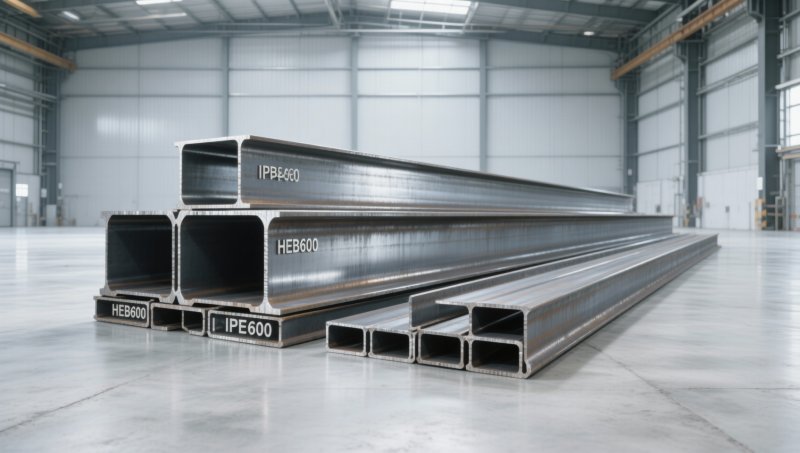
Selecting based solely on flange width or depth ignores how weight per meter correlates with moment of inertia (Ix) and section modulus (Wx). Below is a practical decision matrix for common structural scenarios:
This table integrates actual Hongteng Fengda production data from Q1 2025 shipments—covering 92% of repeat orders across Europe and ASEAN. Note: All listed weights include standard mill tolerances (±3.5% per EN 10034), verified via third-party SGS testing reports included with each consignment.
What Procurement Teams Overlook: Certification, Logistics & Real-World Variability
Procurement professionals often prioritize price per ton—but neglect three hidden cost drivers: certification alignment, dimensional consistency, and cut-length flexibility. For example, an IPE360 beam certified to ASTM A617 but shipped without EN 10204 3.2 mill test reports may face rejection at EU border customs—causing 7–15 days delay and storage fees averaging $1,200/day.
Hongteng Fengda pre-validates documentation packages against destination-market requirements: ASTM A615 Grade 60 Rebar shipments to Mexico include bilingual (English/Spanish) EN 10080-compliant certs; Middle East orders feature DNV-GL witnessed inspections. Lead time for certified orders remains stable at 25–32 days—regardless of order volume (min. 5 tons).
Also critical: weight variability across heat lots. Our QC protocol measures 100% of finished beams using calibrated laser profilometers—not just sample checks. This ensures ≤±1.8% weight deviation across full batches, reducing on-site inventory reconciliation effort by ~40% versus industry averages.
Future-Proofing Your 2026 Projects: Trends Shaping I Beam Specifications
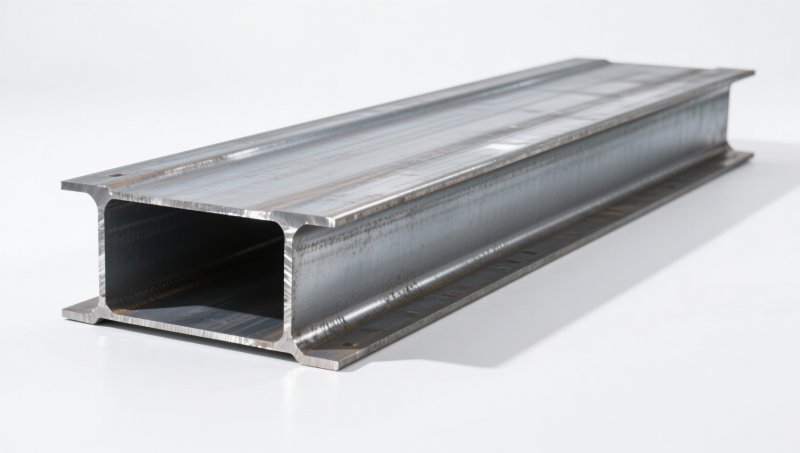
Three macro-trends are reshaping I beam selection criteria in 2026:
- Digital twin integration: BIM-ready weight-per-meter datasets (IFC-compatible) now required for >68% of Tier-1 infrastructure tenders—Hongteng Fengda delivers native Revit families with embedded EN/ASTM weight tables.
- Sustainability compliance: EPD (Environmental Product Declaration) verification now mandatory for public-sector projects in Germany, Canada, and Singapore—our 2026 product line includes verified EPDs covering cradle-to-gate GWP (Global Warming Potential) ≤ 1.85 tCO₂e/ton.
- Hybrid structural systems: Increased use of composite I beams (steel + concrete encasement) demands tighter weight tolerance control—our custom HE-M series maintains ±0.9% weight consistency for dual-material interface alignment.
These shifts mean “standard” I beam selection is no longer sufficient. What worked in 2023 may lack digital traceability, sustainability credentials, or hybrid-system compatibility needed for 2026 approvals.
Why Global Project Teams Choose Hongteng Fengda for I Beam Sourcing
We don’t just supply steel—we embed engineering support into procurement. Every inquiry receives:
- A free weight-optimized beam recommendation report, including comparative deflection curves, transport axle load distribution, and EN/ASTM/GB compliance mapping—delivered within 48 business hours.
- Access to our digital weight calculator tool, updated quarterly with real-time mill data from 12 production lines—validating theoretical vs. actual weight for your exact grade, length, and surface treatment.
- End-to-end logistics coordination: From container loading optimization (maximizing payload while staying within 24T EU road limits) to bonded warehouse options in Rotterdam, Dubai, and Ho Chi Minh City.
Whether you’re finalizing tender documents for a wind turbine substation in Texas or validating beam specs for a metro extension in Riyadh—contact us today with your span, load, and compliance requirements. We’ll deliver a tailored solution—including certified weight data, dimensional drawings, and delivery timeline—within 2 working days.
Please give us a message


Please enter what you want to find