Selecting the right steel plate for construction is no longer a simple thickness decision. Load requirements now shape safety margins, fabrication efficiency, lifecycle cost, and compliance risk across modern structural projects.
As projects become taller, faster, and more performance-driven, demand for the right steel plate for construction keeps rising. Engineers must match load paths, service conditions, and standards with practical material choices.
This article explains the changing selection logic, the forces behind it, and the key checks that support reliable steel plate decisions under real construction loads.
Load-driven selection is becoming the defining rule in construction steel decisions
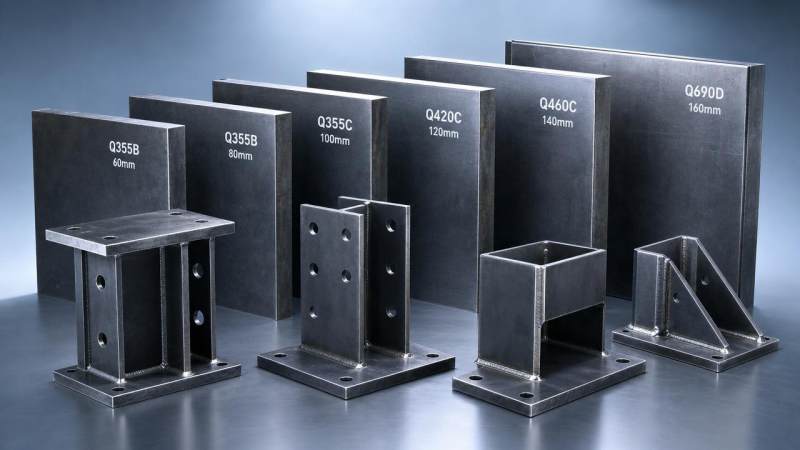
In many projects, structural design is shifting from general material preference to load-specific verification. That means steel plate for construction must be chosen with deeper attention to stress, deformation, and connection behavior.
Earlier selection habits often favored familiar grades. Today, higher spans, mixed-use buildings, seismic zones, and tighter cost controls require more disciplined plate specification.
This change is especially visible in beams, base plates, gusset plates, transfer structures, equipment supports, and heavy fabricated members. In each case, load demands directly affect grade and thickness selection.
Why the evaluation standard is changing
The industry is moving toward performance accountability. Designs are checked more closely, material traceability matters more, and long-term durability is judged alongside initial price.
As a result, choosing steel plate for construction now involves a broader review. Strength alone is not enough. Weldability, toughness, flatness, tolerances, and standard compliance all affect final performance.
Several clear signals are pushing steel plate requirements upward
Market and technical signals show why plate selection is becoming more demanding. These drivers explain why load-based material evaluation is now a practical necessity.
The technical forces behind the trend
- Lighter structural concepts need stronger materials.
- Connection zones experience concentrated loads and fatigue.
- Cold climates increase toughness requirements.
- Complex welding sequences raise sensitivity to material chemistry.
- Cost pressure encourages optimized rather than oversized plate use.
A better steel plate for construction choice starts with understanding load behavior
Load requirements should be translated into material criteria before purchase. Static load, impact load, cyclic load, and combined load do not stress plates in the same way.
For static bearing applications, yield strength and thickness may dominate. For dynamic or seismic service, ductility and notch toughness become more important.
A practical review should include the following checks before specifying steel plate for construction.
- Identify the maximum design load and safety factor.
- Confirm whether the plate works in tension, bending, shear, or compression.
- Review deflection limits, not only ultimate strength.
- Check welding details, heat input, and edge preparation.
- Match required standards and inspection documents.
How grade and thickness interact
Higher grade does not automatically solve every load issue. Increasing yield strength may reduce thickness, but weldability, forming behavior, and local buckling still need review.
In some fabricated members, a moderate grade with better processing stability creates lower total risk than an unnecessarily high-strength option.
For projects needing coil-based feedstock for formed structural parts, Hot Rolled Coil Hrc can support downstream processing with carbon steel options ranging from Q195 to Q890 grades.
Its available standards include ASTM, JIS, EN, ISO, and CE-related compliance pathways. Applications extend to steel structure components where workability, formability, and controlled cost matter.
The impact reaches design, fabrication, installation, and sourcing at the same time
The shift toward load-based plate selection affects more than structural calculations. It changes communication between design intent and actual material delivery.
Design impact
Design teams must define not only nominal strength, but also acceptable substitution rules. Without that clarity, equivalent-looking grades can produce inconsistent field performance.
Fabrication impact
Fabrication depends on flatness, thickness tolerance, cutting response, and weld consistency. A steel plate for construction that meets paper specifications but processes poorly can delay the whole project.
Installation impact
Plate mismatch during installation can affect alignment, hole accuracy, and connection reliability. These issues often create hidden costs that exceed small savings in material price.
Sourcing impact
Reliable sourcing now requires mill capability, documentation quality, and export experience. Stable lead times and standard compliance reduce project uncertainty across international construction supply chains.
Suppliers with broad structural steel experience can better support angle steel, channel steel, beams, cold formed profiles, and custom components under common global standards.
The most important checks are shifting from price-first to performance-first
When comparing steel plate for construction, the most useful focus points are changing. Initial price still matters, but it should be weighed against project performance and risk exposure.
- Yield strength must match actual design demand, not assumptions.
- Thickness should support both strength and stiffness targets.
- Chemical composition affects weldability and cracking risk.
- Impact toughness matters in low-temperature or seismic regions.
- Dimensional tolerance affects fit-up and fabrication speed.
- Certification reduces compliance and traceability problems.
A simple comparison framework
The smartest response is to build a repeatable evaluation method now
A repeatable method improves future specifications and reduces project variation. It also helps compare supplier proposals more accurately when multiple grades appear technically acceptable.
Recommended evaluation steps
- Define the governing loads and service environment.
- Translate them into strength, toughness, and welding requirements.
- Screen candidate grades under ASTM, EN, JIS, or GB logic.
- Verify dimensional tolerance and processing suitability.
- Confirm mill documents, lead time, and quality consistency.
- Review total cost, including fabrication and installation risk.
This approach makes steel plate for construction selection more reliable, especially when projects involve custom fabricated parts, exported structures, or performance-sensitive connections.
Load requirements will continue to shape how construction steel is specified. The best decisions come from combining structural analysis, processing reality, and standard compliance into one material strategy.
If a project needs dependable structural steel support, it is worth reviewing available grades, fabrication needs, and documentation early. That step helps turn steel plate selection into a measurable project advantage.
Please give us a message


Please enter what you want to find